
Frequently Asked Questions (FAQs)
Frequently Asked Questions (FAQs)
The UAE is focused on economic diversification, moving beyond traditional oil reliance, and establishing itself as a pivotal global business hub.
- Key Initiatives: The Dubai Economic Agenda (D33) aims to double the size of Dubai’s economy over the next decade and consolidate its position among the top three global cities, encompassing 100 transformational projects. The "We the UAE 2031" vision focuses on social, economic, investment and development aspects and enhance the position of the UAE as a global partner and an attractive and influential economic hub (targets doubling Foreign Direct Investment (FDI) flows to AED 240 billion annually and tripling FDI stock by 2031).
- Economic Strength: The GDP was estimated at USD 527.8 billion in 2024, with projections for 2025 suggesting an increase to USD 550.2 billion. FDI inflows reached USD 30.688 billion in 2023, positioning the UAE as the second-largest global recipient.
- Competitive Advantages: These include a strategic location at the crossroads of Europe, Asia, and Africa, world-class infrastructure, a business-friendly ecosystem, and a lack of exchange control restrictions, enabling seamless cross-border trade and capital repatriation.
Yes, 100% foreign ownership is permitted in the UAE following a landmark reform effective June 1, 2021. This removed the requirement for a local sponsor in most sectors, allowing foreign investors to fully own mainland companies. Free Zones have always offered 100% ownership. While the reform covers most activities, certain strategic sectors may still require a local partner or be subject to specific conditions.
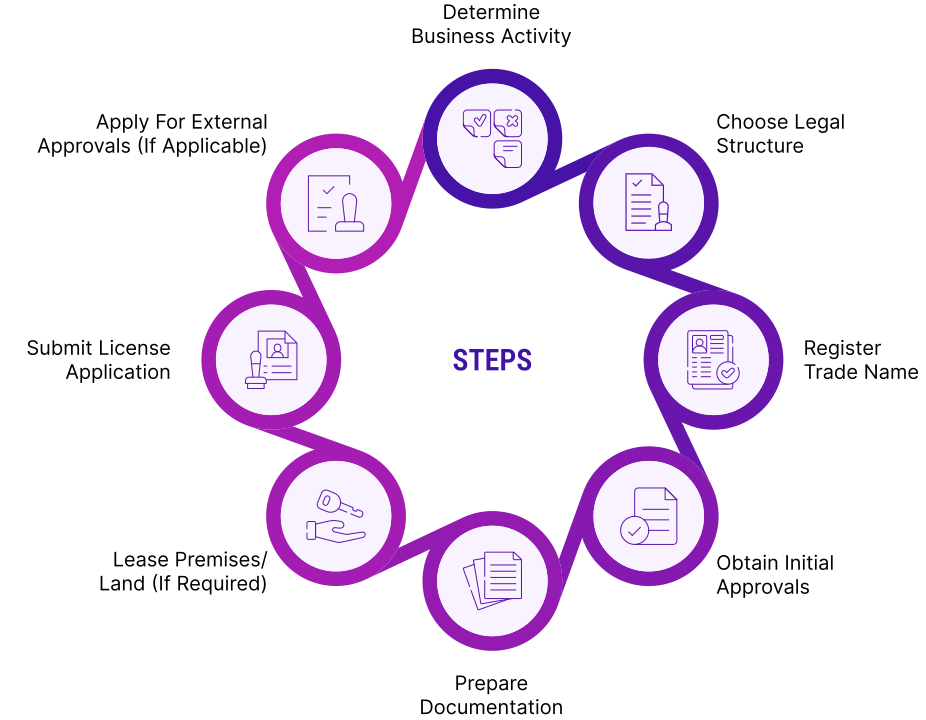
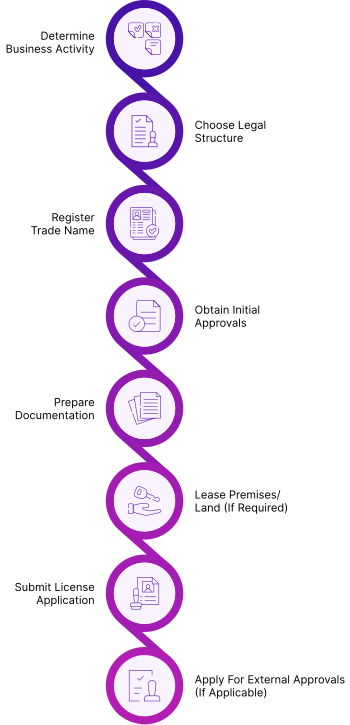
The registration process in the UAE follows a structured sequence, with timelines depending on the emirate, business activity, and whether the setup is Mainland or Free Zone.
Steps:
Timelines:
- Mainland: Typically 1–2 weeks after document submission
- Free Zone: Often faster, typically completed within a few days
Note: Delays may occur due to incomplete/inaccurate documents or pending external approvals.
The three primary jurisdictions for setting up a corporate entity in the UAE are Mainland, Free Zones and offshore.
| Feature | Mainland | Free Trade Zones (FZs) | Offshore |
|---|---|---|---|
| Regulation | Regulated by the respective emirate's Department of Economic Development (DED). | Governed by their own regulatory authority and specific rules of the Free Zone. | An offshore company in the UAE is a legal entity established in a designated offshore jurisdiction—such as RAK ICC or JAFZA Offshore—for conducting business outside the UAE. Unlike mainland and free zone companies, they do not have office inside UAE and do not offer UAE residence visas. |
| Foreign Ownership | 100% foreign ownership is permitted in most mainland sectors (over 1,000), eliminating the 51% local ownership requirement (except some strategically sensitive sectors) | 100% foreign ownership is a standard feature and major incentive. | 100% foreign ownership is a standard feature |
| Office Requirement | Physical office space in the UAE mainland is mandatory | Physical office space is usually required, but the type can vary: Flexi-desk / Smart desk: A shared, minimal-space workstation (very common and accepted for many free zones); Shared office / Co-working space; Dedicated private office; and Warehouse / industrial units (for industrial or logistics activities) | Cannot lease office space |
| Operations Scope | Entities can operate across the entire country without jurisdictional restrictions. | Operations are generally restricted to within the free zone or internationally. But cannot directly trade in the UAE mainland without appointing a local distributor or establishing a mainland branch | The offshore entities cannot operate within the UAE market |
| Corporate Tax (CT) | Standard CT rates apply (9% on income exceeding AED 375,000). | Qualifying Free Zone Persons (QFZPs) benefit from a 0% CT rate on Qualifying Income. | Generally 0% (but cannot earn UAE-sourced income) |
| Benefits | Allows direct trade with the UAE market and participation in government contracts | Often offers tax incentives, simplified customs procedures, and sector-focused ecosystems | They are primarily used for international business, asset holding, and investment structuring, offering tax efficiency, confidentiality, and simplified compliance. |
Corporate Banks in the UAE are categorized into following main types:
- Commercial Banks (Conventional): Offer standard banking services such as accepting deposits, providing loans, issuing credit cards, and processing payments. Examples: Emirates NBD, First Abu Dhabi Bank, Mashreq, Abu Dhabi Commercial Bank.
- Islamic Banks: Operate under Shariah (Islamic law), providing banking solutions without interest, using profit-sharing and asset-backed financing models. Examples: Dubai Islamic Bank, Abu Dhabi Islamic Bank, Emirates Islamic, Sharjah Islamic Bank.
- Foreign Banks & Representative Offices: International banks operating UAE branches, offering retail and wholesale banking. Examples: HSBC, Citibank, Standard Chartered.
- Alternate Banking: Provide global financial services, multi-currency banking, and cross-border payment solutions, often without a traditional local banking license. Payoneer, Interpolitan Money. These platforms allow UAE businesses to receive international payments, manage global accounts, and facilitate cross-border commerce efficiently.
- Neo-Banks: 100% digital banks offering seamless account setup, payments, and business banking through mobile apps and web platforms, often focused on SMEs and startups. Example: Wio Bank. Backed by Abu Dhabi sovereign wealth funds ADQ and Emirates, Wio is a licensed digital bank based in Abu Dhabi offering modern banking solutions, ondemand account creation, and advanced business features.
Opening a corporate bank account in the UAE is a key step for both mainland and Free Zone companies, though requirements vary across banks. UAE banks follow strict KYC (Know Your Customer) standards, typically requiring:
- Business license, Certificate of Registration, and Memorandum of Association
- Board resolution authorizing account management
- Passport copies of shareholders and authorized signatories
- Notarization of documents (in the home country and in the UAE, if applicable)
An in-person meeting with a bank representative is usually required. Non-residents can open accounts, but restrictions may apply. Most banks also require maintaining a minimum balance, usually ranging from AED 50,000–500,000 (USD 13,500–135,000), depending on the account type.
UAE offers one of the world’s most liberal foreign exchange regimes:
- No foreign exchange controls – capital, profits, interest, and royalties can be freely repatriated.
- Stable currency – the UAE Dirham (AED) is pegged to the US dollar, ensuring predictability for international trade and investment.
This openness, combined with banking stability, and strong regulation makes the UAE a secure and investor-friendly financial hub, significantly reducing risks for foreign companies.
The employment environment is governed by Federal Labor Law No. 33 of 2021.
- Work Permits and Visas: Non-UAE nationals must obtain a work permit and residence visa, usually sponsored by the employer company. Standard work visas are typically valid for two years.
- Contracts: All contracts must be fixed-term, and it is common practice to execute both a basic MOHRE contract and a supplementary, detailed private employment contract provided these terms do not conflict with the MOHRE contract or applicable law.
- Emiratization: Companies with 50 or more employees must increase the proportion of UAE nationals in their workforce by 2% each year, targeting 10% by 2026. Failure to meet quotas results in fines.
- Wages Protection System (WPS): Employers must pay salaries electronically through authorized financial institutions to ensure timely and transparent payments.
- End-of-Service Gratuity: An employee who completes at least one year of continuous service is entitled to a gratuity, calculated at 21 days' wage for each of the first five years and 30 days' wage for subsequent years (capped at two years' total wages, excluding allowances).
The UAE offers several reformed residency options designed to attract and retain global talent:
- Golden Residence (10 years): Granted to investors, entrepreneurs, exceptional talents, scientists, and professionals. For professionals, eligibility requires a specialized degree, classification in the first or second occupational level, and a basic salary of not less than AED 30,000. For property investors, a minimum investment of AED 2 million is required.
- Green Residence (5 years): Available for skilled professionals and freelancers/self-employed individuals. It requires a bachelor's degree or specialized diploma and, for freelancers, an annual income of at least AED 360,000 over the last two years. This visa provides a longer flexible grace period (up to 6 months) to stay in the country if the permit is cancelled.
The UAE’s labor laws, significantly updated in 2022, are designed to safeguard employees and regulate working conditions.
- Employment Contracts: All employees must now have fixed-term contracts of up to two years, replacing unlimited contracts. Contracts must be registered with the MOHRE and specify salary, working hours, and leave entitlements.
- Working Hours: Standard working hours are capped at 8 hours per day / 48 hours per week, with overtime provisions and reduced hours during Ramadan. Outdoor work is prohibited during peak summer heat.
- Leave and Benefits:
- Annual leave – 30 calendar days after one year of service (pro-rated for shorter tenure)
- Maternity leave – 60 days
- Parental leave – 5 days for both parents
- Sick leave – 90 days
- Hajj leave – 30 days (once during employment)
- Study leave – 10 days.
- Worker Protection: Employees benefit from equal pay, anti-discrimination safeguards, protection from harassment and unlawful termination, and are covered under the mandatory unemployment insurance scheme, which provides financial support in case of job loss.
- Wage Protection System (WPS): Ensures all salaries are paid in full and on time through approved banking channels.
The UAE’s evolving labor framework reflects its commitment to fairness, transparency, and worker welfare, making it an attractive employment environment.
The UAE utilizes a hybrid legal system combining civil law principles with elements of Islamic Sharia.
The UAE judiciary follows a hierarchical structure:
- Court of First Instance
- Court of Appeal
- Court of Cassation (the highest court)
- Financial Free Zones: The Dubai International Financial Centre (DIFC) and Abu Dhabi Global Market (ADGM) are notable exceptions, operating distinct common law jurisdictions based on English common law.
- Dispute Resolution: Commercial disputes often rely on arbitration, governed by Federal Law No. 6 of 2018. The UAE is a signatory to the New York Convention (since 2006), ensuring the enforcement of foreign arbitral awards.
The UAE tax regime includes federal Corporate Tax, Value Added Tax (VAT), and various other levies.
| Tax Type | Rate | Key Details |
|---|---|---|
| Federal Corporate Tax (CT) | Standard rate: 9% on taxable income > AED 375,000 Qualifying Free Zone: 0% on Qualifying Income |
Effective from June 1, 2023. Small business relief is available for revenue < AED 3 million. Qualifying Free Zone is eligible for 0% subject to conditions like adequate substance, audited financial statements, and compliance with the Arm’s Length Principle (ALP) etc. |
| Qualifying Minimum Top-up Tax (QDMTT) | upto 15% | Effective from January 1, 2025. Applicable to Constituent Entity of Multinational Enterprises (MNE) with group consolidated turnover above Euro 750 million. |
| Value Added Tax (VAT) | 5% standard rate. | Applied on the supply of goods and services. Mandatory registration threshold is AED 375,000. |
| Excise Tax | 50% or 100% | Levied on specific goods harmful to health or the environment (e.g., 50% on sweetened drinks, 100% on tobacco and energy drinks). |
Value Added Tax (VAT) was introduced in the UAE in January 2018 at a standard rate of 5%. It applies to most goods and services at each stage of the supply chain, with the ultimate burden on the consumer. Businesses act as intermediaries, collecting VAT and remitting it to the Federal Tax Authority (FTA).
Registration is mandatory if a business’s annual turnover from taxable supplies and imports exceeds AED 375,000, while voluntary registration is allowed above AED 187,500. The 5% rate applies unless supplies are zero-rated or exempt. Free Zone companies are generally subject to VAT, though certain designated zones and activities may qualify for a 0% rate, especially for goods re-exported or moved within Free Zones. Businesses must ensure timely filings and full compliance with UAE VAT regulations.
- Disclosure Form (TPDF) – Related parties: Required if aggregate value of all transactions with all related parties exceeds AED 40 million. Once the above threshold is met the reporting requirement for individual transaction category applies to transaction with all related parties exceeding AED 4 million. Connected Person - Required if aggregate value of payment to each connected person exceeds AED 0.5 million (to be submitted with UAE Corporate Tax Return within nine months of the end of the tax period)
- Master File (MF) and Local File (LF): Required if the Taxable Person is part of a Multinational Enterprise (MNE) group with total consolidated revenue of AED 3.15 billion or more, OR if the taxable person’s revenue is AED 200 million or more (to be submitted within 30 days of request by the FTA)
- Country-by-Country Report (CbCR): Required for MNE groups headquartered in UAE with consolidated revenues exceeding AED 3.15 billion during the fiscal year immediately preceding the reporting fiscal year (12 months from the end of the accounting period)
The UAE TP Law mandates that all the related party transactions, whether cross-border, domestic, or involving free zone entities irrespective of threshold must comply with the arm’s length standard.
Entities incorporated in UAE are required to maintain & present their financial statements as per International Financial Reporting Standards (IFRS) unless exempt under specific circumstances. The Financial Statements should be for 12 months; however, the first Financial Statements can be prepared for a maximum of 18 months from the date of registration.
The records for mainland entities are required to be maintained at the Head Office & in electronic form and should be maintained for minimum of 5 years.
Accounting records for free zone entities are required to be maintained as per the laws governing the said free zones.
Mainland companies are required to have their financial accounts audited annually. Audit requirements for Free Zone companies may vary, though many are still subject to audits, with specific deadlines for reporting.
Non-compliance carries significant penalties across various regulatory frameworks:
- Data Protection: Under the federal PDPL, fines can reach up to AED 10,000,000 (USD 2.7 million). In ADGM, fines may reach up to USD 28 million, while the DIFC may impose administrative fines up to USD 100,000.
- Anti-Money Laundering (AML): Supervisory Authorities, such as the DFSA, can impose sanctions ranging from warnings and fines (AED 50,000 to AED 500,000) to suspension of activity for up to one month or cancellation of the license/authorization.
- Cybercrime: Federal Decree-Law No. 2 of 2019 on Cybercrime imposes strict penalties, including hefty fines and imprisonment, for offenses like unauthorized access and data breaches.
The UAE has a strong legal framework to protect intellectual property (IP) rights, covering trademarks, patents, copyrights, and industrial designs.
- Trademarks – Protected under Federal Law No. 36 of 2021, valid for 10 years (renewable), and registered with the Ministry of Economy. Infringement can result in fines up to AED 1 million and imprisonment.
- Patents – Governed by Federal Law No. 11 of 2021, valid for 20 years for new and inventive products or processes. Penalties for infringement include fines up to AED 1 million.
- Copyrights – Protected under Federal Decree-Law No. 38 of 2021, covering works such as literature, art, music, and software. Authors enjoy both economic and moral rights automatically upon creation.
These strict protections reflect the UAE’s commitment to fostering an innovation-driven economy while deterring infringement through strong enforcement.
On the commercial real estate side, the UAE offers diverse options tailored to business needs:
- Office spaces – From co-working hubs and serviced offices to premium towers in central business districts.
- Retail units – Available in malls, high streets, and mixed-use developments.
- Warehouses & industrial plots – Located in free zones and specialized logistics hubs.
- Ownership & leasing – Foreign investors can acquire property in designated freehold zones or lease land/property for up to 99 years, offering both flexibility and long-term security.
This variety enables companies—whether startups, SMEs or multinationals—to establish the right physical footprint aligned with their growth strategy.