

 Download PDF
Market Overview
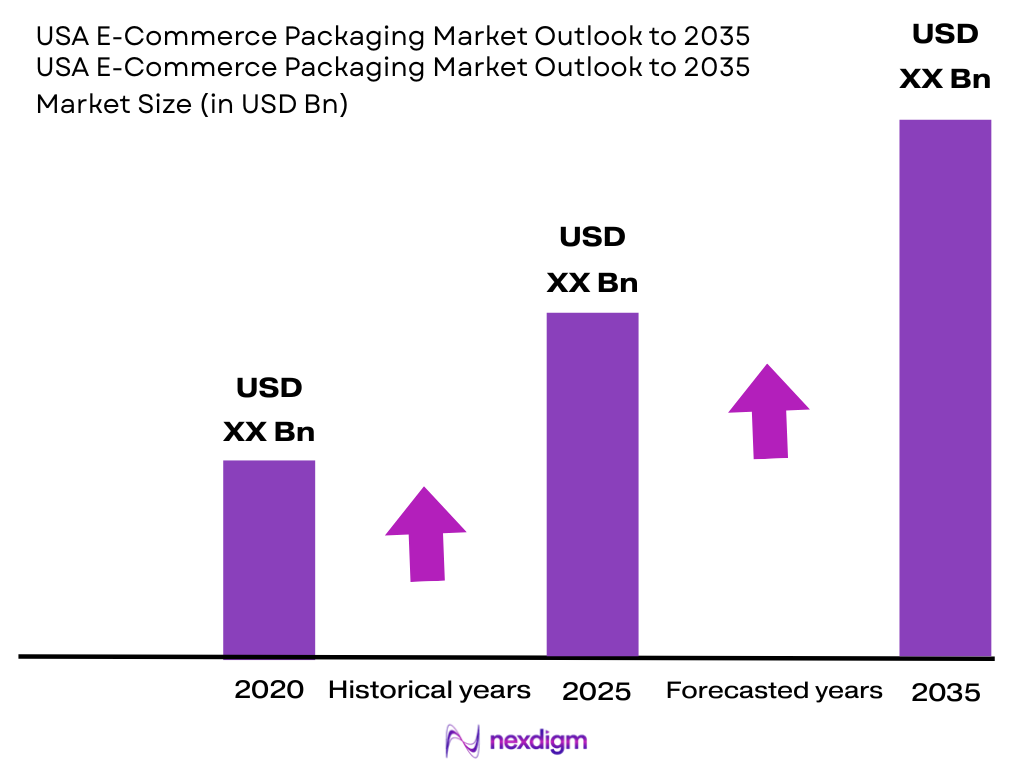
The USA E-Commerce Packaging Market was valued at USD ~ Billion in 2024 and is anticipated to expand at a CAGR of ~ % during 2026–2035. The market is primarily driven by rising online retail penetration, growth of same-day and quick-commerce delivery, and expanding subscription commerce shipment volumes. According to GlobeNewswire, the U.S. e-commerce packaging market was valued at approximately USD ~ billion in 2024. This growth is directly underpinned by U.S. retail e-commerce sales, which reached USD ~ billion in 2024 and accounted for 16.1 percent of total retail sales, sustaining high corrugated and secondary packaging throughput across parcel networks, retail replenishment, and omnichannel returns, according to Ken Research. U.S. corrugated shipments reached 381 billion square feet in 2024, requiring dense converting footprints and reliable linerboard access to protect plant utilization and account profitability across the country’s packaging supply chain.
Market Segmentation
By Material
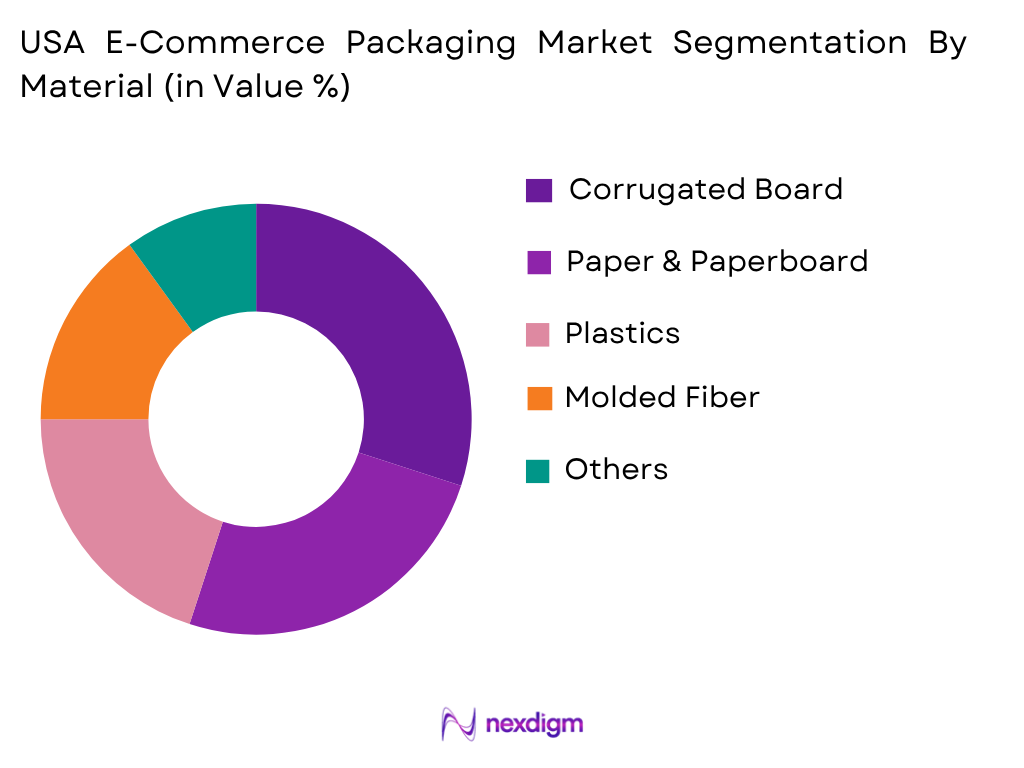
Among these, Corrugated Board holds the largest share of the USA E-Commerce Packaging Market, registering a 60 percent share by material as of 2024 according to MarketsandMarkets, given its excellent cushioning and strength for items such as electronics, appliances, clothing, and cosmetics shipped through parcel networks. The U.S. corrugated and paperboard boxes market alone was valued at approximately USD 47 billion in 2024, according to the Freedonia Group, led by companies including Smurfit WestRock, International Paper, Packaging Corporation of America, Graphic Packaging, and Georgia-Pacific. At the same time, Molded Fiber and paper-based protective packaging materials are gaining share as U.S. consumer goods firms spent nearly USD 1 billion on damage-related write-offs in 2024, according to Mordor Intelligence, incentivizing thicker padding and engineered fiber-based inserts designed to drop breakage rates below 1 percent while maintaining curbside recyclability.
By Product Type
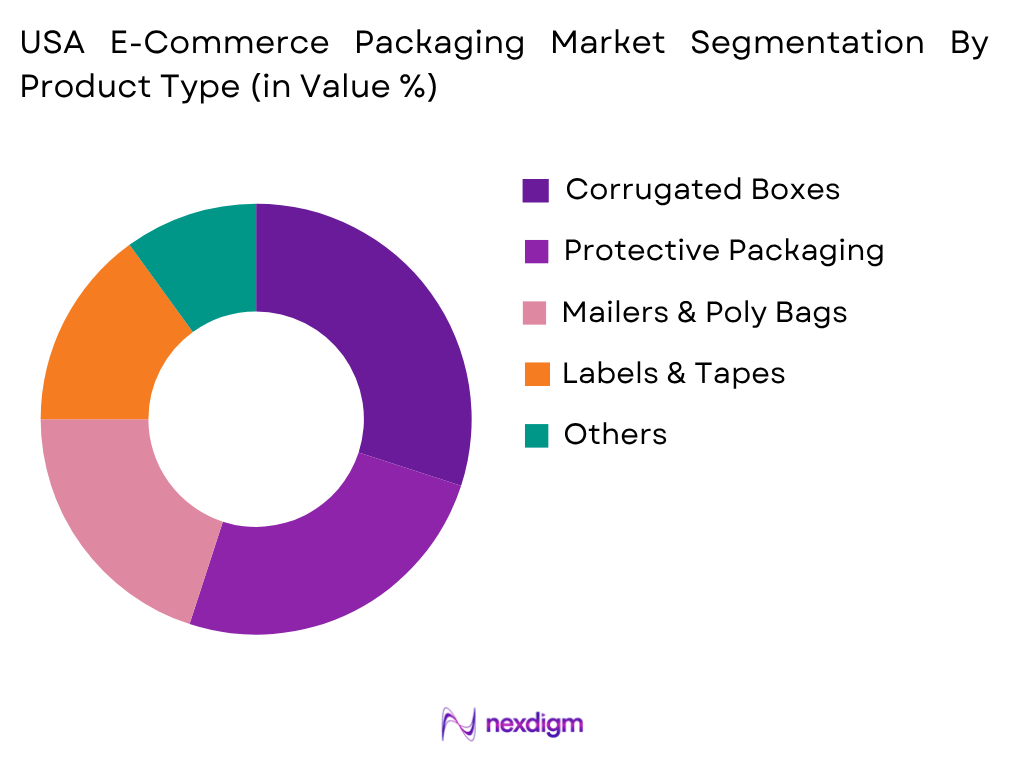
The Corrugated Boxes segment holds a leading share, generating 61.20 percent of the U.S. e-commerce packaging market in 2025 according to Mordor Intelligence, reflecting versatility across SKUs ranging from apparel to small appliances. Meanwhile, Protective Packaging, including void-fill cushions, molded pulp, and air pillows, is expanding at a 15.95 percent CAGR as retailers tackle returns tied to in-transit damage. Parallel growth in flexible mailers for fashion items continues to displace rigid cartons, reducing cube waste and last-mile carbon emissions, while cold-chain e-grocery packaging further intensifies demand for specialized insulation materials. Leading packaging groups increasingly deploy digital twins and SaaS configurators that model cube, weight, and emissions trade-offs to optimize packaging selection across diverse product categories and shipment profiles.
Competitive Landscape
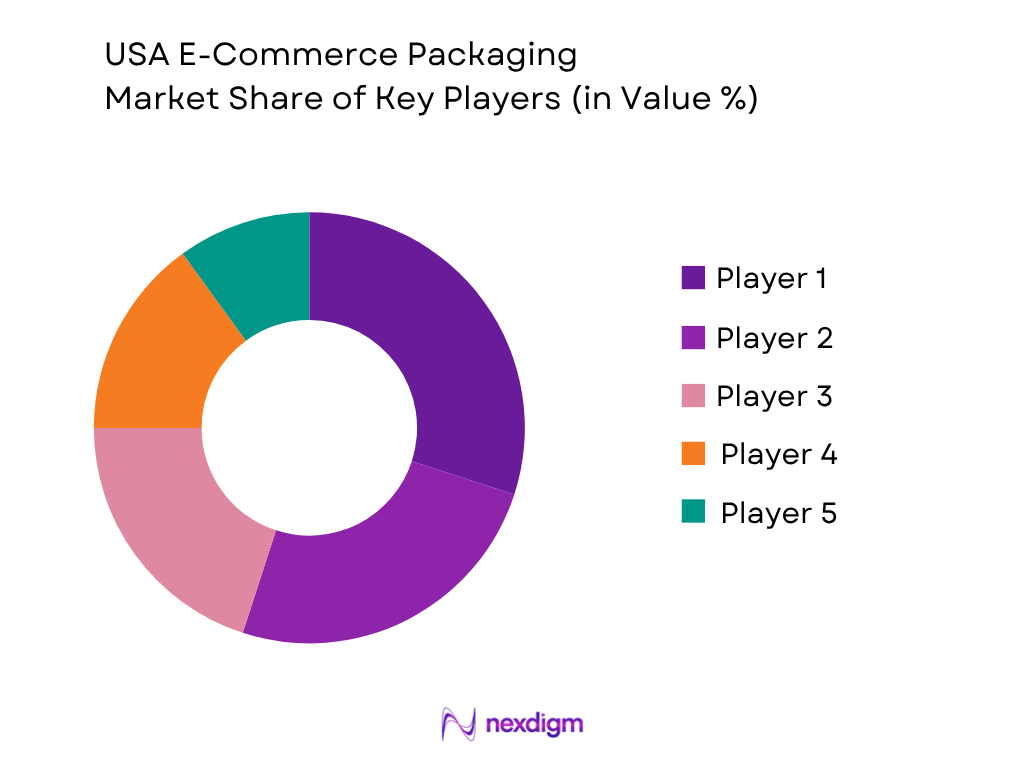
The USA E-Commerce Packaging Market is moderately consolidated, with a handful of large integrated paper and protective packaging manufacturers dominating alongside specialized converters serving niche fulfillment and returns packaging needs. Three of the largest profiled U.S. corrugated companies, WestRock Company (now part of Smurfit WestRock), Georgia-Pacific LLC, and Pratt Industries Inc., are headquartered in metro Atlanta, while International Paper Company is based in Memphis, reflecting the South’s role as the dominant operating corridor due to its combination of mill access, recycling infrastructure, freight connectivity, and headquarters density. Competition is primarily based on cushioning and damage-protection performance, cube efficiency, recyclability, and the ability to serve large e-commerce marketplaces and direct-to-consumer brands at scale. Companies are increasingly investing in automated right-sizing technology, recycled content, and molded fiber protective packaging to differentiate their portfolios and meet evolving retailer sustainability commitments.
| Company | Established | Headquarters | Primary Product Portfolio | Natural Color Portfolio | Manufacturing Presence | Major End-Use Industries | Key Strategic Focus | Certifications & Compliance |
| Smurfit WestRock | 2024 | ~ | ~ | ~ | ~ | ~ | ~ | ~ |
| International Paper Company | 1898 | ~ | ~ | ~ | ~ | ~ | ~ | ~ |
| Packaging Corporation of America | 1959 | ~ | ~ | ~ | ~ | ~ | ~ | ~ |
| Sealed Air Corporation | 1960 | ~ | ~ | ~ | ~ | ~ | ~ | ~ |
| Pratt Industries, Inc. | 1991 | ~ | ~ | ~ | ~ | ~ | ~ | ~ |
USA E-Commerce Packaging Market Analysis
Growth Drivers
Rising Online Retail Penetration and Quick-Commerce Growth
The USA e-commerce packaging market is experiencing sustained growth due to rising online retail penetration and the expansion of same-day and quick-commerce delivery formats. U.S. retail e-commerce sales reached USD 1,192.6 billion in 2024, accounting for 16.1 percent of total retail sales, according to Ken Research, sustaining high corrugated and secondary packaging throughput across parcel networks. E-commerce gross merchandise value continues to climb in double digits, and every incremental order ships in its own protective pack, multiplying packaging demand faster than headline retail sales growth, according to Mordor Intelligence. Subscription commerce further amplifies volumes as recurring shipments deliver monthly replenishments in branded cartons, while quick-commerce operators targeting rapid grocery delivery windows raise packaging-to-product ratios as fragile fresh items increasingly ship individually rather than in bulk crates.
Expansion of Protective Packaging to Reduce Damage-Related Losses
The steady expansion of protective and cushioning packaging formats remains a major driver for e-commerce packaging consumption in the United States. U.S. consumer goods firms spent nearly USD 1 billion on damage-related write-offs in 2024, according to Mordor Intelligence, directly incentivizing retailers and brands to invest in thicker padding and engineered inserts capable of dropping breakage rates below 1 percent. Protective systems, including void-fill cushions, molded pulp, and air pillows, are expanding at a 15.95 percent CAGR as retailers tackle returns tied to in-transit damage. U.S. corrugated shipments reached 381 billion square feet in 2024, according to Ken Research, requiring dense converting footprints and reliable linerboard access to support the scale of protective and shipping packaging required across the country’s expanding parcel and fulfillment network.
Market Challenges
Volatility in Containerboard Prices and Damage-Related Cost Pressures
Despite steady demand growth, the USA e-commerce packaging market remains vulnerable to fluctuations in containerboard, linerboard, and resin prices that directly affect converter margins and packaging costs for e-commerce brands. U.S. consumer goods firms’ nearly USD 1 billion in damage-related write-offs in 2024 illustrates the direct financial cost of inadequate protective packaging, creating pressure on manufacturers to continuously improve cushioning performance while managing input cost volatility. Longer trade lanes in cross-border commerce, from overseas fulfilment hubs to U.S. consumers, further elevate the need for thicker flute grades and engineered cushioning capable of withstanding multi-modal handling, adding material cost and complexity for packaging manufacturers serving import-heavy e-commerce supply chains.
State-Level Regulatory Fragmentation and Right-Sizing Pressure
The USA e-commerce packaging market faces increasing complexity from state-level Extended Producer Responsibility (EPR) packaging regulations that vary in scope, timelines, and recycled content requirements across states such as California, Colorado, Oregon, and Maine, requiring packaging manufacturers and e-commerce brands to navigate a fragmented compliance landscape rather than a single federal standard. Carrier dimensional weight pricing policies from major parcel carriers continue to pressure e-commerce brands and packaging suppliers to right-size packaging and minimize wasted cube space, requiring investment in automated fit-to-box technologies. Reverse logistics and returns packaging add further complexity, as packaging must withstand multiple shipment cycles while maintaining damage-protection performance and cost efficiency across both outbound and returns flows.
Market Opportunities
Rising Investment in Automated Right-Sizing and Recycled Materials
The USA e-commerce packaging market presents significant opportunities for manufacturers investing in automated right-sizing technology and recycled packaging materials. Leading packaging groups deploy digital twins and SaaS configurators that model cube, weight, and emissions trade-offs, according to Mordor Intelligence, enabling e-commerce brands to optimize packaging selection while reducing both shipping costs and environmental footprint. As sustainability becomes a critical driver for the industry, companies are adopting eco-friendly materials such as paper-based packaging, biodegradable plastics, and reusable boxes, according to Grand View Research. Manufacturers offering curbside-recyclable mono-material mailers, molded fiber protective packaging, and post-consumer recycled containerboard are well positioned to capture demand from e-commerce brands and marketplaces pursuing aggressive sustainability commitments across their packaging supply chains.
Expansion of Cold-Chain and Subscription Commerce Packaging
The continued growth of cold-chain e-grocery and subscription commerce creates substantial long-term opportunities for specialized e-commerce packaging manufacturers. Subscription commerce further amplifies packaging volumes as recurring shipments deliver monthly replenishments in branded cartons, according to Mordor Intelligence, while cold-chain e-grocery intensifies demand for specialized insulation and temperature-controlled packaging materials. Flexible mailers for fashion and apparel items continue displacing rigid cartons, reducing cube waste and last-mile carbon emissions, creating opportunities for manufacturers offering lightweight, high-performance flexible packaging formats. As e-commerce brands increasingly prioritize both damage protection and sustainability credentials, packaging manufacturers investing in specialized, application-specific solutions are well positioned to capture growing demand across food and beverage, apparel, electronics, and personal care e-commerce categories.
Future Outlook
The USA E-Commerce Packaging Market is expected to witness sustained expansion over the forecast period, supported by continued growth in online retail penetration, expanding quick-commerce and subscription delivery formats, and increasing regulatory and retailer pressure to adopt recyclable and right-sized packaging materials. Continued investment in automated right-sizing technology, molded fiber protective packaging, and recycled containerboard will further accelerate innovation across the industry. The market is also likely to benefit from the continued expansion of U.S. e-commerce gross merchandise value, enabling greater investment in advanced, sustainable, and damage-reducing packaging technologies capable of serving both domestic marketplaces and cross-border fulfillment operations.
Major Players
- Smurfit WestRock
- International Paper Company
- Packaging Corporation of America
- Sealed Air Corporation
- Pratt Industries, Inc.
- Georgia-Pacific LLC
- Graphic Packaging International, LLC
- Amcor plc
- Mondi plc
- DS Smith plc
- Ranpak Holdings Corp.
- Sonoco Products Company
- Berry Global Group, Inc.
- Uline, Inc.
- Winpak Ltd.
Key Target Audience
- E-Commerce Packaging Manufacturers
- Online Retailers and Marketplace Operators
- Direct-to-Consumer Brands and Subscription Commerce Companies
- Third-Party Logistics and Fulfillment Providers
- Parcel Carriers and Last-Mile Delivery Companies
- Investment and Venture Capitalist Firms
- Government and Regulatory Bodies (State Extended Producer Responsibility (EPR) Programs, Federal Trade Commission (FTC), Department of Transportation (DOT))
- Packaging Material Suppliers and Industrial Raw Material Distributors
Research Methodology
Step 1: Identification of Key Variables
The research process begins with identifying the complete ecosystem of the USA E-Commerce Packaging Market, including raw material and containerboard suppliers, packaging converters and manufacturers, online retailers and marketplaces, third-party logistics providers, parcel carriers, and regulatory authorities. Extensive secondary research is conducted using company annual reports, government publications, trade associations, customs statistics, industry journals, and proprietary databases to determine the variables influencing market demand, pricing, production, consumption, and technological developments.
Step 2: Market Analysis and Construction
Historical market information is collected and analyzed to estimate market size, production volumes, import-export activity, application-wise demand, and pricing trends. A combination of top-down and bottom-up approaches is used to estimate market revenues and validate segment-level performance. Consumption patterns across food and beverages, apparel, electronics, and personal care e-commerce categories are evaluated to establish an accurate representation of the industry.
Step 3: Hypothesis Validation and Expert Consultation
The preliminary findings are validated through Computer-Assisted Telephone Interviews (CATIs) and structured discussions with e-commerce packaging manufacturers, procurement managers, fulfillment operations executives, sustainability officers, and senior executives operating within the U.S. e-commerce packaging industry. These interviews help verify market assumptions, competitive developments, technology adoption trends, pricing dynamics, and future investment opportunities while refining the overall market estimates.
Step 4: Research Synthesis and Final Output
The final stage integrates insights obtained from primary interviews with quantitative information collected through secondary sources. Data triangulation techniques are applied to reconcile differences between supply-side and demand-side estimates, ensuring robust market forecasting. The report is then reviewed through multiple quality assurance checkpoints to deliver a comprehensive analysis covering market size, segmentation, competitive landscape, future outlook, and strategic recommendations for industry stakeholders.

- Executive Summary
- Research Methodology (Market Definitions and Assumptions, Abbreviations, Market Sizing Approach, Top-Down Analysis, Bottom-Up Analysis, Demand-Side Assessment, Supply-Side Assessment, Primary Industry Interviews, Secondary Research Validation, Data Triangulation, Forecasting Framework, Limitations and Future Conclusions)

- Definition and Scope
- Market Evolution and Industry Genesis
- Timeline of Major Industry Developments
- E-Commerce Packaging Industry Value Chain Analysis
- Supply Chain Analysis

- Growth Drivers (Rising Online Retail Penetration and GMV Growth, Growth of Same-Day and Quick-Commerce Delivery, Expanding Subscription Commerce and Recurring Shipments, Increasing Demand for Damage-Reducing Protective Packaging, Rising Sustainability and Recyclability Requirements, Growth of Cross-Border and Marketplace Fulfillment)
- Market Challenges (Volatility in Containerboard and Resin Prices, Rising Cost of Damage-Related Product Write-Offs, State-Level Extended Producer Responsibility Regulatory Fragmentation, Right-Sizing and Dimensional Weight Pricing Pressures, Reverse Logistics and Returns Packaging Complexity, Labor and Automation Cost Pressures in Fulfillment Centers)
- Market Opportunities (Investment in Recycled and Curbside-Recyclable Materials, Growth in Molded Fiber and Compostable Protective Packaging, Expansion of Automated Right-Sizing and Fit-to-Box Technologies, Smart Packaging with QR Codes and Digital Tracking, Reusable and Returnable Packaging Systems, Cold-Chain E-Grocery Packaging Innovation)
- Market Trends (Shift Toward Mono-Material Recyclable Mailers, Rising Adoption of Automated Box-Sizing Systems, Growth in Molded Pulp and Fiber-Based Protective Packaging, Digital Twins and SaaS Packaging Configurators, Flexible Mailer Displacement of Rigid Cartons for Apparel, Industry Consolidation Through M&A)
- Government Regulations (State-Level Extended Producer Responsibility (EPR) Packaging Laws, Federal Trade Commission (FTC) Green Guides for Environmental Marketing Claims, Amazon Frustration-Free Packaging and SIOC Certification Requirements, Department of Transportation (DOT) Packaging and Labeling Requirements, State Recycled Content Mandates, Carrier Dimensional Weight Pricing Policies)
- Import and Export Analysis (Trade Volume, Major Import Sources, Export Destinations, HS Code Analysis, Trade Balance)
- Raw Material Availability Analysis (Containerboard and Linerboard, Recycled Paper Fiber, Plastic Resins, Molded Pulp Feedstock)
- Technology Landscape (Automated Right-Sizing and Fit-to-Box Systems, Molded Fiber Manufacturing, Digital Twins and SaaS Packaging Configurators, Protective Packaging and Cushioning Systems, Smart Packaging and Digital Tracking)
- Sustainability Assessment (Recyclability and Curbside Recycling Compatibility, Post-Consumer Recycled Content, Carbon Footprint Reduction, Reusable and Returnable Packaging Systems, Circular Economy Integration)
- PESTLE Analysis
- SWOT Analysis
- Porter’s Five Forces Analysis
- Stakeholder Ecosystem
- Competition Ecosystem

- By Market Value (2020-2025)
- By Volume Consumption (2020-2025)
- By Average Selling Price (2020-2025)

- By Product Type (In Value %)
Corrugated Boxes
Mailers & Poly Bags
Protective Packaging (Void-Fill & Cushioning)
Labels & Tapes
Molded Pulp & Fiber Packaging - By Material (In Value %)
Corrugated Board
Paper & Paperboard
Plastics
Molded Fiber - By Packaging Function (In Value %)
Primary & Retail-Ready Packaging
Protective & Void-Fill Packaging
Shipping & Transit Packaging - By End-Use Industry (In Value %)
Food & Beverages
Apparel & Accessories
Electronics
Personal Care & Cosmetics
Household Products
Pharmaceutical - By Region (In Value %)
Northeast
Midwest
South
West

- Market Share of Major Players (By Value, Volume, Material Type, Application Industry, Product Category)
- Cross Comparison Parameters (Material Portfolio Breadth, Sustainable Packaging Portfolio, Automated Right-Sizing Capability, Application Technical Support Capability, Manufacturing Capacity, Regulatory Compliance & Certifications, E-Commerce Customer Base, Innovation & New Product Launch Frequency)
- SWOT Analysis of Major Players
- Pricing Analysis by Product Category and SKU
- Production Capacity Analysis
- Manufacturing Footprint Analysis
- Distribution Network Analysis
- Innovation Benchmarking
- Detailed Profiles of Major Companies
Smurfit WestRock
International Paper Company
Packaging Corporation of America
Sealed Air Corporation
Pratt Industries, Inc.
Georgia-Pacific LLC
Graphic Packaging International, LLC
Amcor plc
Mondi plc
DS Smith plc
Ranpak Holdings Corp.
Sonoco Products Company
Berry Global Group, Inc.
Uline, Inc.
Winpak Ltd.

- Consumption Pattern Analysis (Industrial Usage, Batch Size, Product Category Penetration, Seasonal Demand, Reformulation Activity)
- Purchasing Criteria (Damage Protection Performance, Cost Efficiency, Recyclability, Cube Utilization, Regulatory Compliance, Brand and Unboxing Experience)
- Procurement and Supplier Selection Analysis
- Sustainable Packaging Adoption Assessment
- Premium vs Standard Packaging Demand
- Product Attribute Preference Analysis (Cushioning Performance, Cube Efficiency, Recyclability, Tamper-Evidence, Print Quality, Unboxing Appeal)
- Consumer Sustainability and Returns Experience Influence on Packaging Design
- Pain Point Analysis
- Decision-Making Process

- By Market Value (2026-2035)
- By Volume Consumption (2026-2035)
- By Average Selling Price (2026-2035)


 Request a Sample
 Ask for Customization
 Get a Quote
 Enquire Now