
 Download PDF
Market Overview
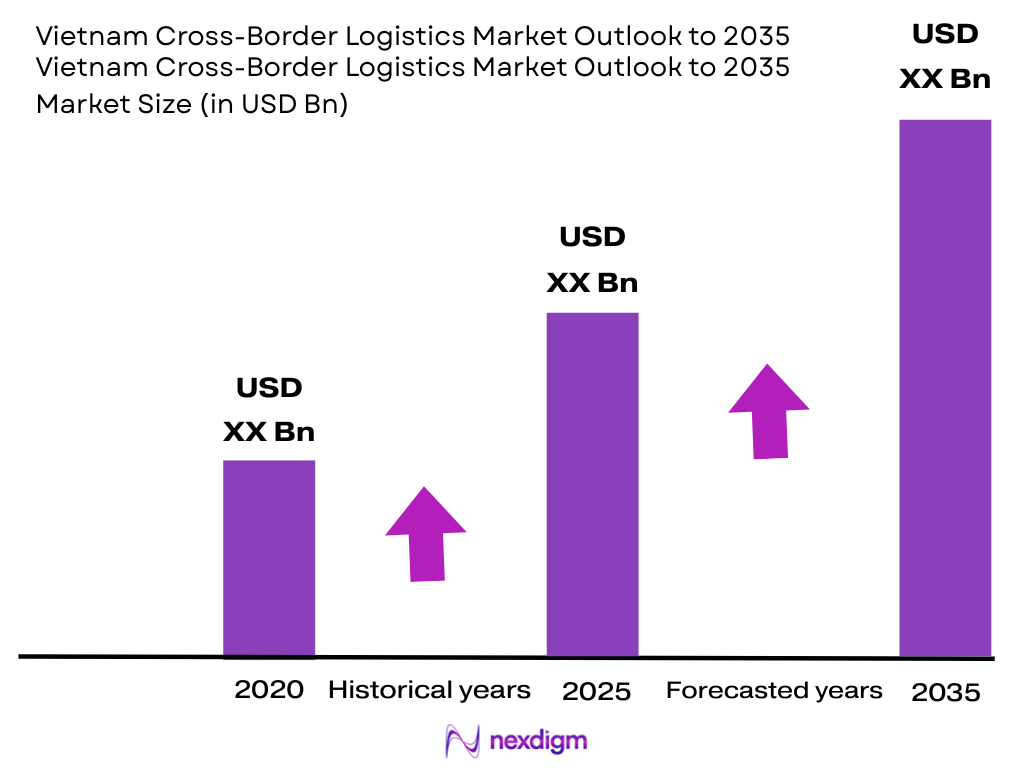
The Vietnam Cross-Border Logistics Market was valued at USD ~ Billion in 2024 and is projected to expand at a ~% CAGR during 2026–2035. The market is driven by Vietnam’s export-oriented manufacturing economy, expanding cross-border trade with China and ASEAN countries, and rising foreign direct investment in industrial production. Vietnam recorded USD 405.5 billion in merchandise exports and USD 380.8 billion in merchandise imports, while total foreign direct investment disbursement reached USD 25.35 billion, supporting increasing demand for international freight forwarding, customs brokerage, warehousing, and multimodal transportation services.
Market Segmentation
By Mode of Transportation
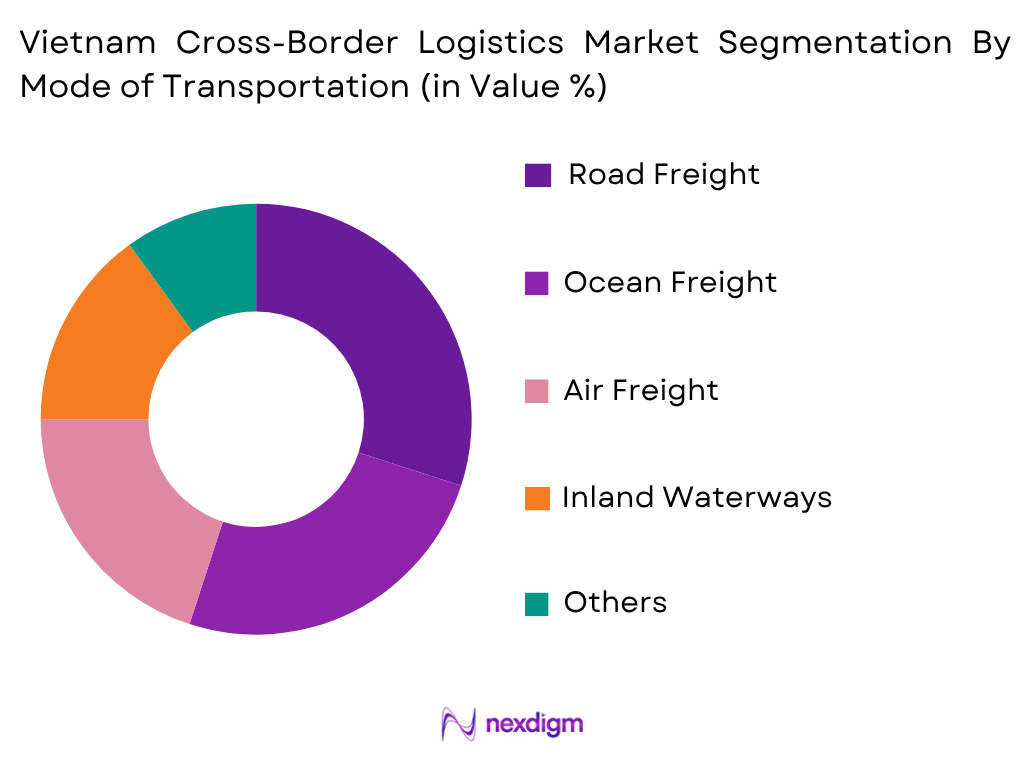
The Vietnam Cross-Border Logistics Market is segmented by mode of transportation into Road Freight, Rail Freight, Inland Waterways, Air Freight, Ocean Freight, and Multimodal Transportation. Road freight continues to dominate the market due to its extensive connectivity between industrial parks, manufacturing facilities, border gates, seaports, and inland logistics centers. Most cross-border cargo moving between Vietnam and China relies on trucking because it provides flexible scheduling, shorter transit times, and direct access to manufacturing facilities throughout northern Vietnam. Road transportation is particularly important for electronics, garments, machinery, agricultural products, and consumer goods requiring fast customs clearance and efficient regional distribution. Logistics providers continue investing in modern truck fleets, GPS-based fleet management systems, customs documentation software, and integrated transportation management platforms to improve operational efficiency. Although ocean freight remains essential for long-distance international exports and rail transportation is gradually expanding under regional connectivity initiatives, road freight remains the dominant transportation mode because of its operational flexibility and strong integration with Vietnam’s export-oriented manufacturing sector.
By End-User Industry
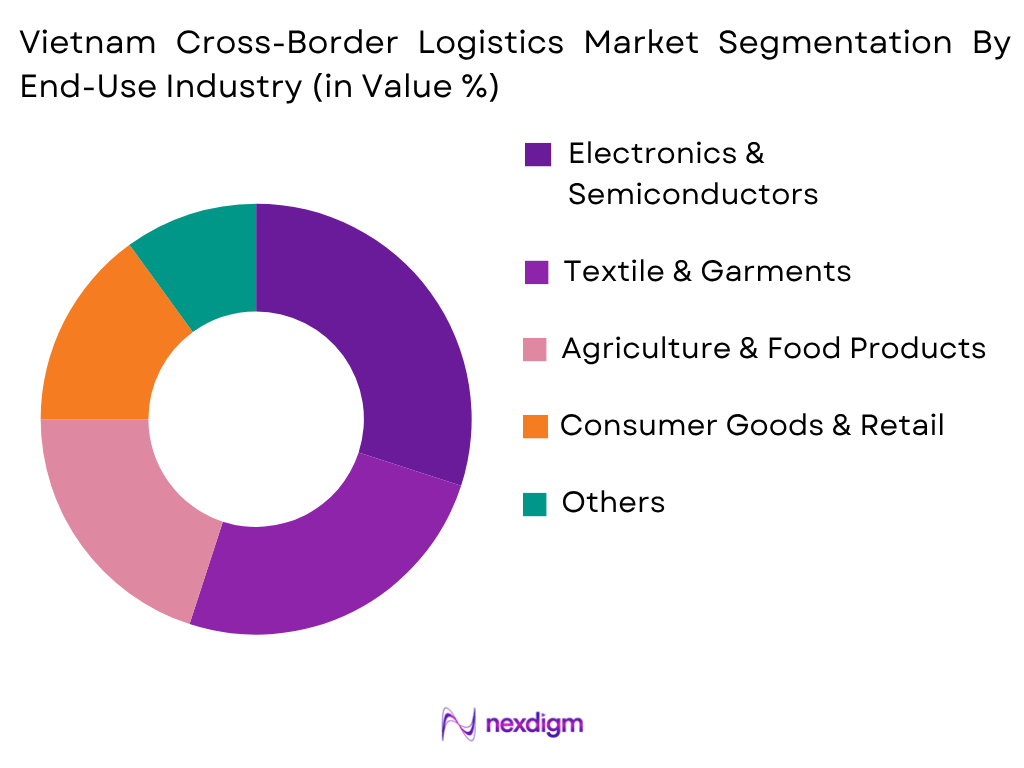
The Vietnam Cross-Border Logistics Market is segmented by end-use industry into Electronics & Semiconductors, Textile & Garments, Agriculture & Food Products, Automotive Components, Consumer Goods & Retail, Pharmaceuticals & Healthcare, Industrial Machinery, and Chemicals. Electronics and semiconductor manufacturing represents the dominant end-use segment because Vietnam has become one of Asia’s leading export manufacturing destinations for smartphones, electronic components, computers, and consumer electronics. Global manufacturers have established large-scale production facilities throughout northern Vietnam, generating substantial demand for international inbound raw material transportation and outbound export logistics. These supply chains require highly reliable customs brokerage, multimodal freight services, warehousing, cross-docking, and time-sensitive transportation solutions to maintain production schedules. Continuous investment in industrial parks, export processing zones, and logistics infrastructure has further strengthened this segment’s position. While textile exports, agricultural commodities, and consumer goods also generate significant logistics demand, electronics manufacturing remains the largest contributor because of higher shipment frequency, integrated regional supply chains, and increasing foreign direct investment in high-value manufacturing industries.
Competitive Landscape
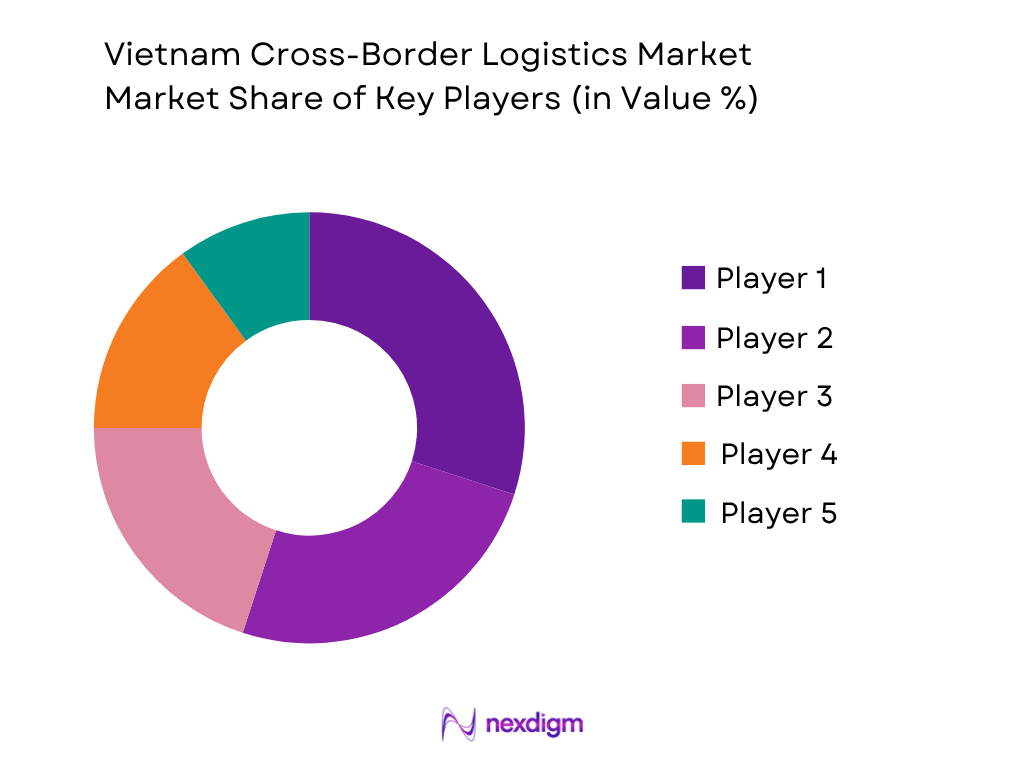
The Vietnam Cross-Border Logistics Market is characterized by competition among domestic logistics providers, global freight forwarders, integrated supply chain companies, customs brokers, and multimodal transportation operators. Leading companies compete through border network coverage, warehousing capacity, customs expertise, multimodal transportation services, digital freight platforms, and integrated supply chain solutions. Increasing investments in warehouse automation, transportation visibility platforms, and cross-border fulfillment infrastructure continue strengthening competition across Vietnam’s logistics industry.
| Company | Established | Headquarters | Primary Service | Cross-Border Network | Customs Brokerage | Digital Visibility Platform | Sustainability capability | Certifications & Complainces |
| Gemadept Corporation | 1990 | ~ | ~ | ~ | ~ | ~ | ~ | ~ |
| ITL Corporation | 2000 | ~ | ~ | ~ | ~ | ~ | ~ | ~ |
| DHL Supply Chain Vietnam | 1969 | ~ | ~ | ~ | ~ | ~ | ~ | ~ |
| Transimex Corporation | 1983 | ~ | ~ | ~ | ~ | ~ | ~ | ~ |
| Bee Logistics Corporation | 2004 | ~ | ~ | ~ | ~ | ~ | ~ | ~ |
Vietnam Cross-Border Logistics Market Analysis
Growth Drivers
Expansion of Export-Oriented Manufacturing and Foreign Direct Investment
Vietnam’s position as one of Asia’s leading export manufacturing hubs continues to drive demand for cross-border logistics services. According to the General Statistics Office (GSO) of Vietnam, merchandise exports reached USD 405.53 billion in 2024, while imports totaled USD 380.76 billion, resulting in sustained movement of intermediate goods and finished products through road, maritime, rail, and air logistics networks. The Ministry of Planning and Investment (MPI) reported that realized foreign direct investment reached USD 25.35 billion during 2024, reflecting continued investment in electronics, machinery, textiles, automotive components, and industrial manufacturing. The World Bank reported Vietnam’s GDP reached approximately USD 476.3 billion in 2024, while the IMF estimated GDP per capita exceeded USD 4,700, indicating expanding industrial output and purchasing power. Major manufacturing provinces including Bac Ninh, Bac Giang, Hai Phong, Dong Nai, and Binh Duong continue attracting export-oriented industries that require integrated freight forwarding, customs brokerage, multimodal transportation, bonded warehousing, and cross-border distribution services. The rapid expansion of industrial parks and export processing zones has significantly increased demand for efficient logistics solutions connecting Vietnam with China, Laos, Cambodia, ASEAN member countries, and global maritime trade routes.
Growth in Regional Trade Agreements and Cross-Border Commerce
Vietnam’s participation in multiple regional and international trade agreements has substantially strengthened cross-border logistics demand by increasing merchandise flows throughout Asia-Pacific. According to the General Department of Vietnam Customs, Vietnam’s total import-export turnover reached USD 786.29 billion during 2024, demonstrating the country’s growing dependence on international trade. The World Bank reported that goods and services exports represented one of the largest contributors to Vietnam’s economic activity, supported by extensive manufacturing integration across regional supply chains. Vietnam continues benefiting from trade under agreements including RCEP, CPTPP, EVFTA, and ASEAN Free Trade Area, encouraging greater movement of industrial goods, agricultural products, electronics, and consumer merchandise across international borders. The Asian Development Bank (ADB) noted continued investment in transport connectivity, logistics infrastructure, and border trade facilitation throughout the Greater Mekong Subregion. Border crossings with China through Lang Son, Lao Cai, and Mong Cai remain strategically important for electronics, agricultural exports, and industrial supply chains. Growing trade volumes require expanded customs brokerage, transportation management, cross-border warehousing, freight forwarding, and digital logistics solutions capable of supporting increasingly complex regional trade operations.
Market Challenges
Border Congestion and Logistics Infrastructure Constraints
Border congestion and infrastructure limitations remain major operational challenges for Vietnam’s cross-border logistics industry. Vietnam’s land trade with China is concentrated through major border gates such as Huu Nghi, Tan Thanh, Mong Cai, and Lao Cai, where increasing freight volumes frequently create customs clearance delays during peak trading periods. According to the General Department of Vietnam Customs, total merchandise trade exceeded USD 786.29 billion during 2024, placing sustained pressure on border processing facilities, inland transportation networks, and customs administration systems. The World Bank reported Vietnam’s population exceeded 101 million, while rapid industrialization continues increasing freight demand across northern logistics corridors. Road freight remains the dominant transportation mode for trade with China, resulting in heavy utilization of highways connecting industrial provinces with border checkpoints. Limited multimodal integration between road, rail, inland waterways, and maritime transportation further increases logistics complexity for exporters and importers. These operational constraints contribute to longer shipment transit times, increased warehousing requirements, inventory management challenges, and reduced transportation efficiency, encouraging continued investment in logistics infrastructure, border modernization, and digital customs processing systems.
Complex Customs Procedures and Cross-Border Regulatory Compliance
Cross-border logistics providers in Vietnam face significant challenges arising from customs documentation requirements, regulatory compliance obligations, and differing import-export procedures across neighboring countries. International shipments frequently require extensive customs declarations, certificates of origin, product-specific permits, sanitary inspections, and regulatory approvals depending on commodity classification and destination market. According to the General Department of Vietnam Customs, Vietnam processed merchandise trade worth USD 786.29 billion during 2024, illustrating the substantial administrative workload associated with customs management. The World Bank reported Vietnam’s economy generated approximately USD 476.3 billion in GDP during 2024, reflecting increasing industrial production requiring efficient international logistics services. Exporters operating in sectors such as electronics, textiles, agricultural products, seafood, pharmaceuticals, and chemicals must comply with multiple domestic and international trade regulations simultaneously. Differences in customs procedures between Vietnam and neighboring countries increase administrative complexity for logistics providers managing multimodal shipments across ASEAN and China. Consequently, companies continue investing in customs brokerage expertise, electronic documentation platforms, trade compliance software, and integrated logistics management systems to improve operational efficiency and reduce shipment delays.
Market Opportunities
Digital Customs Modernization and Smart Logistics Technologies
The modernization of customs administration and increasing adoption of digital logistics technologies present significant opportunities for Vietnam’s cross-border logistics market. Vietnam continues expanding electronic customs processing through the National Single Window and participation in the ASEAN Single Window, enabling faster document processing and greater trade facilitation. According to the General Department of Vietnam Customs, international merchandise trade reached USD 786.29 billion during 2024, creating substantial demand for digital customs management and automated trade documentation systems. The World Bank reported Vietnam’s digital economy continues expanding alongside broader economic growth, encouraging logistics providers to invest in cloud-based transportation management systems, artificial intelligence, IoT-enabled fleet monitoring, blockchain-supported trade documentation, and predictive route optimization. Increasing cargo volumes require real-time shipment visibility, automated customs declarations, warehouse management systems, and integrated supply chain platforms capable of improving freight efficiency while reducing administrative burden. These technological developments provide logistics providers with opportunities to improve service quality, enhance customs compliance, optimize transportation operations, and strengthen competitiveness within regional cross-border trade networks.
Expansion of Industrial Parks and Cross-Border Logistics Infrastructure
The continued expansion of industrial parks, export processing zones, logistics centers, and border infrastructure provides substantial opportunities for Vietnam’s cross-border logistics market. According to the Ministry of Planning and Investment, realized foreign direct investment reached USD 25.35 billion during 2024, with a significant share directed toward export-oriented manufacturing industries requiring integrated logistics services. The General Statistics Office reported merchandise exports totaling USD 405.53 billion, reinforcing demand for warehousing, freight forwarding, customs brokerage, multimodal transportation, and cross-border distribution facilities. Major industrial regions including Bac Ninh, Hai Phong, Quang Ninh, Dong Nai, Long An, and Binh Duong continue expanding manufacturing capacity, increasing freight movement across land borders and maritime gateways. Simultaneously, investments in expressways, logistics centers, inland container depots, and international border gates improve transportation connectivity between Vietnam and neighboring countries. These infrastructure developments enable logistics companies to establish strategically located warehouses, cross-docking facilities, bonded logistics parks, and fulfillment centers supporting higher trade volumes while improving delivery speed and operational efficiency across regional supply chains.
Future Outlook
The Vietnam Cross-Border Logistics Market is expected to experience sustained expansion over the coming years, supported by continued growth in export-oriented manufacturing, increasing regional trade integration, and rising investments in transportation infrastructure. The implementation of regional free trade agreements, expansion of industrial parks, modernization of customs procedures, and increasing adoption of digital logistics technologies will further strengthen cross-border freight movement. Investments in multimodal transportation, smart warehousing, and cross-border fulfillment centers are expected to improve logistics efficiency while supporting Vietnam’s growing role as a regional manufacturing and export hub.
Major Players
- DHL Supply Chain Vietnam
- Gemadept Corporation
- Sotrans Group
- Transimex Corporation
- Bee Logistics Corporation
- ITL Corporation (Indo Trans Logistics)
- Nippon Express Vietnam
- Kuehne + Nagel Vietnam
- DSV Vietnam
- DB Schenker Vietnam
- Maersk Logistics Vietnam
- CJ Logistics Vietnam
- FedEx Vietnam
- UPS Vietnam
- Yusen Logistics Vietnam
Key Target Audience
- Export-Oriented Manufacturing Companies
- Electronics & Semiconductor Manufacturers
- Freight Forwarding Companies
- Third-Party Logistics (3PL) Providers
- Importers and Exporters
- Investment and Venture Capitalist Firms
- Government and Regulatory Bodies (General Department of Vietnam Customs, Ministry of Industry and Trade, Ministry of Transport, Vietnam Maritime Administration)
- E-commerce and Retail Companies
Research Methodology
Step 1: Identification of Key Variables
The initial stage involves mapping the complete ecosystem of the Vietnam Cross-Border Logistics Market, including exporters, importers, freight forwarders, customs brokers, logistics providers, warehousing operators, transportation companies, and border authorities. Comprehensive secondary research using government databases, customs statistics, trade reports, transportation publications, and proprietary industry sources is conducted to identify the variables influencing market performance and trade activity.
Step 2: Market Analysis and Construction
Historical trade statistics, freight movement, transportation mode utilization, customs processing, warehousing activity, and industrial production data are analyzed to construct the market framework. Both bottom-up and top-down methodologies are employed to estimate revenue generation, logistics service penetration, shipment flows, and infrastructure utilization across major trade corridors while ensuring consistency and accuracy of market estimates.
Step 3: Hypothesis Validation and Expert Consultation
The research hypotheses are validated through computer-assisted telephone interviews (CATIs) and direct consultations with logistics companies, customs brokers, freight forwarders, exporters, transportation providers, and warehouse operators. These interviews provide operational insights into freight demand, border clearance efficiency, supply chain challenges, infrastructure constraints, digital logistics adoption, and evolving customer requirements to strengthen the accuracy of the market assessment.
Step 4: Research Synthesis and Final Output
The final stage combines quantitative market analysis with qualitative industry feedback to produce a comprehensive assessment of the Vietnam Cross-Border Logistics Market. Forecast assumptions incorporate macroeconomic indicators, trade policy developments, infrastructure expansion, regional manufacturing growth, customs modernization, and logistics technology adoption. Multiple validation procedures are performed to ensure that the final report presents reliable, consistent, and actionable market intelligence.

- Executive Summary
- Research Methodology (Market Definitions and Assumptions, Abbreviations, Market Sizing Approach, Top-Down Analysis, Bottom-Up Analysis, Demand-Side Assessment, Supply-Side Assessment, Primary Industry Interviews, Trade Flow Assessment, Freight Intelligence Analysis, Data Triangulation, Forecasting Framework, Limitations and Future Conclusions)

- Definition and Scope
- Market Evolution and Industry Genesis
- Timeline of Major Industry Developments
- Cross-Border Trade Value Chain Analysis
- Cross-Border Logistics Supply Chain Analysis (Shippers, Freight Forwarders, Customs Brokers, Carriers, Warehousing, Border Inspection Agencies, Last-Mile Operators, Technology Providers)
- Trade Corridor Ecosystem Analysis

- Growth Drivers (Expansion of Export Manufacturing, Growth in Vietnam–China Trade, Increasing Cross-Border E-commerce, Foreign Direct Investment, Free Trade Agreements, Industrial Park Expansion)
- Market Challenges (Border Congestion, Customs Documentation Complexity, Infrastructure Bottlenecks, Logistics Cost Pressures, Limited Rail Connectivity, Cross-Border Regulatory Differences)
- Market Opportunities (Nearshoring Supply Chains, Smart Customs Digitalization, Cold Chain Logistics Expansion, ASEAN Trade Integration, Cross-Border Fulfillment Centers, Green Logistics Adoption)
- Market Trends (Digital Freight Platforms, Real-Time Cargo Visibility, AI-Based Route Optimization, IoT Fleet Monitoring, Blockchain Trade Documentation, Warehouse Automation)
- Government Regulations (Vietnam Customs Law, National Single Window, ASEAN Single Window, EVFTA Trade Framework, RCEP Trade Framework, Cross-Border Road Transport Agreements)
- Trade Flow Analysis
- Border Crossing Performance Assessment
- Customs Processing Time Analysis
- Freight Capacity Analysis
- Supply-Demand Gap Assessment
- SWOT Analysis
- Porter’s Five Forces Analysis
- PESTLE Analysis
- Stakeholder Ecosystem
- Competition Ecosystem

- By Market Value (2020-2025)
- By Freight Volume (2020-2025)
- By Average Logistics Cost per Shipment (2020-2025)

- By Mode of Transportation (In Value %)
Road Freight
Rail Freight
Inland Waterways
Air Freight
Ocean Freight
Multimodal Transportation - By Cross-Border Trade Corridor (In Value %)
Vietnam–China
Vietnam–Laos
Vietnam–Cambodia
ASEAN Cross-Border Trade
International Ocean Trade - By Service Type (In Value %)
Freight Forwarding
Customs Brokerage
Transportation Management
Cross-Border Warehousing
Third-Party Logistics (3PL)
Fourth-Party Logistics (4PL)
Express Parcel & Courier
Reverse Logistics - By End-Use Industry (In Value %)
Electronics & Semiconductors
Textile & Garments
Agriculture & Food Products
Automotive Components
Consumer Goods & Retail
Pharmaceuticals & Healthcare
Industrial Machinery
Chemicals - By Region (In Value %)
Northern Vietnam
Red River Delta
Central Vietnam
Southeast Vietnam
Mekong Delta

- Market Share of Major Players (By Revenue, Freight Volume, Transportation Mode, Cross-Border Corridor)
- Cross Comparison Parameters (Cross-Border Network Coverage, Customs Brokerage Capability, Warehousing Capacity, Border Gate Presence, Fleet Strength, Digital Freight Visibility Platform, Cold Chain Logistics Capability, ASEAN Trade Expertise)
- SWOT Analysis of Major Players
- Pricing Analysis (By Shipment Type, Transportation Mode and Trade Corridor)
- Fleet and Warehouse Capacity Benchmarking
- Strategic Partnerships, Mergers & Acquisitions
- Detailed Profiles of Major Companies
DHL Supply Chain Vietnam
Gemadept Corporation
Sotrans Group
Transimex Corporation
Bee Logistics Corporation
ITL Corporation (Indo Trans Logistics)
Nippon Express Vietnam
Kuehne + Nagel Vietnam
DSV Vietnam
DB Schenker Vietnam
Maersk Logistics Vietnam
CJ Logistics Vietnam
FedEx Vietnam
UPS Vietnam
Yusen Logistics Vietnam

- Cross-Border Freight Demand Assessment
- Exporter and Importer Behavior Analysis
- Transportation Mode Preference Analysis
- Logistics Cost Allocation Assessment
- Customs Compliance Requirements
- Inventory and Warehouse Strategy Analysis
- Supply Chain Pain Point Analysis (Border Delays, Documentation Burden, Transit Time, Inventory Costs, Capacity Availability)
- Vendor Selection Criteria
- Purchase Decision-Making Process
- Digital Logistics Platform Adoption

- By Market Value (2026-2035)
- By Freight Volume (2026-2035)
- By Average Logistics Cost per Shipment (2026-2035)


 Request a Sample
 Ask for Customization
 Get a Quote
 Enquire Now