

 Download PDF
Market Overview
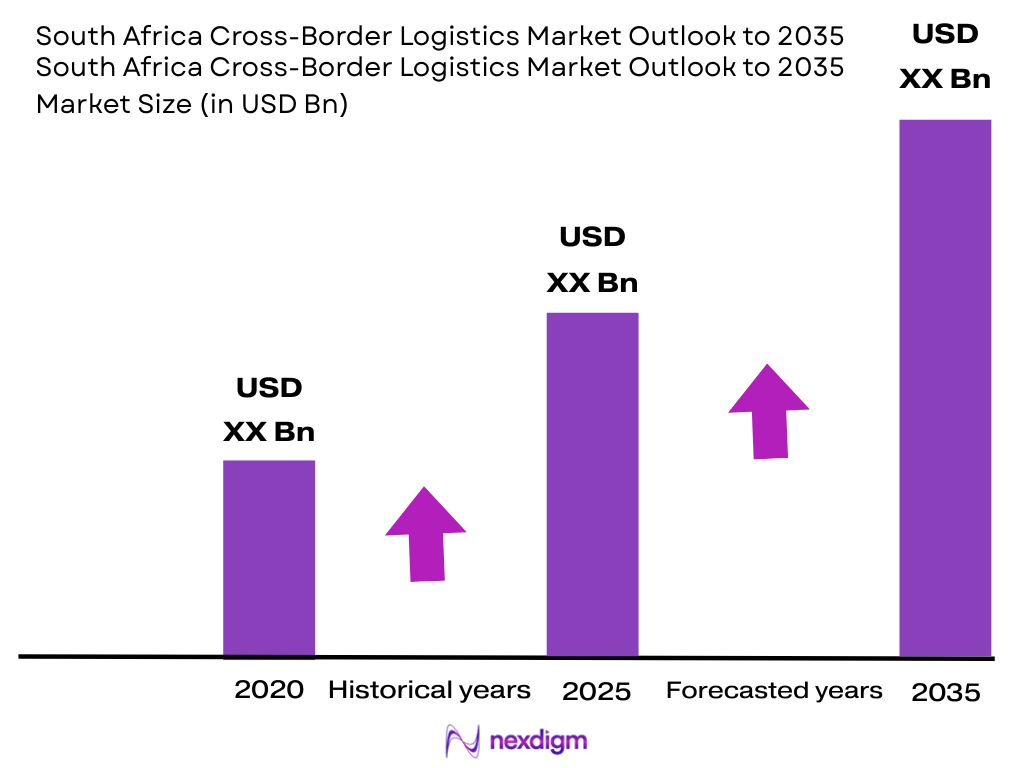
The South Africa Cross Border Logistics Market was valued at approximately USD ~ Billion in 2025 and is anticipated to expand to approximately USD ~ Billion in 2026 and approximately USD ~ Billion by 2031, reflecting a compound annual growth rate of approximately 4.17% during 2026-2031. The market continues to be shaped by South Africa’s role as the primary logistics gateway for landlocked Southern African Development Community (SADC) nations, which dominated approximately 55.61% of market volumes in 2025, driven substantially by Zambian copper and Zimbabwean chrome trucked through the Beitbridge border post. In July 2025, two significant developments reshaped the market’s operating environment: the modernization of the Beitbridge border post, which became operational 24 hours a day for tourism and passenger traffic and 12 hours a day for commercial goods, and the launch of the African Continental Free Trade Area (AfCFTA) digital customs platform. The South African Revenue Service’s November 2025 automation of AfCFTA certificate-of-origin processing further reduced customs clearance times for qualifying parcels to under 12 hours, directly minimizing cold-chain risk for temperature-sensitive cross-border shipments.
Market Segmentation
By Service Type
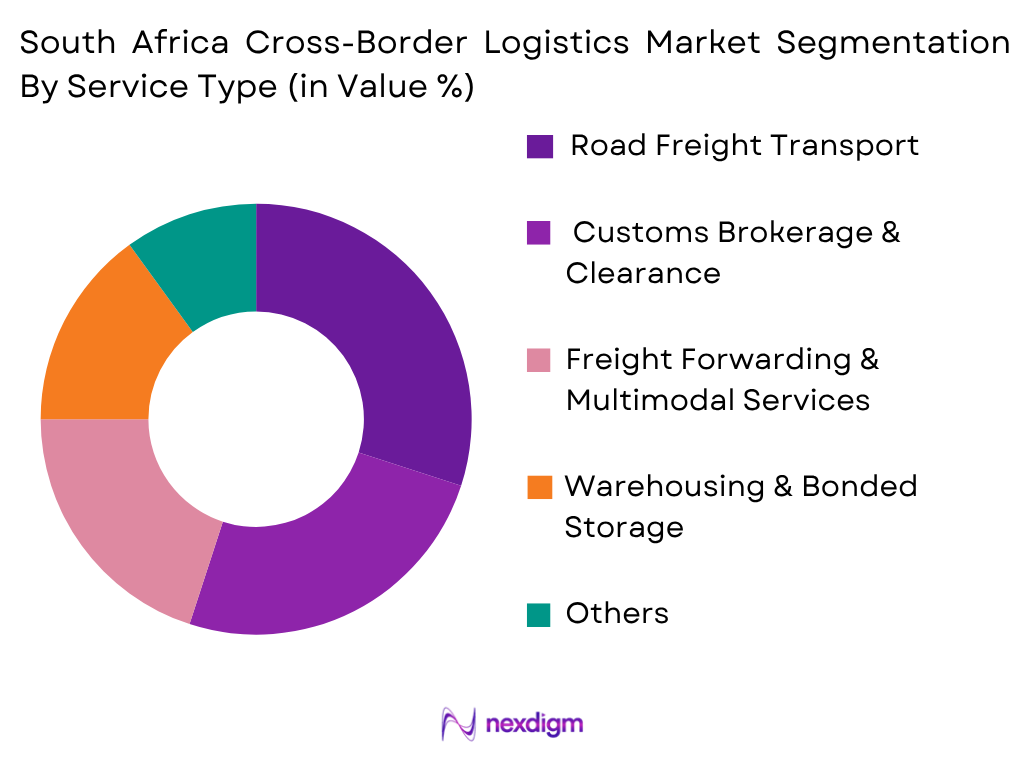
Road Freight Transport dominates the South Africa Cross Border Logistics Market, reinforced by continued diversion of mining commodity traffic from rail to road as Transnet continues to struggle with cable theft and locomotive shortages, compelling miners to truck chrome, copper, and platinum-group metals across SADC borders rather than rely on rail alternatives. Customs Brokerage & Clearance represents an increasingly critical service category following the South African Revenue Service’s November 2025 automation of AfCFTA certificate-of-origin processing, which reduced customs clearance times for qualifying parcels to under 12 hours, minimizing cold-chain risk for temperature-sensitive shipments. DSV South Africa has positioned integrated cross-border customs brokerage as a core capability to sustain throughput across the Beitbridge corridor, reflecting the growing importance of digital documentation expertise as a competitive differentiator. Freight Forwarding & Multimodal Services continue to expand as operators increasingly unbundle vehicle ownership from logistics management to access flexible, modular capacity pools capable of responding to shifting corridor demand and infrastructure conditions.
By Cargo Type
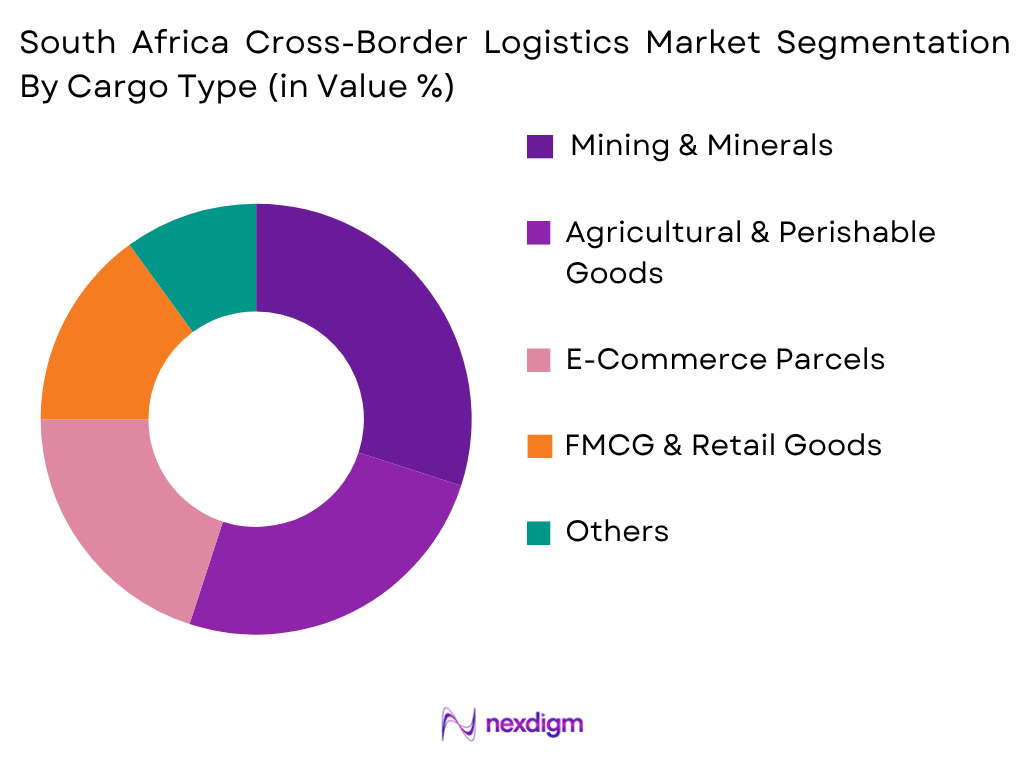
Mining & Minerals cargo, encompassing Zambian copper, Zimbabwean chrome, and platinum-group metals, represents the largest cargo category in the South Africa Cross Border Logistics Market, with SADC landlocked nations accounting for approximately 55.61% of market size in 2025 substantially due to this mineral traffic moving through Beitbridge. Non-temperature-controlled freight will remain dominant through 2031 given its central role in transporting mining and construction cargo, though its growth is expected to slow as demand for temperature-controlled logistics rises to meet tightening regulatory standards and ensure product integrity for perishable exports. Agricultural & Perishable Goods represent a fast-growing cargo category, with infrastructure upgrades such as the Kazungula one-stop border post reducing dwell times to under four hours, enabling South African exporters to reach Lusaka and Harare within 48 hours of harvest and supporting premium pricing for time-sensitive produce. E-Commerce Parcels and FMCG & Retail Goods continue to expand as distributors increasingly embed next-day cross-border delivery promises into their service offerings, reflecting the broader digitalization of regional trade.
Competitive Landscape
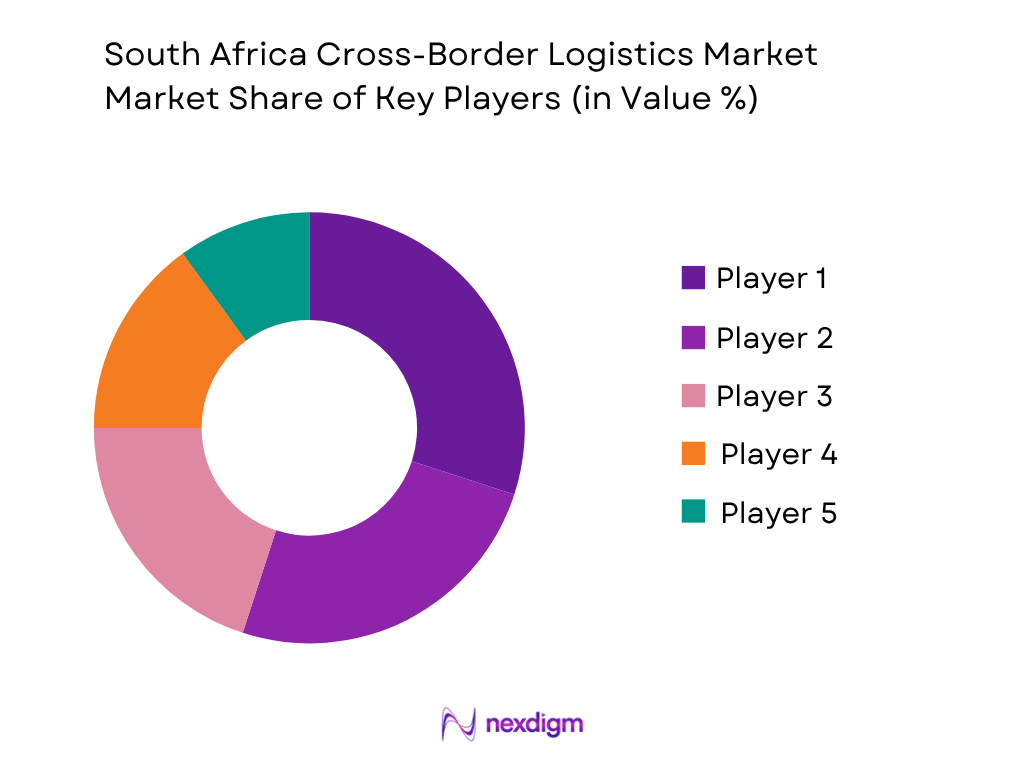
The South Africa Cross Border Logistics Market remains largely dominated by unorganized players, particularly in road transport, given the sector’s comparatively low entry barriers and cost competitiveness relative to formalized freight operators. DSV South Africa leverages integrated cross-border customs brokerage to sustain throughput across the Beitbridge corridor, benefiting from parent company DSV’s global scale following its approximately USD 15.95 billion acquisition of DB Schenker, which included an announced EUR 1 billion domestic German investment earmarked for digitization and warehouse automation that is expected to extend to African operations over time. Imperial Logistics, now operating under DHL Group ownership, Bidvest Group, Barloworld Logistics, and Value Logistics maintain substantial cross-border road freight and customs brokerage capability serving South Africa’s major SADC corridors. Modular fleet configuration continues to harden as the dominant procurement pattern among major shippers, with buyers increasingly unbundling vehicle ownership from logistics management to access flexible capacity pools, while customs documentation expertise concentrates among a shrinking pool of accredited agents, creating a structural advantage for larger, technology-enabled operators capable of maintaining compliant brokerage capacity at bottleneck posts including Beitbridge and Kazungula.
| Company | Established | Headquarters | Primary Service | Cross-Border Network | Customs Brokerage | Digital Visibility Platform | Sustainability capability | Certifications & Complainces |
| DSV South Africa (DSV A/S) | 1976 | ~ | ~ | ~ | ~ | ~ | ~ | ~ |
| Imperial Logistics (DHL Group) | 1975 | ~ | ~ | ~ | ~ | ~ | ~ | ~ |
| Bidvest Group Limited | 1988 | ~ | ~ | ~ | ~ | ~ | ~ | ~ |
| Barloworld Logistics | 1902 | ~ | ~ | ~ | ~ | ~ | ~ | ~ |
| Value Logistics Limited | 1996 | ~ | ~ | ~ | ~ | ~ | ~ | ~ |
South Africa Cross-Border Logistics Market Analysis
Growth Drivers
AfCFTA Digital Customs Modernization and SARS Automation
The South Africa cross-border logistics market is experiencing sustained growth due to accelerating digital customs modernization under the African Continental Free Trade Area framework, which entered its operational phase in 2021 and continues to reshape SADC trucking through simplified customs procedures and mutual recognition of standards. The South African Revenue Service’s November 2025 automation of AfCFTA certificate-of-origin processing reduced customs clearance times for qualifying parcels to under 12 hours, directly minimizing cold-chain risk and improving transit reliability for cross-border shippers. In July 2025, the launch of the AfCFTA digital customs platform, alongside modernization of the Beitbridge border post to operate 24 hours a day for tourism and passenger traffic and 12 hours a day for commercial goods, marked a significant structural shift in the market’s operating environment, with Beitbridge now handling an average of more than 300 trucks per day. A 2023 Single Customs Territory pilot demonstrated the tangible benefits of this digital modernization trajectory, facilitating an approximately 15% reduction in cross-border transit time for shipments bound for Zambia and Botswana, reinforcing continued investment in digital customs infrastructure across the region.
Mining Commodity Diversion to Road Freight Amid Rail Underperformance
Continued underperformance of Transnet’s rail network, driven by persistent cable theft and locomotive shortages, continues to divert substantial mining commodity volumes from rail to road freight, directly benefiting the South Africa cross-border logistics market. SADC landlocked nations accounted for approximately 55.61% of market size in 2025, driven largely by Zambian copper and Zimbabwean chrome trucked via Beitbridge, as miners increasingly favor road transport’s reliability over rail alternatives affected by chronic infrastructure and security challenges. This structural shift toward road-based mineral logistics continues to support demand for cross-border trucking capacity even as the market simultaneously navigates persistent border congestion challenges. As mining companies continue prioritizing supply chain reliability over marginal cost savings associated with rail transport, sustained diversion toward road freight is expected to continue supporting cross-border logistics demand across South Africa’s primary mineral export corridors throughout the forecast period.
Market Challenges
Chronic Border Congestion Despite Modernization Investment
Despite significant modernization investment, the South Africa cross-border logistics market continues to face chronic border congestion that imposes substantial economic costs on shippers and the broader economy. Beitbridge processes more than 14,500 tonnes of freight per day, yet continues to produce queues in which the worst five percent of northbound crossings take approximately 57 hours, with total congestion costs estimated at up to R16 billion annually for the South African economy. While South Africa’s Border Management Authority is planning an approximately R12.5 billion public-private partnership to modernize six major land ports, including Beitbridge and Lebombo, construction is expected to begin only in late 2026, with operations scheduled around 2030, leaving the market to navigate persistent congestion for several more years before comprehensive infrastructure relief materializes. Industry analysis has noted that these congestion costs do not remain flat but compound over time and change shipper behavior permanently, with exporters of perishable goods potentially abandoning affected trade routes, logistics companies being forced to invest in larger truck fleets simply to compensate for idle time, and manufacturers increasingly choosing neighboring countries for regional distribution rather than routing through congested South African corridors.
Customs Brokerage Talent Scarcity and Fragmented Operator Base
The South Africa cross-border logistics market faces a growing structural challenge as cross-border documentation expertise concentrates among a shrinking pool of accredited customs brokerage agents, creating bottlenecks at Beitbridge and Kazungula posts even as digital customs platforms continue to mature. This talent scarcity disproportionately affects smaller, unorganized operators, who continue to dominate the South African road transport and small-scale warehousing market given comparatively low entry barriers and cost competitiveness, but who often lack the specialized documentation expertise required to navigate AfCFTA rules-of-origin certification and other evolving digital compliance requirements efficiently. Legacy fleet integration presents a parallel challenge, as older vehicles lacking GPS and electronic logging device compatibility face exclusion from major shippers’ preferred-carrier programs, forcing premature fleet retirement decisions among smaller operators unable to fund technology upgrades. This combination of concentrated brokerage expertise and fragmented operator technology adoption continues to create a widening capability gap between large, technology-enabled logistics providers and the long tail of smaller cross-border operators.
Market Opportunities
Border Management Authority PPP Infrastructure Investment
South Africa’s Border Management Authority’s planned approximately R12.5 billion public-private partnership to modernize six major land ports, including Beitbridge and Lebombo, creates substantial long-term opportunity for logistics operators, infrastructure investors, and technology providers positioned to participate in this infrastructure transformation. The Kazungula one-stop border post model, which has already reduced dwell times to under four hours and enabled South African exporters to reach Lusaka and Harare within 48 hours of harvest, provides a proven template for the type of efficiency gains achievable through concession-based border modernization. Industry stakeholders have specifically noted that comparable crossings under concession models have achieved dwell time reductions from three days to four hours, demonstrating the scale of opportunity available as South Africa proceeds with its broader six-port modernization program. Logistics operators and technology providers that establish early relationships with the Border Management Authority and position themselves for participation in this PPP framework are well positioned to capture preferential access as construction begins in late 2026 and operations come online around 2030.
Cold Chain and Temperature-Controlled Corridor Growth
Rising demand for temperature-controlled cross-border logistics creates substantial opportunity for operators capable of providing validated cold-chain capability across South Africa’s SADC export corridors. Infrastructure upgrades such as the Kazungula one-stop border post, which has reduced dwell times to under four hours, directly support premium pricing for time-sensitive agricultural exports by enabling South African exporters to reach regional markets within 48 hours of harvest, a critical threshold for perishable product integrity. While non-temperature-controlled freight will remain dominant through 2031 given its central role in mining and construction cargo, temperature-controlled logistics demand is rising specifically to meet tightening regulatory standards and ensure product integrity for perishable exports, creating a structurally growing premium segment within the broader market. Operators that can combine validated cold-chain capability with reliable, fast-clearing corridor access are increasingly well positioned to capture premium contract positioning from agricultural exporters and FMCG distributors seeking to reduce spoilage risk and meet tightening quality standards across SADC export markets.
Future Outlook
The South Africa Cross Border Logistics Market is expected to witness steady expansion over the forecast period, supported by continued AfCFTA-driven digital customs modernization, sustained diversion of mining commodity traffic from rail to road, and gradual infrastructure relief as the Border Management Authority’s six-port modernization program progresses toward operations around 2030. Continued investment in telematics, digital customs compliance capability, and cold-chain corridor infrastructure will further shape competitive positioning across the industry’s currently fragmented structure. The market’s growth trajectory will remain closely tied to the pace of border infrastructure investment and the broader region’s success in addressing chronic congestion at critical crossings such as Beitbridge, even as competing corridors such as the Lobito Corridor create longer-term competitive pressure by diverting Central African mineral traffic away from South Africa’s traditional southern routes.
Major Players
- DSV South Africa (DSV A/S)
- Imperial Logistics (DHL Group)
- Bidvest Group Limited
- Barloworld Logistics
- Value Logistics Limited
- Unitrans (KAP Industrial Holdings)
- Super Group Limited
- RTT Group
- Transnet SOC Ltd.
- CFR Freight Group
- Röhlig-Grindrod (Pty) Ltd.
- Bollore Logistics South Africa
- Kuehne+Nagel South Africa
- Massmart Distribution
- Digistics (Pty) Ltd.
Key Target Audience
- Cross-Border Logistics & Freight Forwarding Companies
- Mining & Minerals Companies
- Agricultural Exporters & Perishable Goods Producers
- FMCG & Retail Distributors
- E-Commerce Platforms
- Investment and Venture Capitalist Firms
- Government and Regulatory Bodies (Border Management Authority (BMA), South African Revenue Service (SARS), Cross-Border Road Transport Agency (CBRTA))
- Customs Brokerage Agents and Freight Technology Providers
Research Methodology
Step 1: Identification of Key Variables
The research process begins with identifying the complete ecosystem of the South Africa Cross Border Logistics Market, including freight carriers, customs brokerage agents, freight forwarders, warehousing operators, shippers, and regulatory authorities. Extensive secondary research is conducted using company annual reports, government publications, trade associations, customs statistics, industry journals, and proprietary databases to determine the variables influencing market demand, pricing, freight volumes, and infrastructure developments.
Step 2: Market Analysis and Construction
Historical market information is collected and analyzed to estimate market size, freight volumes, corridor-wise transit activity, cargo-type demand, and pricing trends. A combination of top-down and bottom-up approaches is used to estimate market revenues and validate segment-level performance. Consumption patterns across mining, agriculture, FMCG, and e-commerce cargo categories are evaluated to establish an accurate representation of the industry.
Step 3: Hypothesis Validation and Expert Consultation
The preliminary findings are validated through Computer-Assisted Telephone Interviews (CATIs) and structured discussions with cross-border freight operators, customs brokerage specialists, procurement and logistics managers, regulatory experts, and senior executives operating within the South African and broader SADC logistics industry. These interviews help verify market assumptions, competitive developments, technology adoption trends, pricing dynamics, and future investment opportunities while refining the overall market estimates.
Step 4: Research Synthesis and Final Output
The final stage integrates insights obtained from primary interviews with quantitative information collected through secondary sources. Data triangulation techniques are applied to reconcile differences between supply-side and demand-side estimates, ensuring robust market forecasting. The report is then reviewed through multiple quality assurance checkpoints to deliver a comprehensive analysis covering market size, segmentation, competitive landscape, future outlook, and strategic recommendations for industry stakeholders.

- Executive Summary
- Research Methodology (Market Definitions and Assumptions, Abbreviations, Market Sizing Approach, Top-Down Analysis, Bottom-Up Analysis, Demand-Side Assessment, Supply-Side Assessment, Primary Industry Interviews, Trade Flow Assessment, Freight Intelligence Analysis, Data Triangulation, Forecasting Framework, Limitations and Future Conclusions)

- Definition and Scope
- Market Evolution and Industry Genesis
- Timeline of Major Industry Developments
- Cross-Border Trade Value Chain Analysis
- Cross-Border Logistics Supply Chain Analysis (Shippers, Freight Forwarders, Customs Brokers, Carriers, Warehousing, Border Inspection Agencies, Last-Mile Operators, Technology Providers)
- Trade Corridor Ecosystem Analysis

- Growth Drivers (AfCFTA Digital Customs Modernization, SARS Certificate-of-Origin Automation, Mining Commodity Diversion to Road Freight, One-Stop Border Post Expansion, Growth in E-Commerce & FMCG Cross-Border Delivery, Rising Temperature-Controlled Logistics Demand)
- Market Challenges (Chronic Border Congestion Despite Modernization, Customs Brokerage Talent Scarcity, Fragmented Unorganized Operator Base, Transnet Rail Underperformance, Legacy Fleet Technology Gaps, Regional Corridor Competition from Lobito)
- Market Opportunities (Border Management Authority PPP Infrastructure Investment, Single Customs Territory Expansion, Cold Chain & Temperature-Controlled Corridor Growth, Telematics & Cargo Visibility Technology Adoption, Modular Fleet & Capacity Pool Models, Multimodal Rail-Road Integration)
- Market Trends (Growth in Digital Customs Clearance Adoption, One-Stop Border Post Modernization, Telematics & GPS Fleet Tracking Standardization, Modular Fleet Configuration, Cold Chain Corridor Premiumization, Regional Corridor Diversification)
- Government Regulations (Border Management Authority Act Compliance, SARS Customs Modernization Programme, AfCFTA Rules of Origin Certification, SADC Regional Infrastructure Development Master Plan, Cross-Border Road Transport Agency (CBRTA) Permits, Weights & Dimensions Harmonization Standards)
- Import and Export Analysis (Trade Volume, Major Destination Markets, Corridor-Wise Freight Distribution, HS Code Analysis, Trade Balance)
- Infrastructure Availability Analysis (Border Post Capacity & Dwell Times, Road Corridor Quality, Rail Network Reliability, Bonded Warehouse Capacity, Cold Chain Storage Infrastructure)
- Technology Landscape (Digital Customs Clearance Platforms, GPS & Electronic Logging Device Integration, Telematics & Cargo Visibility Systems, AfCFTA Digital Customs Platform, Warehouse Management Systems)
- Sustainability Assessment (Fleet Emission Reduction, Modal Shift from Road to Rail Potential, Border Efficiency & Idle-Time Reduction, Renewable Energy Warehouse Integration, Regional Infrastructure Resilience)
- PESTLE Analysis
- SWOT Analysis
- Porter’s Five Forces Analysis
- Stakeholder Ecosystem
- Competition Ecosystem

- By Market Value (2020-2025)
- By Freight Volume (2020-2025)
- By Average Logistics Cost per Shipment (2020-2025)

- By Service Type (In Value %)
Road Freight Transport
Rail Freight Transport
Customs Brokerage & Clearance
Warehousing & Bonded Storage
Freight Forwarding & Multimodal Services - By Cargo Type (In Value %)
Mining & Minerals (Copper, Chrome & PGMs)
Agricultural & Perishable Goods
FMCG & Retail Goods
Industrial & Manufactured Goods
E-Commerce Parcels - By Temperature Control (In Value %)
Temperature-Controlled (Cold Chain)
Non-Temperature-Controlled - By Destination Corridor (In Value %)
North-South Corridor (Beitbridge)
Trans-Kalahari Corridor
Maputo Corridor
Kazungula & Western Corridor
Other SADC Corridors - By End User (In Value %)
Mining Companies
Agricultural Exporters
FMCG & Retail Distributors
E-Commerce Platforms
Manufacturing Companies - By Region (In Value %)
Limpopo (Beitbridge Gateway)
Gauteng (Johannesburg Hub)
KwaZulu-Natal (Durban Port)
Mpumalanga (Lebombo/Maputo Corridor)
Other Provinces

- Market Share of Major Players (By Value, Freight Volume, Service Type, Corridor, Cargo Category)
- Cross Comparison Parameters (Service Portfolio Breadth, Customs Brokerage Capability, Corridor & Border Post Access, Fleet Technology Integration, Warehousing & Bonded Storage Capacity, Regulatory Compliance & Certifications, Mining & FMCG Customer Base, Innovation & Digital Platform Adoption)
- SWOT Analysis of Major Players
- Pricing Analysis by Corridor and Cargo Type
- Fleet Capacity Analysis
- Corridor Footprint Analysis
- Distribution & Agent Network Analysis
- Innovation Benchmarking
- Detailed Profiles of Major Companies
DSV South Africa (DSV A/S)
Imperial Logistics (DHL Group)
Bidvest Group Limited
Barloworld Logistics
Value Logistics Limited
Unitrans (KAP Industrial Holdings)
Super Group Limited
RTT Group
Transnet SOC Ltd.
CFR Freight Group
Röhlig-Grindrod (Pty) Ltd.
Bollore Logistics South Africa
Kuehne+Nagel South Africa
Massmart Distribution
Digistics (Pty) Ltd.

- Consumption Pattern Analysis (Freight Volume, Shipment Frequency, Corridor Preference, Seasonal & Harvest-Driven Demand, Modal Split Activity)
- Purchasing Criteria (Transit Time Reliability, Customs Compliance Support, Cost per Shipment, Cargo Visibility & Tracking, Cold Chain Capability, Border Post Access)
- Procurement and Carrier Selection Analysis
- Digital Customs Adoption Assessment
- Mining vs FMCG Cross-Border Demand Comparison
- Service Attribute Preference Analysis (Dwell Time Performance, Documentation Accuracy, Fleet Technology Compatibility, Corridor Coverage, Real-Time Tracking, Cost Efficiency)
- Regulatory Compliance Influence on Carrier Selection
- Pain Point Analysis
- Decision-Making Process

- By Market Value (2026-2035)
- By Freight Volume (2026-2035)
- By Average Logistics Cost per Shipment (2026-2035)


 Request a Sample
 Ask for Customization
 Get a Quote
 Enquire Now