
 Download PDF
Market Overview
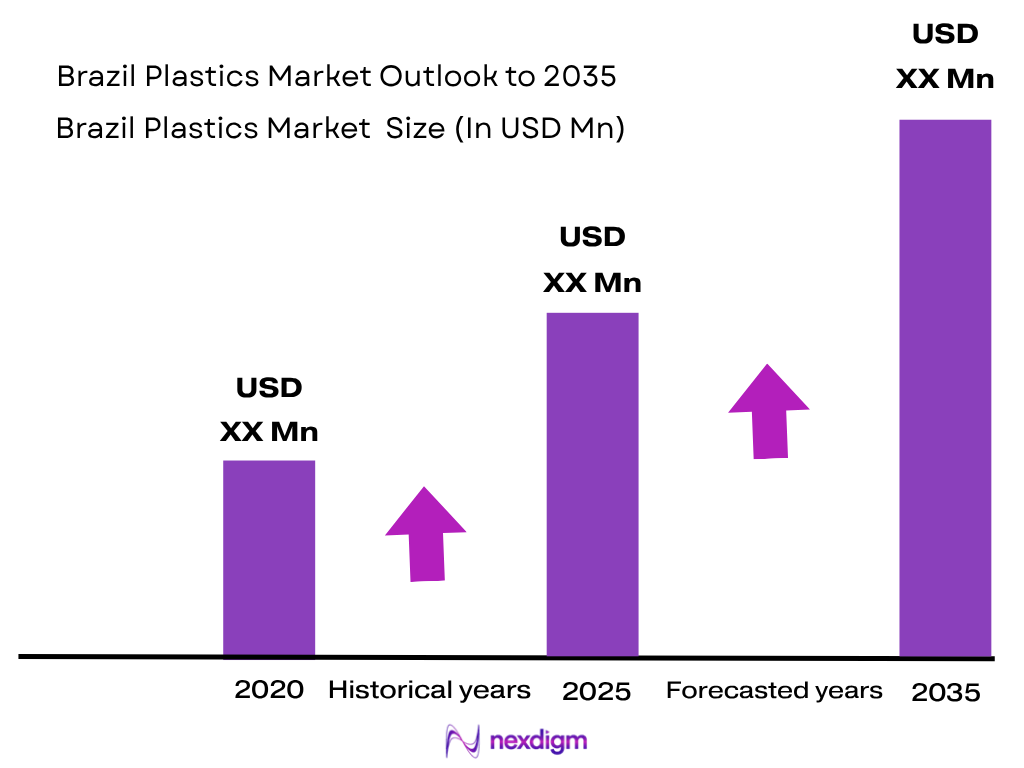
The Brazil Plastics Market represents one of Latin America’s largest plastic-conversion ecosystems. ABIPLAST reports processed-plastics apparent consumption of BRL 181.2 billion and 8.14 million tonnes in the latest period, compared with BRL 158.5 billion and approximately 7.5 million tonnes in the preceding period. Domestic production also reached 7.46 million tonnes, supported by packaging, construction, automotive, agribusiness and consumer-product demand. For report sizing purposes, the market value is therefore considered at approximately BRL 181.2 billion.
Brazil’s plastics industry is concentrated primarily around São Paulo, Rio Grande do Sul, Santa Catarina, Paraná, Bahia and Rio de Janeiro, where petrochemical production, converting capacity, large consumer industries and logistics infrastructure are concentrated. The Southeast alone produced 559 thousand tonnes of post-consumer recycled resin, while the South generated another 266 thousand tonnes in the latest measured period. The country also hosts 12,889 plastic-transforming companies and produced 7.46 million tonnes of transformed plastic products, reinforcing these industrial regions as the principal centers of demand and supply.
Market Segmentation
By Resin Type
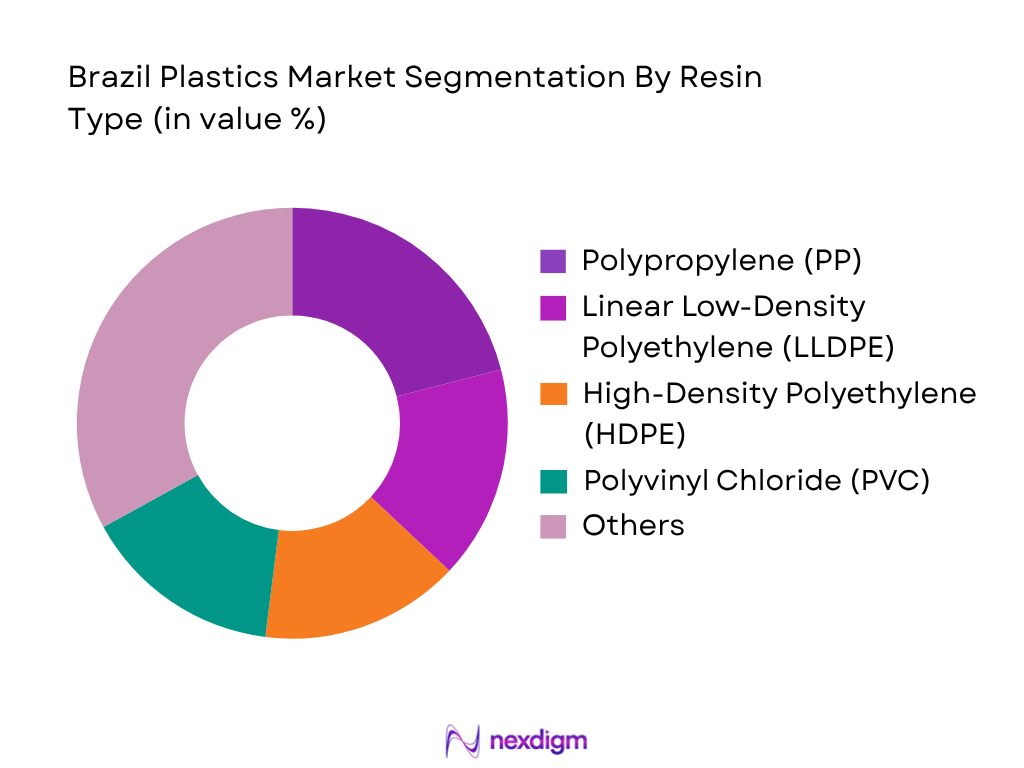
The Brazil Plastics Market is segmented by resin type into polypropylene, linear low-density polyethylene, high-density polyethylene, polyvinyl chloride, low-density polyethylene, polyethylene terephthalate, polystyrene, expanded polystyrene and recycled plastics. Polypropylene dominates resin consumption, supported by its broad processing flexibility and application across rigid packaging, automotive parts, household products, caps and closures, nonwovens and industrial components. Its combination of low density, chemical resistance, stiffness and relatively attractive processing economics makes it suitable for high-volume injection molding and extrusion. Brazil’s sizeable food-processing, consumer-goods and automotive manufacturing industries create persistent PP demand. LLDPE and HDPE are also structurally important due to flexible packaging, films, bottles, pipes and industrial containers. PVC maintains a strong position because Brazil’s construction and infrastructure industries consume substantial quantities in pipes, fittings, profiles and other long-life applications. ABIPLAST identifies PP as the single largest resin category in national consumption.
End-Use Industry
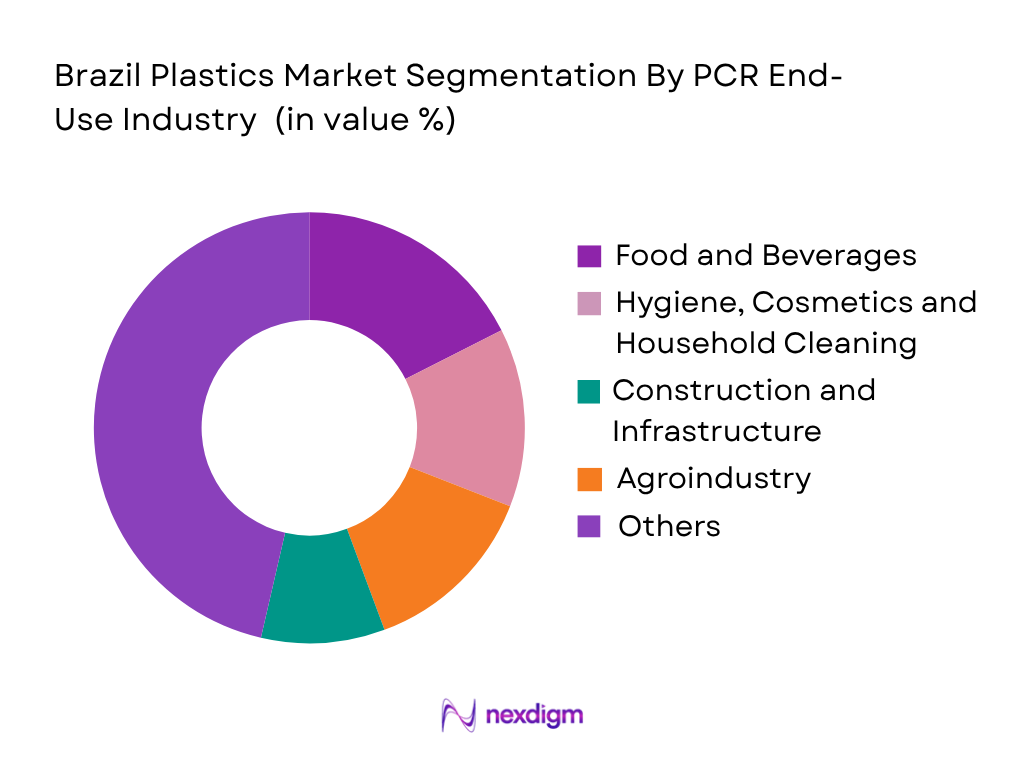
The Brazil Plastics Market’s recycled-material segment serves food and beverages, hygiene and household cleaning, construction and infrastructure, agroindustry, housewares, textiles, automotive, industrial products, electronics, furniture and other applications. Food and beverage applications lead post-consumer recycled resin demand, reflecting the enormous scale of Brazil’s consumer-packaged-goods industry and increasing requirements for circular packaging solutions. PET bottle-to-bottle recycling is particularly important because PET represents the largest individual PCR polymer stream. Brand owners are also progressively incorporating recycled material into packaging specifications, which strengthens demand for traceable and consistent PCR. Hygiene, cosmetics and household cleaning applications constitute another major outlet, while construction absorbs recycled HDPE and related polymers in pipes, corrugated conduits and fittings. Agribusiness is becoming increasingly relevant through applications such as films, irrigation hoses and agrochemical packaging, expanding the addressable market for mechanically recycled polymers.
Competitive Landscape
The Brazil Plastics Market combines large petrochemical resin producers, integrated plastic converters, packaging specialists, pipe manufacturers and recycling companies. Braskem has substantial influence at the upstream resin level through polyethylene, polypropylene and PVC production, while companies such as Videolar-Innova and Unipar hold strategic positions in styrenics and PVC-related value chains. Valgroup is important across plastic packaging and circularity, whereas Tigre has established a large downstream position in plastic piping and water-management systems. Competition increasingly extends beyond production scale toward recycled-content capability, application development, circular-economy integration, feedstock security and customer-specific polymer solutions.
| Company | Establishment Year | Headquarters | Core Plastic Market Position | Major Polymer/Product Coverage | Brazil Manufacturing Footprint | Major End-Use Exposure | Circularity/Sustainability Capability | Key Competitive Strength |
| Braskem S.A. | 2002 | São Paulo, Brazil | ~ | ~ | ~ | ~ | ~ | ~ |
| Valgroup | 1976 | São Paulo, Brazil | ~ | ~ | ~ | ~ | ~ | ~ |
| Videolar-Innova S.A. | 1988 | Barueri, São Paulo, Brazil | ~ | ~ | ~ | ~ | ~ | ~ |
| Unipar Carbocloro S.A. | 1969 | São Paulo, Brazil | ~ | ~ | ~ | ~ | ~ | ~ |
| Tigre S.A. | 1941 | Joinville, Santa Catarina, Brazil | ~ | ~ | ~ | ~ | ~ | ~ |
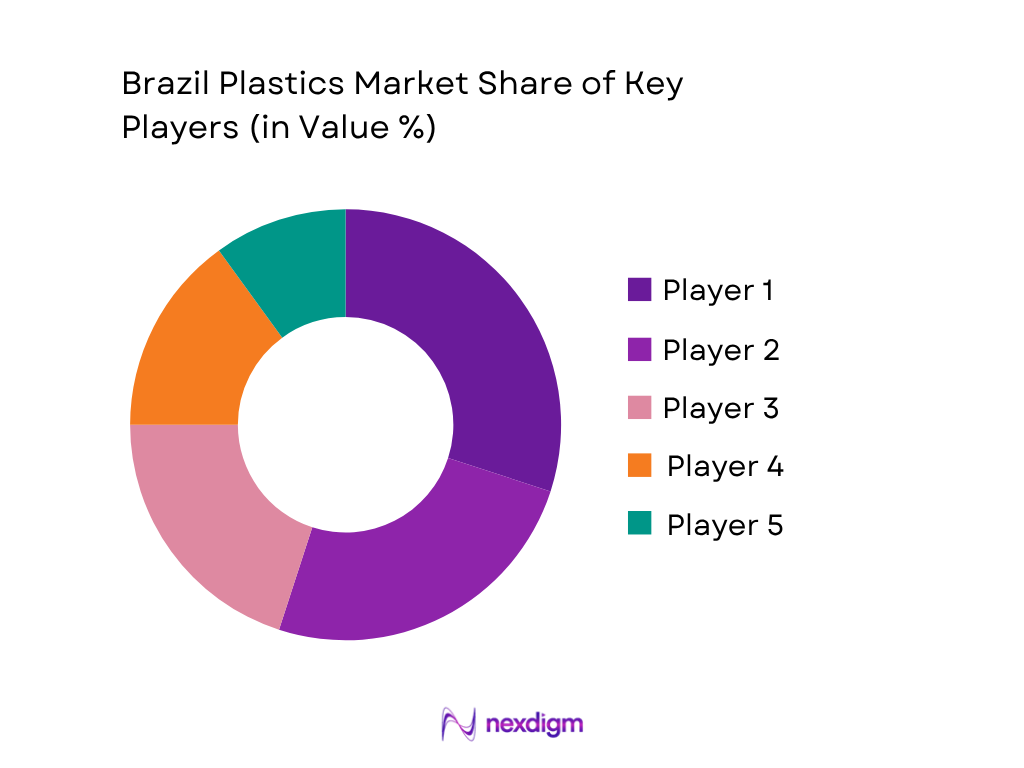
Brazil Plastics Market Analysis
Growth Drivers
Strong Packaging, Automotive and Consumer-Manufacturing Demand
Brazil’s large industrial and consumer economy provides a substantial demand base for plastic resins, films, containers, molded components and engineered plastic products. The World Bank recorded Brazil’s GDP at USD 2.186 trillion in 2024, with GDP per capita reaching USD 10,310.5, providing a significant macroeconomic foundation for consumption-intensive industries such as packaged foods, beverages, household products and automobiles (Source: World Bank). Brazil produced 7.46 million tonnes of transformed plastic products in 2024, while the plastics transformation and recycling industry comprised approximately 14,600 operating companies and supported 404,600 direct jobs (Source: ABIPLAST). Automotive manufacturing creates an additional high-volume outlet for polypropylene, polyethylene, ABS, polyamides and other engineering polymers used in interiors, exterior parts, fluid systems and under-the-hood applications. Brazilian vehicle manufacturers produced 2.55 million vehicles in 2024, while new-vehicle registrations reached 2.635 million units (Source: ANFAVEA). These industrial volumes reinforce demand for lightweight molded components, protective packaging, logistics materials, automotive compounds and other converted plastic products, supporting broad resin consumption across Brazil’s manufacturing value chain.
Expanding Agribusiness and Infrastructure-Linked Plastic Applications
Brazil’s large agricultural production system creates structural demand for plastic films, irrigation pipes, greenhouse materials, silage covers, agrochemical containers, hoses, crates and other durable polymer products. IBGE recorded Brazilian production of cereals, legumes and oilseeds at approximately 300.68 million tonnes in 2024, cultivated across tens of millions of hectares, demonstrating the physical scale of agricultural operations requiring polymer-based storage, irrigation, crop protection and transportation solutions (Source: IBGE). The recycling segment is also becoming increasingly integrated into agricultural applications. Brazil’s agroindustry consumed approximately 92,000 tonnes of post-consumer recycled plastics in 2024, including more than 43,000 tonnes of recycled high-density polyethylene, which is used in agricultural tarpaulins, irrigation hoses and agrochemical packaging (Source: ABIPLAST). Construction and infrastructure represent another important downstream outlet: approximately 130,000 tonnes of post-consumer recycled resin were absorbed by construction and infrastructure applications during 2024 (Source: ABIPLAST). Combined agricultural and infrastructure requirements support demand for HDPE, LDPE, LLDPE, polypropylene and PVC products, while encouraging converters to develop durable, weather-resistant and recycled-content solutions for technically demanding applications.
Market Challenges
High Exposure to Imported Processed Plastics and International Competition
Brazil’s domestic plastic-conversion industry faces substantial competitive pressure from imported finished and semi-finished plastic products, particularly from Asian manufacturing centers. In 2024, Brazil imported approximately 971,000 tonnes of processed plastic products, creating direct competition for domestic converters serving packaging, household goods, industrial components and other downstream applications (Source: ABIPLAST). China alone supplied 556,252 tonnes of processed plastics to Brazil during the year, followed by India with 52,284 tonnes, the United States with 28,585 tonnes, Colombia with 26,960 tonnes and Germany with 23,397 tonnes (Source: ABIPLAST). The scale of Chinese shipments is particularly relevant for Brazilian processors because imported converted products compete directly with locally manufactured films, sheets, containers, consumer products and technical components. Brazil’s broader macroeconomic scale does not eliminate this exposure: World Bank data places national GDP at USD 2.186 trillion in 2024, meaning domestic demand is sufficiently large to attract global suppliers (Source: World Bank). Brazilian manufacturers therefore need stronger productivity, automation, application development, material efficiency and customer integration to defend domestic industrial volumes against international suppliers operating with large manufacturing bases and established export networks.
Plastic Waste Collection and Recycling Feedstock Constraints
Brazil possesses substantial recycling infrastructure, but the gap between plastic waste generation, recycling capacity and actual recycled-resin output remains a major structural challenge. Approximately 4.82 million tonnes of post-consumer plastic waste were generated in Brazil in 2024, while recycling companies consumed around 1.20 million tonnes of post-consumer material for reprocessing (Source: ABIPLAST). Total plastic waste intake, including post-industrial material, reached approximately 1.55 million tonnes, compared with installed recycling capacity of 2.43 million tonnes. Actual post-consumer recycled resin production reached approximately 1.012 million tonnes, indicating that feedstock collection, sorting, contamination and capacity utilization remain critical constraints (Source: ABIPLAST). The sourcing structure is fragmented: waste traders supplied approximately 518,000 tonnes of material to recyclers, while packaging accounted for roughly 1.037 million tonnes of post-consumer waste consumed by recycling operations. Brazil nevertheless supported 20,043 direct recycling-industry jobs in 2024. Improving collection consistency, polymer separation, washing quality, traceability and feedstock aggregation is therefore essential for converters seeking reliable supplies of rPET, rHDPE, rPP and recycled flexible-polyethylene grades for industrial-scale applications.
Market Opportunities
Expansion of Post-Consumer Recycled Plastics Across Major End-Use Industries
Brazil has a significant opportunity to expand recycled-plastic utilization because an established recycling industry already supplies substantial volumes to packaging, construction, agriculture and consumer-product manufacturers. Domestic production of post-consumer recycled resin reached 1.012 million tonnes in 2024, supported by 2.43 million tonnes of installed recycling capacity, leaving meaningful physical infrastructure available for higher throughput as collection and sorting improve (Source: ABIPLAST). PET represented approximately 395,000 tonnes of PCR production, while recycled HDPE accounted for approximately 202,000 tonnes, recycled polypropylene for around 182,000 tonnes, and recycled LDPE/LLDPE for approximately 152,000 tonnes based on reported polymer output composition (Source: ABIPLAST). Downstream demand is already diversified: food and beverage applications consumed 167,000 tonnes of PCR, personal hygiene, cosmetics and household cleaning absorbed 132,000 tonnes, construction and infrastructure consumed 130,000 tonnes, and agroindustry used approximately 92,000 tonnes during 2024. These existing consumption volumes demonstrate commercial acceptance across several major applications. The opportunity therefore centers on improving waste recovery, food-grade decontamination, polymer sorting, pellet consistency and closed-loop systems to unlock more of Brazil’s installed recycling infrastructure.
Development of Circular Packaging and High-Quality Recycled Resin Supply
Plastic packaging represents a major opportunity for Brazil’s converters, recyclers and resin producers because packaging already constitutes the largest recoverable feedstock stream entering the recycling system. Brazilian recyclers processed approximately 1.037 million tonnes of post-consumer plastic packaging waste in 2024, out of roughly 1.20 million tonnes of total post-consumer plastic material consumed by recycling facilities (Source: ABIPLAST). At the downstream level, food and beverage manufacturers absorbed approximately 167,000 tonnes of post-consumer recycled resin, while hygiene, cosmetics and household-cleaning applications consumed another 132,000 tonnes. Brazil also produced 1.012 million tonnes of PCR resin, demonstrating an established industrial base from which higher-quality circular packaging systems can develop. The regulatory environment has strengthened this commercial direction: Federal Decree 12,688, published in 2025, formally established a national reverse-logistics system for plastic packaging and assigned responsibilities to manufacturers, importers, distributors and retailers (Source: Presidency of the Republic of Brazil). This creates opportunities for investment in collection infrastructure, traceability platforms, optical sorting, washing, PET decontamination, recycled-polymer compounding and design-for-recycling packaging capable of returning recovered plastics into higher-value applications.
Future Outlook
The Brazil Plastics Market is expected to expand through a combination of packaging consumption, sanitation infrastructure, construction activity, automotive lightweighting, agribusiness applications and recycled-plastic adoption. For the forecast period, the market is expected to register an indicative ~5.5% CAGR during 2026-2035. Growth will increasingly shift toward higher-value applications, PCR incorporation, mono-material packaging, renewable polymers and technology-enabled recycling rather than being driven exclusively by virgin resin volumes.
Circularity will represent one of the most important structural changes. Brazil produced 1.012 million tonnes of post-consumer recycled resin, supported by 2.43 million tonnes of installed recycling capacity. PET represented the largest PCR stream, while HDPE and polypropylene also had meaningful positions. As collection systems mature and brand owners raise recycled-content requirements, mechanical recycling capacity utilization can improve and investment in sorting, washing, decontamination and traceability systems should increase.
Major Players
- Braskem S.A.
- Valgroup
- Videolar-Innova S.A.
- Unipar Carbocloro S.A.
- Alpek Polyester Brasil S.A.
- Indorama Ventures Brasil
- Tigre S.A.
- Amanco Wavin
- Amcor Brasil
- Plastipak Packaging do Brasil Ltda.
- ALPLA Brasil
- Sealed Air / Cryovac Brasil
- Videplast Indústria de Embalagens Ltda.
- Zaraplast
- Termotécnica Ltda.
Key Target Audience
- Petrochemical and Thermoplastic Resin Producers
- Plastic Packaging and Conversion Companies
- Plastic Recycling and Post-Consumer Resin Producers
- Automotive, Construction, Agribusiness and Consumer-Goods Manufacturers
- Polymer Distributors, Importers and Industrial Raw-Material Suppliers
- Investments and Venture Capitalist Firms
- Private Equity, Infrastructure and Industrial Investment Funds
- Government and Regulatory Bodies (Ministry of Development, Industry, Trade and Services – MDIC; Ministry of Environment and Climate Change – MMA; Brazilian National Health Surveillance Agency – ANVISA; Brazilian Institute of Environment and Renewable Natural Resources – IBAMA; National Institute of Metrology, Quality and Technology – INMETRO)
Research Methodology
Step 1: Identification of Key Variables
The initial phase involves developing an integrated ecosystem map of the Brazil Plastics Market, covering petrochemical feedstocks, resin producers, distributors, converters, recyclers and major consuming industries. Extensive desk research is conducted using ABIPLAST, IBGE, MDIC trade statistics, company disclosures and regulatory sources. Key variables include polymer consumption, production output, imports, exports, resin pricing, processing technologies, recycling volumes and end-use demand.
Step 2: Market Analysis and Construction
Historical market performance is analyzed through both top-down and bottom-up approaches. The top-down methodology assesses national plastic production, apparent consumption, foreign trade and sector revenues, while the bottom-up approach evaluates converter production, polymer procurement, capacity utilization and application-level demand. Resin-level consumption across PP, PE, PVC, PET, PS/EPS and recycled plastics is reconciled with downstream industry demand to construct the overall market.
Step 3: Hypothesis Validation and Expert Consultation
Market hypotheses are validated through computer-assisted telephone interviews (CATIs) and direct discussions with resin manufacturers, plastic converters, distributors, recyclers, packaging companies and industrial buyers. Interviews focus on operating rates, resin procurement patterns, prices, import competition, recycling economics and downstream application trends. Insights from industry participants are triangulated against secondary data to correct inconsistencies and strengthen market estimates.
Step 4: Research Synthesis and Final Output
The final research phase integrates quantitative findings with industry interviews and company-level intelligence. Demand-side data from packaging, construction, automotive, agriculture and consumer-goods companies are compared with supply-side information from polymer producers and converters. Market size, segmentation, competition and forecast assumptions are subsequently validated using multiple data points, producing a consolidated assessment of the Brazil Plastics Market and its long-term commercial outlook.

- Executive Summary
- Research Methodology (Market Definition and Scope, Brazil Plastics Market Classification, Polymer Resin Classification Assessment, Plastic Processing Technology Mapping, End-Use Industry Demand Assessment, Petrochemical Feedstock Ecosystem Analysis, Virgin and Recycled Plastic Resin Classification, Plastic Conversion Industry Assessment, Import and Export Flow Analysis, Post-Consumer Recycled Resin Ecosystem Evaluation, Plastic Waste Collection and Recycling Framework Assessment)

- Definition and Scope
- Brazil Plastics Industry Evolution and Development of Petrochemical and Plastic Conversion Ecosystem
- Plastic Resin Production, Polymer Conversion and End-Use Application Structure
- Brazil Plastics Market Value Chain Analysis
- Brazil Plastics Market Supply Chain Analysis
- Petrochemical Feedstock, Polymer Resin, Plastic Converter, Compounder, Recycler and End-Use Industry Ecosystem Analysis
- Plastic Resin Integration Assessment Across Packaging, Building and Construction, Automotive, Agriculture, Consumer Goods and Industrial Applications

- Growth Drivers (Expansion of Food and Beverage Packaging Demand, Growth of Building and Construction Activity, Strong Agribusiness Plastic Consumption, Automotive Lightweighting and Polymer Adoption, Expansion of Modern Retail and E-Commerce Packaging, Increasing Recycled Plastic Resin Adoption)
- Market Challenges (Dependence on Imported Plastic Resins and Feedstocks, Volatility in Petrochemical Feedstock Prices, Exchange Rate Fluctuations, Plastic Waste Collection and Sorting Constraints, Limited Availability of High-Quality Post-Consumer Recycled Resin, High Logistics and Energy Costs)
- Market Opportunities (Expansion of Post-Consumer Recycled Resin Capacity, Development of Mono-Material Recyclable Packaging, Growth of Water and Sanitation Infrastructure Plastics, Expansion of Agricultural Films and Irrigation Systems, Development of Bio-Based Polymer Applications, Import Substitution in Specialty and Engineering Plastics)
- Market Trends (Increasing PCR Content in Plastic Packaging, Shift Toward Mono-Material Flexible Packaging, Plastic Packaging Lightweighting and Downgauging, Expansion of Bio-Based Polyethylene Applications, Growth of Design-for-Recycling Solutions, Development of Chemical and Advanced Recycling Technologies, Increasing Adoption of High-Performance Polymer Compounds)
- Regulatory and Standards Landscape (National Solid Waste Policy, Plastic Packaging Reverse Logistics Framework, Extended Producer Responsibility Requirements, Post-Consumer Recycled Content Requirements, Environmental Licensing Regulations, ANVISA Food-Contact Plastic Regulations, ABNT Plastic Product and Packaging Standards)
- SWOT Analysis
- Porter’s Five Forces Analysis
- PESTLE Analysis
- Stakeholder Ecosystem
- Competition Ecosystem

- By Market Value (2020-2025)
- By Plastic Resin Consumption Volume (2020-2025)
- By Domestic Plastic Resin Production Volume (2020-2025)
- By Plastic Conversion Output Volume (2020-2025)
- By Virgin Plastic Resin Consumption Volume (2020-2025)
- By Recycled Plastic Resin Consumption Volume (2020-2025)
- By Plastic Resin Import Volume (2020-2025)

- By Resin Type (In Value %)
Polyethylene
High-Density Polyethylene (HDPE)
Low-Density Polyethylene (LDPE)
Linear Low-Density Polyethylene (LLDPE)
Polypropylene
Polyvinyl Chloride
Polyethylene Terephthalate
Polystyrene and Expanded Polystyrene
ABS and SAN
Engineering and Specialty Plastics - By Product Type (In Value %)
Plastic Films and Sheets
Flexible Plastic Packaging
Rigid Plastic Packaging
Plastic Bottles and Containers
Plastic Pipes and Fittings
Plastic Automotive Components
Plastic Household and Consumer Products
Plastic Construction Products
Plastic Industrial Components
Plastic Agricultural Products - By End-Use Industry (In Value %)
Packaging
Food and Beverage Packaging
Personal Care and Household Packaging
Pharmaceutical and Healthcare Packaging
Building and Construction
Automotive and Transportation
Agriculture
Electrical and Electronics
Consumer Goods and Housewares
Industrial and Machinery Applications - By Sales Channel (In Value %)
Direct Resin Producer Sales
Plastic Resin Distributors
Polymer Traders and Importers
Plastic Compounders
Plastic Converters
Industrial Procurement Networks
Packaging Manufacturers
Construction Product Manufacturers
Automotive Component Suppliers - By Region (In Value %)
Southeast Brazil
South Brazil
Northeast Brazil
North Brazil
Central-West Brazil

- Market Share of Major Players (By Revenue, Plastic Resin Volume, Production Capacity, Polymer Type, End-Use Industry, Processing Technology, Manufacturing Footprint, Customer Segment Distribution)
- Cross Comparison Parameters (Polymer Resin and Plastic Product Portfolio Breadth, Installed Production and Conversion Capacity, Brazil Manufacturing Footprint, Post-Consumer Recycled Resin Capability, End-Use Industry Coverage, Plastic Processing Technology Capability, Domestic Distribution and Export Network, Circularity and Sustainable Plastics Integration)
- SWOT Analysis of Major Players
- Competitive Positioning Matrix
- Product and Polymer Portfolio Benchmarking
- Pricing and Resin Category Benchmarking
- Manufacturing and Production Capacity Assessment
- Recycling, Circularity and End-Use Integration Assessment
- Detailed Profiles of Major Companies
Braskem S.A.
Valgroup
Videolar-Innova S.A.
Unipar Carbocloro S.A.
Alpek Polyester Brasil S.A.
Indorama Ventures Brasil
Tigre S.A.
Amanco Wavin
Amcor Brasil
Plastipak Packaging do Brasil Ltda.
ALPLA Brasil
Sealed Air / Cryovac Brasil
Videplast Indústria de Embalagens Ltda.
Zaraplast
Termotécnica Ltda.

- Plastic Packaging Manufacturer Resin Procurement Assessment
- Building and Construction Plastic Product Manufacturer Analysis
- Automotive Component Manufacturer Polymer Requirement Assessment
- Agricultural Plastic Product Manufacturer Analysis
- Consumer Goods Manufacturer Resin Consumption Assessment
- Plastic Converter Procurement and Supplier Selection Analysis
- Recycled Plastic Resin Buyer Assessment
- Virgin versus Recycled Plastic Resin Preference Analysis
- End-Use Manufacturer Material Substitution and Sustainability Requirement Analysis

- By Market Value (2026-2035)
- By Plastic Resin Consumption Volume (2026-2035)
- By Domestic Plastic Resin Production Volume (2026-2035)
- By Plastic Conversion Output Volume (2026-2035)
- By Virgin Plastic Resin Consumption Volume (2026-2035)
- By Recycled Plastic Resin Consumption Volume (2026-2035)
- By Plastic Resin Import Volume (2026-2035)
- By Bio-Based and Sustainable Plastic Consumption Volume (2026-2035)


 Request a Sample
 Ask for Customization
 Get a Quote
 Enquire Now