

Agricultural storage infrastructure analysis is vital in addressing the ongoing challenge of post-harvest losses, which remain a significant issue for farmers globally. By evaluating existing storage systems, businesses can identify inefficiencies and areas for improvement. Using competitive intelligence, can benchmark storage practices against competitors, assess industry trends, and gain insights into innovative technologies.
Post-harvest losses in developing countries are estimated at 30-40% of total agricultural production, amounting to USD 940 billion annually. Poor storage infrastructure contributes significantly to these losses, with over 50% of harvested produce in regions like Sub-Saharan Africa being wasted due to inadequate storage facilities.
Investing in better storage infrastructure can reduce these losses by up to 20-25%, improving food security and boosting farm income by ensuring more produce reaches the market in optimal condition. This analysis enables more efficient, cost-effective storage solutions, reducing waste, increasing profitability, and ensuring a more stable supply of agricultural products.
Using Competitive Intelligence to Optimise Post-Harvest Losses in Agriculture
Using competitive intelligence to optimize post-harvest losses in agriculture involves analyzing competitor storage strategies, industry trends, and technological innovations to improve storage infrastructure, reduce waste, and enhance supply chain efficiency.
-
Enhancing Inventory Management with Competitive Data
Leverage competitor insights to optimize inventory management systems, reducing excess produce and lowering the risk of waste.
-
Improving Storage Infrastructure Design
Benchmark competitor storage facility designs to incorporate innovative layouts and environmental controls that prevent spoilage and maximize capacity.
-
Tracking Regional Post-Harvest Loss Rates
Competitive intelligence helps identify regional differences in post-harvest losses, enabling businesses to tailor storage strategies for specific areas.
-
Improving Farmer Education on Post-Harvest Practices
Use competitive insights to develop educational initiatives that inform farmers about advanced storage techniques, reducing waste at the source.
-
Adapting Storage Systems to Seasonal Demand Fluctuations
Competitive intelligence helps adjust storage strategies to account for seasonal demand, ensuring adequate capacity while minimizing post-harvest losses.
-
Monitoring Regulatory Changes Impacting Storage Practices
Track regulations affecting storage infrastructure and practices, ensuring compliance and adoption of standards that reduce post-harvest losses.
Nexdigm’s Insights to Enhance Harvest Storage Capacity
Nexdigm’s insights enhance harvest storage capacity by providing data-driven solutions that optimize facility design, storage technology, and inventory management. Through competitive intelligence and market analysis, Nexdigm identifies best practices, innovative storage solutions, and capacity planning strategies. These insights enable businesses to improve storage efficiency, reduce post-harvest losses, and ensure better product preservation, ultimately boosting profitability and supply chain reliability.
Optimizing Storage Solutions with Nexdigm’s Data-Driven Insights
Nexdigm leverages data-driven insights to optimize storage solutions, enhancing efficiency, scalability, and cost-effectiveness. By analyzing data trends, it ensures smarter, more strategic storage management and resource allocation:
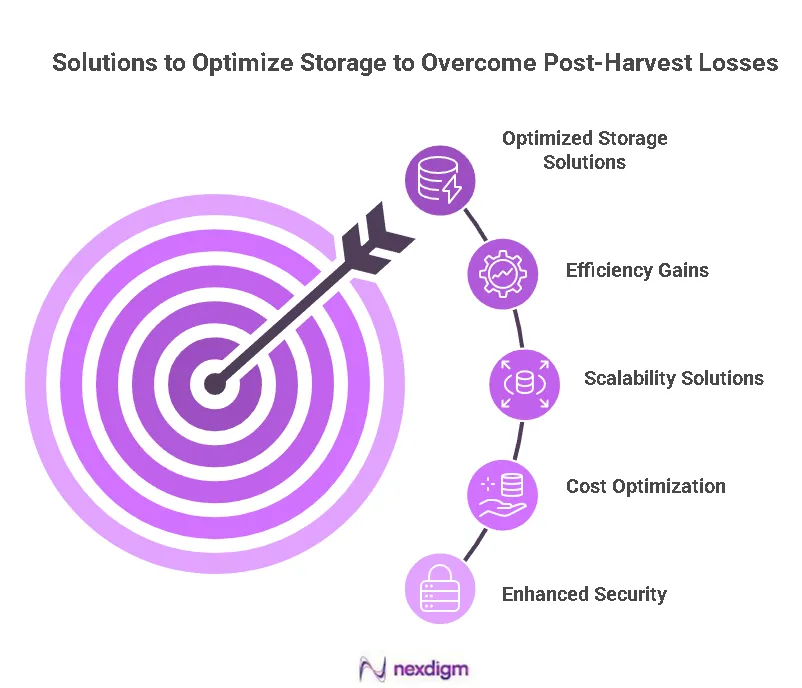
Efficiency Gains
By leveraging insights, Nexdigm enhances storage resource utilization, reducing inefficiencies and lowering operational costs.
Scalability Solutions
With data-driven strategies, Nexdigm provides scalable storage options that adapt to growing data needs, ensuring future-proof systems.
Cost Optimization
Data insights help minimize storage expenses by streamlining resource allocation and eliminating unnecessary capacity, boosting cost-effectiveness.
Enhanced Security
By analyzing storage data trends, Nexdigm identifies vulnerabilities, strengthening security measures and protecting critical data assets.
Real-Time Monitoring
Nexdigm uses real-time data analytics for continuous storage monitoring, enabling proactive adjustments and minimizing system downtime.
Nexdigm’s case:
Recently, Nexdigm’s partnered with a research and advisory company and worked on cold chain and storage markets highlights the magnitude of the challenge and informs infrastructure solutions. Nexdigm data shows only about 12 % of agricultural output is stored in cold storage systems, underscoring gaps that contribute to post‑harvest losses and infrastructure needs.
Nexdigm’s insights have helped clients reduce post-harvest losses by up to 20% by optimizing storage systems and enhancing cold chain efficiency. Advanced storage solutions, backed by data analytics, improve shelf life and reduce spoilage, contributing to a 15% increase in overall crop profitability and minimizing food waste.
To take the next step, simply visit our Request a Consultation page and share your requirements with us.
Harsh Mittal
+91-8422857704