

Agricultural procurement costs are spread across a wide range of products and services. Seeds, fertilizers, crop protection chemicals, irrigation equipment, machinery, packaging, storage and transportation may be purchased through different teams and supplier networks. This makes it difficult for organisations to understand their total procurement exposure or identify where the largest savings opportunities exist.
For agribusinesses, processors, distributors and large farming operations, cost optimisation is not simply a matter of negotiating lower prices. Some of the largest opportunities may lie in fragmented purchasing, inconsistent specifications, avoidable logistics expenses, excess inventory or supplier arrangements that no longer reflect current market conditions.
Fragmented Spending Can Hide Significant Cost Opportunities
When procurement is distributed across locations, farms or business units, similar products may be purchased from different suppliers under different terms. Each individual transaction may appear reasonable, but the combined expenditure can reveal substantial variation.
Common issues include:
- Multiple suppliers providing identical or comparable products without a clear allocation strategy.
- Different purchase specifications that prevent meaningful price comparison.
- Emergency purchases caused by weak demand forecasting.
- Regional contracts with inconsistent payment and delivery terms.
- Limited visibility into rebates, discounts, freight and other indirect costs.
The problem is not that centralised purchasing is always better. Local suppliers may offer faster delivery or lower transport costs. However, without consolidated spend information, businesses cannot determine whether these arrangements are commercially justified.
Product Specifications Can Increase Costs Without Improving Outcomes
Procurement teams sometimes continue using specifications that were established for older operating requirements. This can lead to unnecessary expenditure on products or equipment with features that are not essential to current operations.
For example, a seed procurement decision may involve variety characteristics, treatment and packaging that affect price. Fertilizer purchases may differ in nutrient concentration and formulation. Crop protection products may vary in active ingredient strength and application rates.
Equipment procurement can be even more complex. A machine with a higher purchase price may offer greater productivity, but it may also have operating features that the buyer does not need. Without a clear comparison of requirements and performance, organisations risk paying for specifications that provide limited commercial value.
Seasonal Procurement Creates Inventory and Price Exposure
Agricultural demand is influenced by sowing calendars, crop growth cycles and harvest periods. Businesses that purchase inputs too late may face shortages, higher freight costs and reduced supplier choice. Those that buy too early may carry excess inventory, incur financing costs or face storage-related deterioration.
This creates a difficult balance between securing availability and controlling working capital.
The issue extends beyond agricultural inputs. Storage, transportation and equipment capacity may also become more expensive during peak periods. Businesses that do not coordinate procurement with operational forecasts may end up paying premiums for services that could have been planned earlier.
Supplier and Distribution Structures Influence the Final Cost
The price paid by an agricultural business can include several layers beyond the manufacturer’s quotation. Distributors, dealers, transporters and other intermediaries may contribute margins, handling charges, credit costs and service fees.
Some of these costs provide genuine value, particularly where suppliers offer local inventory, technical support or last-mile delivery. Others may reflect overlapping distribution arrangements or inefficient procurement structures.
The same applies to equipment servicing and spare parts. A low initial purchase price can be offset by expensive maintenance, limited service availability or frequent replacement requirements.
How Businesses Can Identify the Largest Cost Optimization Opportunities
A comprehensive agriculture procurement cost analysis services approach should consolidate spending across procurement categories and locations before identifying opportunities. Organisations need a common baseline that captures purchase prices, product specifications, volumes, suppliers, delivery terms and indirect costs.
The next step is to separate cost differences into categories: market-driven changes, specification-related differences, supplier pricing gaps, logistics expenses and internal procurement inefficiencies. This helps prevent negotiation teams from treating every price variance as an opportunity for savings.
Businesses can then prioritise initiatives based on addressable spend, implementation difficulty, operational impact and supply risk. Nexdigm supports organisations through procurement cost analysis, supplier benchmarking, market intelligence and sourcing research, helping identify cost drivers and build category-specific optimisation strategies.
Agricultural Procurement Cost Optimization Framework
A practical programme should follow five stages:
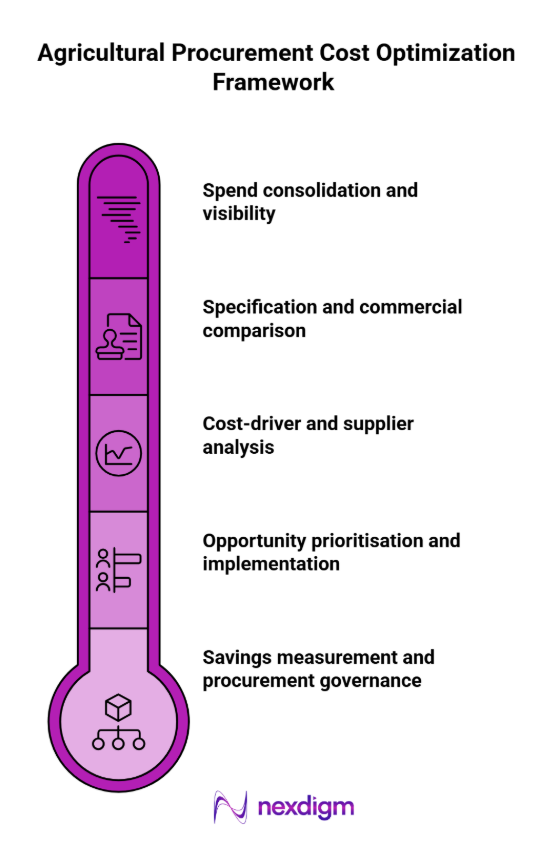
- Spend consolidation and visibility
Bring together procurement data across seeds, fertilizers, crop protection, machinery, irrigation, storage, logistics and other relevant categories. Segment spending by supplier, region, product, business unit and purchasing period. Identify high-value and frequently purchased categories. - Specification and commercial comparison
Standardise product descriptions and technical requirements before comparing quotations. Review pack sizes, nutrient composition, active ingredient concentrations, equipment configurations, delivery terms, credit periods and service inclusions. - Cost-driver and supplier analysis
Separate market-linked costs from supplier-specific pricing, distribution margins, freight, handling, storage and financing expenses. Examine supplier concentration, regional alternatives and opportunities to consolidate suitable purchasing volumes. - Opportunity prioritisation and implementation
Identify savings opportunities through alternative sourcing, specification rationalisation, supplier negotiations, demand consolidation, inventory improvements and service contract reviews. Prioritise initiatives according to financial impact, operational feasibility and risk. - Savings measurement and procurement governance
Establish category-level savings baselines, assign implementation ownership and track actual outcomes. Distinguish negotiated savings from market price movements, volume changes and specification changes. Review supplier performance and cost variance regularly.
Nexdigm’s Case Study: Identifying Agricultural Procurement Savings
Nexdigm analysed expenditure across 6 agricultural procurement categories and 9 operating locations, identifying supplier price gaps, specification inconsistencies and avoidable logistics costs. The assessment prioritised 12 sourcing initiatives for further negotiation and implementation.
To take the next step, simply visit our Request a Consultation page and share your requirements with us.
Harsh Mittal
+91-8422857704