
Logistics networks generate large amounts of operational data, including shipment milestones, vehicle movements, warehouse transactions, delivery times and transport invoices. The challenge is turning these records into decisions that improve service and control costs. Analytics helps businesses identify recurring inefficiencies, test alternatives and allocate capacity based on observed performance rather than assumptions.
Build A Reliable Operational View
Useful analysis starts with consistent data. Shipment identifiers, timestamps, locations, quantities and cost fields need to align across transport management systems, warehouse platforms, carriers and customer records.
Without this foundation, a business may count one shipment several times, compare incompatible transit-time definitions or attribute a delay to the wrong stage. Data quality checks should therefore precede sophisticated modelling.
The World Bank’s Logistics Performance Indicators 2.0 demonstrate the value of operational tracking data. Its 2025 report uses shipment-level information across maritime, aviation and postal networks to assess connectivity, speed and reliability.
Identify Patterns and Test Decisions
Once the data is reliable, analytics can reveal patterns that routine reporting may miss. Examples include lanes with repeated delays, warehouses with unusually long order-processing times, routes with low vehicle utilisation and products that generate disproportionate expedited-shipping costs.
Common applications include:
- Demand Forecasting: Estimate shipment volumes to plan inventory, labour and transport capacity.
- Route Optimisation: Compare delivery sequences, travel times, vehicle capacity and service constraints.
- Exception Detection: Flag missed milestones, unusual dwell times or costs that exceed expected ranges.
- Warehouse Analysis: Identify bottlenecks in picking, packing, staging and dispatch.
- Scenario Testing: Estimate how network changes may affect cost, service and capacity before implementation.
Analytics should support operational judgement, not replace it. A model may recommend consolidating loads, but the decision must account for delivery windows, product handling, driver hours and customer commitments.
Move From Reporting to Network Optimisation
Effective analytics in logistics industry applications connect shipment-level events with network design and operating decisions. Instead of reporting that a route is expensive, the analysis should help determine whether the cause is low utilisation, repeated waiting, poor scheduling or a mismatch between demand and available capacity.
Digitalisation also depends on information sharing. The International Air Transport Association’s ONE Record initiative establishes a standardised approach to sharing air-cargo data across stakeholders. Shared shipment records can reduce duplicate data entry and close information gaps across the logistics chain.
The next step is to test a change on a defined part of the network, measure its impact and compare the result with a baseline. This helps prevent a local efficiency gain from creating a larger problem elsewhere, such as lower transport costs accompanied by longer delivery times.
Nexdigm’s Logistics Network Optimisation Framework
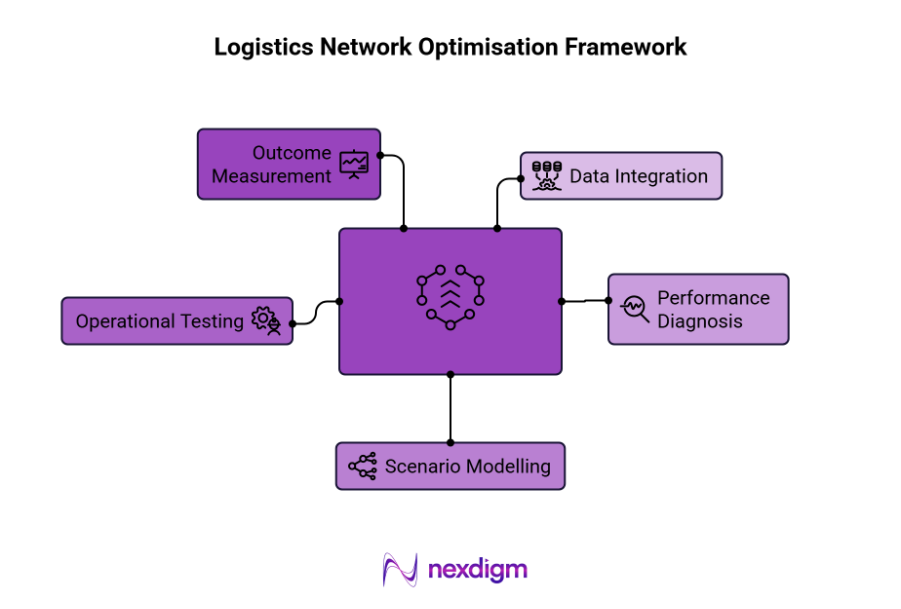
- Data Integration: Align shipment, warehouse, carrier, cost and delivery records.
- Performance Diagnosis: Identify recurring cost, delay, utilisation and service issues.
- Scenario Modelling: Compare routing, capacity, inventory and scheduling alternatives.
- Operational Testing: Pilot selected changes within a defined lane, facility or product group.
- Outcome Measurement: Compare actual cost and service results with the baseline before wider rollout.
Nexdigm’s Case Study: Improving Delivery Planning
A distributor analysed 12 weeks of delivery records across four depots. The review identified repeated route overlap and late dispatches on several high-volume lanes. The operations team adjusted dispatch windows and tested revised route plans, measuring delivery reliability and cost per shipment before extending the changes.
To take the next step, simply visit our Request a Consultation page and share your requirements with us.
Harsh Mittal
+91-8422857704