
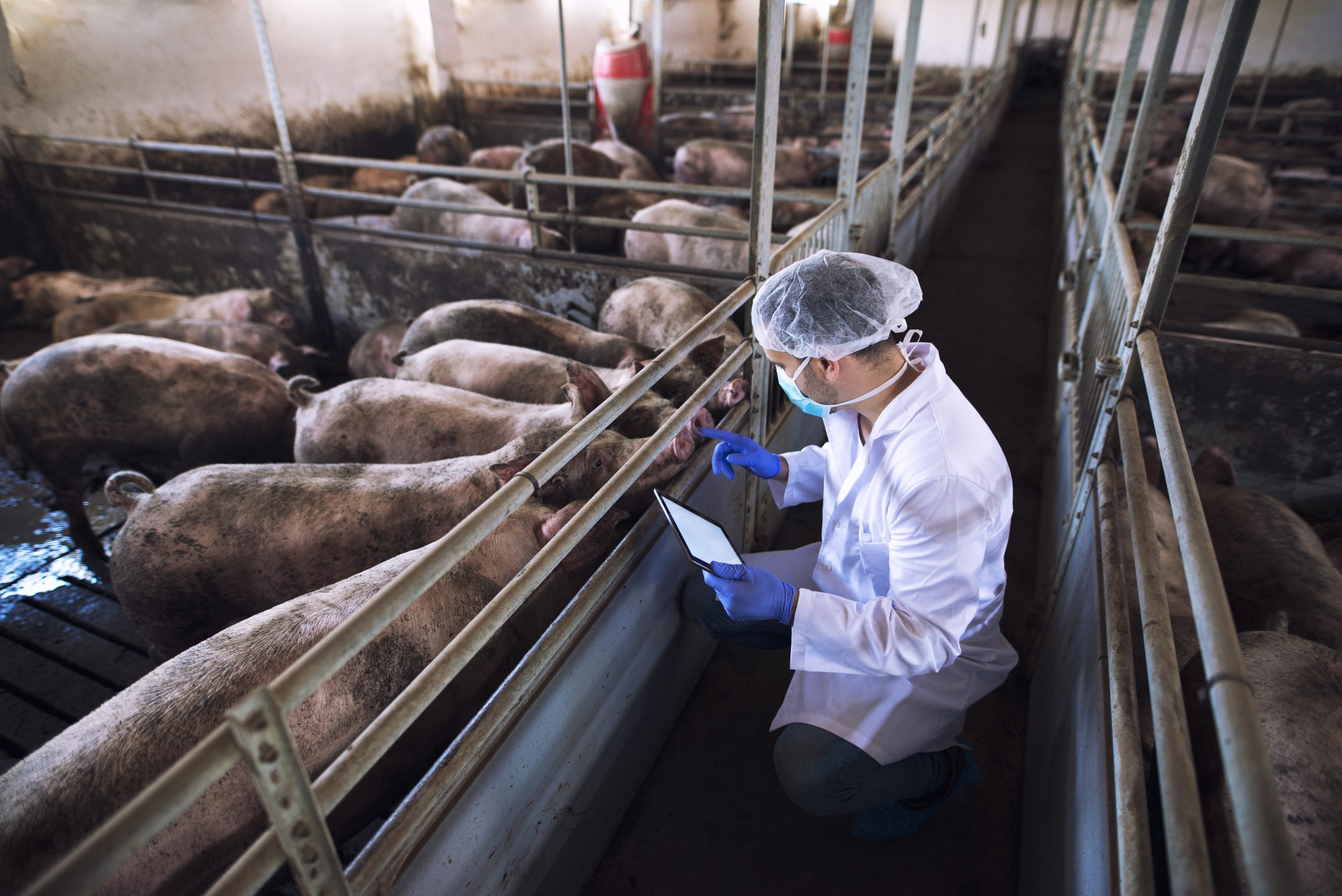
India’s expanding livestock and poultry sectors are increasing the importance of efficient animal feed procurement. According to the Department of Animal Husbandry and Dairying, the country produced 247.87 million tonnes of milk, 149.11 billion eggs, and 10.50 million tonnes of meat in 2024–25. These figures reflect the scale of India’s animal production ecosystem and its dependence on consistent feed availability.
For feed manufacturers, integrated poultry businesses, dairy enterprises, and livestock companies, procurement costs can vary significantly across maize, soybean meal, oilseed cakes, minerals, and feed additives. Identifying competitive sourcing options requires visibility into ingredient prices, supplier capabilities, quality specifications, and regional availability. Animal feed procurement benchmarking services help businesses compare procurement categories, identify cost optimization opportunities, and improve sourcing decisions.
Why Animal Feed Procurement Costs Vary Across Categories
Animal feed procurement costs are influenced by ingredient availability, nutritional composition, seasonal production, transportation, and processing requirements. Maize, soybean meal, oilseed cakes, and specialty additives each have different sourcing dynamics and price drivers. Businesses that assess these inputs independently can better understand cost contributions, identify procurement inefficiencies, and evaluate alternatives without compromising feed formulation requirements, nutritional consistency, or supply reliability.
Procurement Areas That Influence Feed Cost Optimization
Businesses can examine three important dimensions to understand where procurement improvements may be possible:
- Ingredient Price Competitiveness: Compare maize, soybean meal, oilseed cakes, and additives across suppliers, sourcing regions, and purchase volumes to identify pricing differences.
- Nutritional and Quality Consistency: Evaluate protein content, moisture levels, digestibility, contamination parameters, and specifications to ensure competitive sourcing does not compromise feed quality.
- Supply and Logistics Economics: Assess seasonal availability, transportation expenses, storage requirements, delivery schedules, and regional sourcing options to understand landed procurement costs.
Evaluating these dimensions together helps businesses identify savings opportunities while maintaining ingredient suitability and consistent feed production.
Factors That Shape Supplier Selection in Animal Feed Procurement
Selecting suitable feed suppliers requires more than comparing quoted prices. Businesses must consider ingredient quality, consistency of supply, production capacity, regional availability, and commercial terms. Nexdigm’s market and supplier research helps organizations examine these factors across procurement categories, understand differences in vendor capabilities, and assess how sourcing conditions influence overall procurement value. This enables businesses to balance cost competitiveness with nutritional requirements, quality standards, and supply continuity.
How Nexdigm Builds a Clearer Picture of the Animal Feed Supplier Landscape
Experts of Nexdigm combine agribusiness research and supplier profiling to help businesses evaluate the factors that influence supplier competitiveness across animal feed categories. Our animal feed procurement benchmarking services examine three important areas:
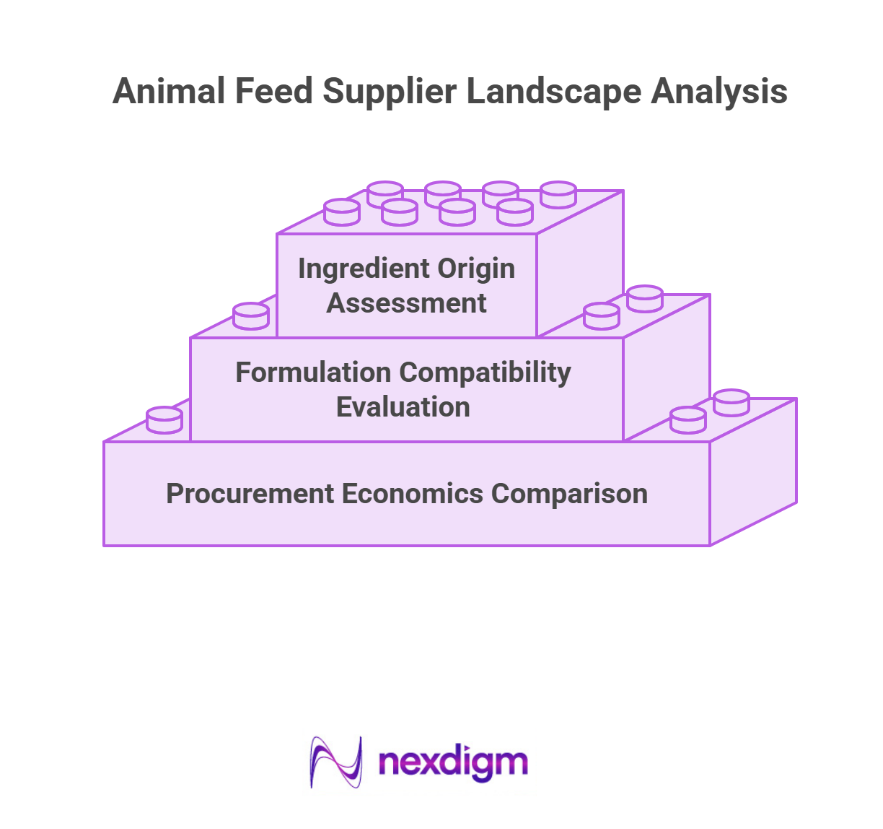
- Ingredient Origin and Seasonality Assessment: Examine supplier sourcing locations, dependence on agricultural production cycles, seasonal availability, and exposure to regional supply fluctuations to understand sourcing reliability.
- Formulation Compatibility Evaluation: Assess ingredient specifications, nutritional composition, quality parameters, and consistency to determine whether alternative suppliers can meet feed formulation requirements.
- Procurement Economics and Commercial Terms: Compare volume-based pricing, minimum order quantities, payment conditions, contract structures, and delivery arrangements to understand the commercial implications of supplier selection.
These insights help businesses evaluate suppliers beyond quoted prices and identify sourcing options that align with nutritional, commercial, and operational priorities.
Nexdigm’s Supplier Landscape Insights Supporting Animal Feed Procurement
Our supplier landscape research helps businesses translate market intelligence into more informed procurement decisions. By highlighting supplier capabilities, ingredient availability, sourcing locations, and commercial differences, our animal feed procurement benchmarking services help organizations identify suitable sourcing alternatives, evaluate vendor competitiveness, and understand potential supply constraints. These insights support procurement planning, supplier selection, and sourcing strategies aligned with cost and operational requirements.
Nexdigm’s Case
An animal nutrition manufacturer engaged Nexdigm to evaluate supplier competitiveness and procurement opportunities across selected Indian markets. The research assessed suppliers covering maize, soybean meal, oilseed cakes, and specialty feed ingredients. The assessment found that 30% of suppliers had significant price variations for comparable ingredients, while 19% had limited flexibility in meeting bulk order requirements. Based on these findings, the manufacturer shortlisted suppliers for further commercial and quality evaluation.
To take the next step, simply visit our Request a Consultation page and share your requirements with us.
Harsh Mittal
+91-8422857704