
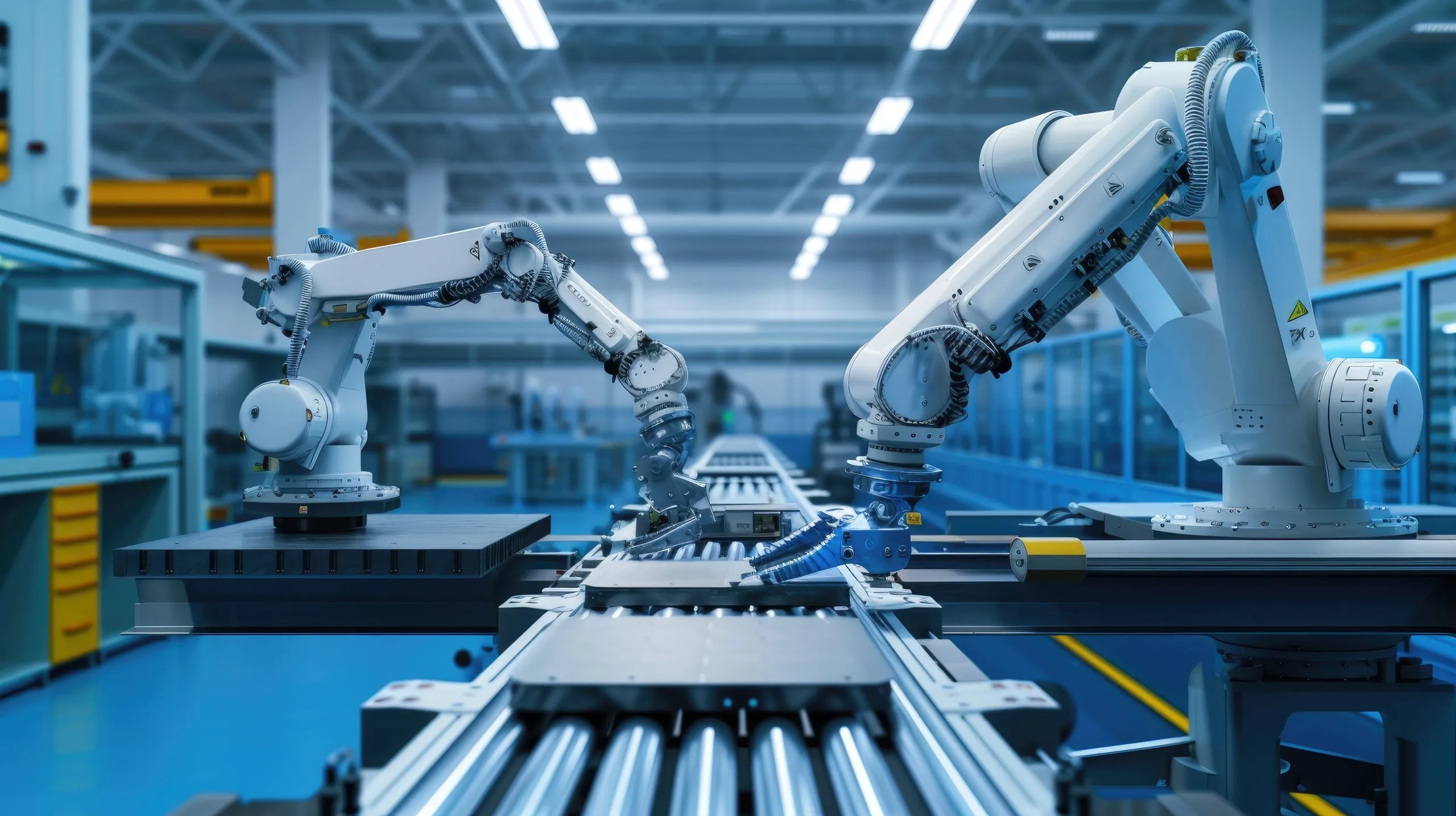
Australia’s industrial automation market is entering a sustained growth phase, driven by digital transformation across mining, manufacturing, and infrastructure sectors. The market is projected to grow from approximately AUD 638 million in 2025 to nearly AUD 1.46 billion by 2035, reflecting a CAGR of about 8.6%. Automation technologies such as robotics, IoT-enabled systems, and SCADA platforms are increasingly deployed to enhance productivity, safety, and operational efficiency. As Australia faces labor shortages and rising operational costs, automation is becoming a strategic necessity rather than a discretionary investment.
Key Market Drivers Shaping Growth of Australia’s Industrial Automation Market
Expansion of Mining and Resource Industries
Australia’s mining sector remains a primary driver of automation adoption. Large-scale operations in Western Australia increasingly rely on automated drilling, remote monitoring, and autonomous vehicles to improve safety and efficiency. Automation helps reduce human exposure to hazardous environments while maintaining productivity. The dominance of this region in automation adoption reflects the sector’s capital intensity and scale.
Industry 4.0 and Digital Transformation
The adoption of Industry 4.0 technologies—including AI, IoT, and advanced robotics—is accelerating across manufacturing and utilities. Globally, around 64% of manufacturers are already using automation technologies, with over 40% reporting improved efficiency. In Australia, smart factories, connected supply chains, and predictive maintenance systems are becoming standard, particularly in automotive and energy sectors. Wireless communication protocols and cloud-based control systems are also gaining traction, enabling real-time decision-making and scalability.
Rising Demand for Productivity and Cost Efficiency
Australia faces persistent productivity challenges and rising labor costs, prompting businesses to invest in automation solutions. Automation reduces downtime, optimizes resource utilization, and enhances output quality. This is particularly critical as industries seek to remain globally competitive while managing workforce constraints and economic pressures.
Government Policies and Strategic Initiatives Accelerating Industrial Automation Adoption
The Australian government is actively supporting automation through digital and industrial policies. Initiatives such as the national AI strategy and the establishment of automation communities of practice aim to standardize adoption across federal agencies. Additionally, climate-related investments—such as over A$5 billion allocated for industrial decarbonization—are encouraging automation in energy-efficient processes and smart infrastructure. These efforts collectively promote innovation, sustainability, and coordinated technology deployment.
Competitive Landscape and Key Industry Players Driving Innovation and Market Expansion
The market is moderately consolidated, with global and regional players competing on technology innovation and service capabilities. Key companies include ABB, Siemens, Schneider Electric, Honeywell, Mitsubishi Electric, and Rockwell Automation. These firms focus on expanding digital portfolios, integrating AI-driven solutions, and forming strategic partnerships. Localized support services and customization for mining, utilities, and manufacturing sectors are critical differentiators in the Australian market.
Key Challenges Impacting the Growth of Australia’s Industrial Automation Market
High Implementation Costs and Skill Gaps
Automation systems require significant upfront investment and specialized expertise. Small and medium enterprises often face barriers in adopting advanced technologies due to cost constraints and limited technical skills.
Cybersecurity and Integration Risks
As industries become more connected, cybersecurity risks increase. Globally, nearly 39% of companies report data breaches linked to automation systems. Integrating legacy infrastructure with modern automation platforms also presents technical complexities.
Future Outlook
The Australia industrial automation market is expected to witness steady growth through 2035, supported by technological advancements and policy backing. Emerging trends such as Industry 5.0, human-machine collaboration, and sustainable automation will shape the next phase of development. Increasing investments in logistics automation—projected to grow at nearly 15% CAGR—highlight expanding applications beyond traditional industries. As businesses prioritize resilience, efficiency, and decarbonization, automation will become deeply embedded across Australia’s industrial ecosystem, positioning the country as a competitive player in advanced manufacturing and smart infrastructure.
Consultants at Nexdigm, in their latest publication “Australia Industrial Automation Market Outlook to 2035,” analyze the sector by System Type (Programmable Logic Controllers (PLCs), Industrial Robots, Human-Machine Interfaces (HMIs), Variable Frequency Drives (VFDs)), By Platform Type (Fixed Automation Systems, Programmable Automation Systems, Flexible Automation Systems), and By Fitment Type (On-premise Solutions, Cloud-based Solutions, Hybrid Solutions). Nexdigm suggests that businesses should align their strategies with evolving market dynamics, technological advancements, and regulatory developments to remain competitive in the industrial automation landscape.
To take the next step, simply visit our Request a Consultation page and share your requirements with us.
Harsh Mittal
+91-8422857704