
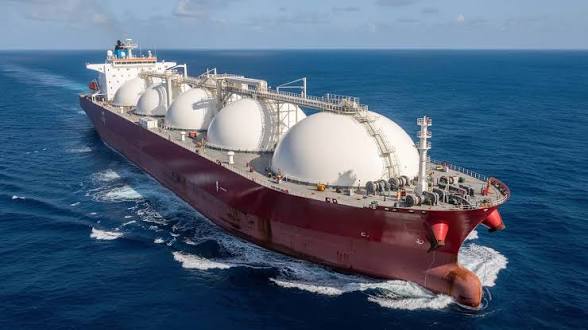
Australia has established itself as one of the world’s leading LNG exporters, making LNG carriers an essential part of its energy export ecosystem. With approximately 86-88 million tonnes per annum (MTPA) of LNG export capacity spread across ten operating LNG projects, the country remains among the top three LNG-exporting nations globally. Behind every LNG cargo shipped from Western Australia, Queensland, or the Northern Territory is a sophisticated network of LNG carrier vessels connecting Australian producers with energy-hungry markets across Asia. As demand for cleaner-burning fuels and energy security grows, Australia’s LNG carriers industry continues to play a vital role in global trade.
Market Drivers Advancing the Australia LNG Carriers Industry
Australia’s Strong Position as a Global LNG Export Powerhouse
The primary growth engine for Australia’s LNG carriers market is the country’s enormous LNG export industry. Australia currently operates ten LNG export facilities with total operational capacity exceeding 85 MTPA, serving major importing countries such as Japan, China, South Korea, and Taiwan. Large export volumes require a substantial fleet of LNG carriers to ensure efficient transportation. As Australia continues exporting significant quantities of LNG, shipping demand remains strong across key trade routes.
Growing Energy Security Demand Across Asia
Asian economies continue to rely heavily on LNG imports to meet industrial and power generation requirements. Japan remains Australia’s largest LNG customer, accounting for approximately 35% of LNG exports, while South Korea and other regional markets continue increasing imports. This ongoing demand for reliable LNG supply creates long-term transportation requirements and supports investments in modern LNG carrier fleets designed for greater efficiency and sustainability.
Expansion of Advanced LNG Infrastructure
Australia’s LNG industry includes some of the world’s most notable assets, including the North West Shelf LNG facility with 16.9 MTPA capacity and Gorgon LNG with 15.6 MTPA capacity. The presence of large-scale export terminals and sophisticated loading infrastructure supports continued LNG shipping activity. Ongoing investments in operational efficiency and project optimization further strengthen demand for LNG transportation services.
Government Initiatives Supporting the Australia LNG Carriers Industry
The Australian government continues to recognize LNG as an important export industry and contributor to national trade revenues. Australia remains one of the world’s largest energy commodity exporters, with LNG accounting for a significant share of energy exports. Energy and trade policies focus on maintaining export competitiveness, supporting infrastructure development, and ensuring secure access to global markets. These efforts indirectly benefit LNG carrier operators by sustaining Australia’s position within international LNG supply chains.
Competitive Landscape of Australia LNG Carriers Sector
The market involves global LNG shipping companies, vessel owners, charter operators, and energy producers. Major LNG exporters including Woodside Energy, Chevron Australia, Santos, Shell, INPEX, and ConocoPhillips rely on long-term shipping arrangements to serve international customers. Competition centers on fleet efficiency, fuel consumption, environmental performance, and vessel availability. Long-term charter contracts remain common as exporters seek reliable transportation capacity amid global market fluctuations.
Challenges Facing Australia LNG Carriers Industry
Aging Gas Fields and Supply Uncertainty
Several mature LNG projects face challenges related to declining upstream gas production. Industry participants must secure sufficient feed gas supplies to maintain export volumes and maximize utilization of existing infrastructure.
Increasing Global LNG Competition
New LNG capacity from the United States, Qatar, and other exporting nations is intensifying competition. As additional projects come online globally, exporters and shipping operators may face increased pricing pressure and market volatility.
Future Outlook
The long-term outlook for Australia’s LNG carriers market remains positive, supported by the country’s position as one of the world’s largest LNG exporters and a trusted supplier to major Asian economies. With approximately 86 MTPA of liquefaction capacity and ten operating LNG projects, Australia continues to generate substantial shipping demand. While increasing global competition and evolving energy transition policies may influence market dynamics, LNG is expected to remain an important component of regional energy security. As a result, LNG carriers will continue serving as the backbone of Australia’s LNG export industry, connecting the country’s vast energy resources with international markets and supporting global energy trade for years to come.
Consultants at Nexdigm, in their latest publication “Australia LNG Carriers Market Outlook to 2035” analyze the sector By Carrier Technical Specification (Membrane Containment Systems, Propulsion Technology Types and Containment Capacity ranges), By End User Industry Sector (Upstream LNG Export Operators, Integrated Energy Trading Firms and Utility Power Generation Facilities) and By Chartering Contract Modak (Spot Market Voyage Charters, Short-Term Project Charters and Long-Term Project Charters).
Nexdigm suggests that businesses in “Australia LNG Carriers Industry” focusses on oilfield, desalination, construction, and industrial applications, strengthen local warehousing, develop application-specific grades, improve technical support, and build resilient sourcing networks to serve expanding energy, water, and manufacturing demand.
To take the next step, simply visit our Request a Consultation page and share your requirements with us.
Harsh Mittal
+91-8422857704