
Automotive production depends on a complex network of component suppliers, from engine and transmission manufacturers to producers of tyres, electrical systems and specialised parts. Changes in component imports can reveal shifts in vehicle production, supplier competitiveness, and exposure to international supply disruptions.
Import values alone provide an incomplete picture. Businesses need to understand what is being imported, where it originates, and whether purchasing patterns reflect higher volumes, changing prices or a shift toward more sophisticated components.
Track Components At Product Level
Component analysis should begin with clearly defined product categories. Broad automotive parts classifications can conceal significant differences between mechanical components, electrical equipment, rubber products and specialised systems.
Where available, import quantities should be reviewed alongside trade values. Rising values accompanied by stable volumes may indicate higher prices or a shift toward more expensive products. Growth in both measures can provide stronger evidence of expanding physical demand.
Product-level analysis also helps distinguish components used across multiple vehicle types from specialised parts associated with particular technologies or manufacturing processes.
Identify Supplier Shifts
Changes in supplier market share can reveal emerging sourcing opportunities and competitive pressure. A supplier gaining share may benefit from pricing, technical capabilities, reliable delivery or favourable trade conditions. A declining share, however, does not necessarily indicate reduced competitiveness; the change may reflect temporary disruptions, exchange-rate movements or shifts in product mix.
Effective auto components import volume tracking compares suppliers across several periods and product categories. It should establish whether sourcing is becoming more concentrated or diversified, and whether new suppliers are replacing established partners or simply adding capacity.
Businesses should also distinguish between the country from which goods are shipped and their actual country of origin. This distinction matters when applying tariffs, trade preferences, and rules of origin.
Measure Sourcing Dependence
A high import share is not automatically a supply chain weakness. Imported components may provide technology, quality, or cost advantages that domestic suppliers cannot currently match. Risk increases when critical components depend on a small number of suppliers, locations, or transport routes and have limited substitutes.
Procurement teams should assess supplier concentration alongside component criticality, delivery reliability, and the time required to qualify alternatives. A widely available component may be easier to replace than a specialised electronic system requiring extensive testing and customer approval.
Automotive Component Sourcing Resilience Framework
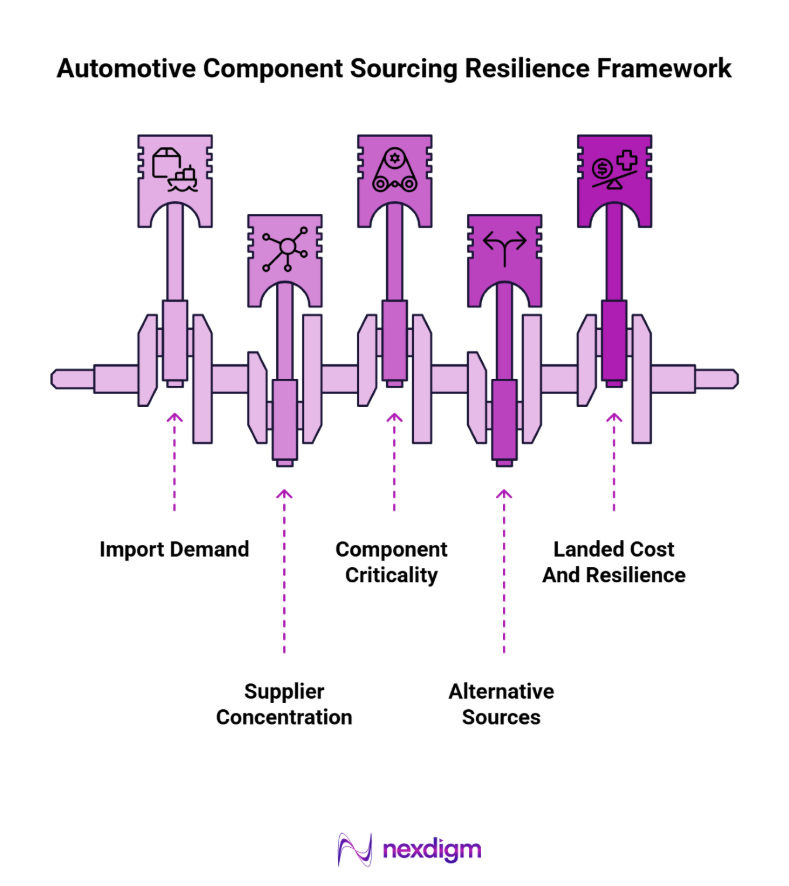
- Import Demand: Track product-level quantities and values across multiple periods to distinguish genuine volume growth from price changes and shifts in component mix.
- Supplier Concentration: Measure the share of imports supplied by leading countries and companies to identify categories exposed to excessive dependence on limited sources.
- Component Criticality: Determine which parts could interrupt production, affect vehicle safety, or delay customer deliveries if supply becomes unavailable.
- Alternative Sources: Evaluate potential suppliers, technical compatibility, qualification timelines, production capacity, and the cost of transferring orders between sourcing locations.
- Landed Cost And Resilience: Compare purchase prices, freight, duties, lead times, inventory requirements and disruption exposure before changing supplier allocations.
These factors help companies prioritise components according to demand growth, replacement difficulty, and operational risk rather than applying the same sourcing strategy to every imported part.
Build A More Resilient Component Strategy
A detailed view of import volumes and supplier movements helps manufacturers anticipate demand, benchmark sourcing options and understand where dependence creates operational risk. Combining trade evidence with technical qualification and procurement economics can support more targeted supplier diversification and investment decisions.
Nexdigm’s Case Study
An automotive supplier notices rising imports in an electrical component category but finds that most purchases originate from two countries. A review of alternative suppliers, qualification requirements and delivery lead times identifies a feasible second source for the most production-critical component, reducing exposure without requiring an immediate shift across the entire purchasing portfolio.
To take the next step, simply visit our Request a Consultation page and share your requirements with us.
Harsh Mittal
+91-8422857704