

Auto profit analysis is the process of evaluating the profitability of automotive companies or their specific segments. It involves assessing revenue generation, cost structures, pricing strategies, and operational efficiencies. This analysis helps businesses understand their profit margins, identify areas for cost reduction, and optimize strategies to maximize financial performance and growth.
Profitability Pressures Persist Due to Increasing Input Costs Across Supply Chains
As per competitive intelligence services, profitability pressures persist in the automotive sector as input costs continue to rise across supply chains. Factors like raw material price hikes, logistics disruptions, and labor shortages contribute to escalating costs, putting pressure on profit margins.
These services help businesses analyze how rising input costs impact their financial performance and identify strategies to mitigate these pressures. By optimizing procurement, production processes, and pricing models, companies can better navigate these challenges and protect profitability.
Harnessing Competitive Intelligence Services on Profitability Pressures
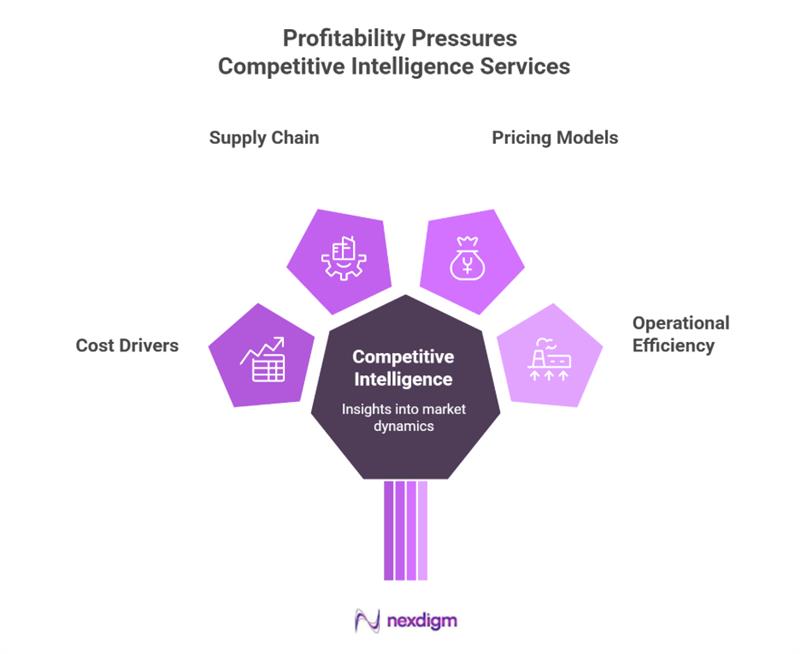
As input costs continue to rise across supply chains, competitive intelligence services help businesses understand these pressures. These insights enable companies to optimize operations, improve cost management, and sustain profitability despite increasing expenses.
Identifying Cost Drivers
Competitive intelligence helps pinpoint key cost drivers, such as raw materials or transportation, allowing companies to focus on cost-reduction strategies that optimize resource allocation and reduce profitability pressures.
Optimizing Supply Chain Strategies
By analyzing supply chain data, competitive intelligence helps businesses identify more efficient suppliers, streamline logistics, and reduce overall supply chain costs, thereby mitigating the impact of rising input prices.
Improving Pricing Models
Competitive intelligence services provide insights into competitors’ pricing strategies, helping companies adjust their pricing models to balance rising costs while maintaining competitiveness and profit margins.
Enhancing Operational Efficiency
By tracking operational inefficiencies, competitive intelligence allows businesses to implement process improvements that lower production costs, increase output, and help maintain profitability despite higher input costs.
Nexdigm’s Competitive Intelligence Services on Profitability Pressures from Rising Input Costs
Nexdigm’s Automotive profitability benchmarking services help businesses address profitability pressures caused by increasing input costs across supply chains. These enhancements optimize operations, improve cost efficiency, and sustain margins in challenging market conditions.
Cost Reduction Strategies
Nexdigm helps identify inefficiencies in supply chains, recommending strategies to reduce input costs, such as negotiating better terms with suppliers or adopting alternative materials.
Supply Chain Optimization
Nexdigm provides insights into optimizing supply chain operations, enabling businesses to reduce transportation and logistics costs, leading to improved cost control and better profit margins.
Competitive Pricing Analysis
By tracking competitors’ pricing strategies, Nexdigm helps businesses adjust their own pricing models to remain competitive while protecting profitability despite rising input costs.
Operational Efficiency Improvements
Nexdigm evaluates internal operations and processes, providing recommendations for increasing efficiency, minimizing waste, and reducing costs across production, which helps enhance profitability.
Supplier Performance Evaluation
Nexdigm analyzes supplier performance and reliability, helping businesses identify high-performing suppliers to reduce delays, improve cost predictability, and ensure consistent product quality while minimizing input cost fluctuations.
Market Trend Forecasting
Nexdigm provides market insights and forecasts on price trends, enabling businesses to proactively adjust their procurement strategies, manage input cost increases, and stay ahead of market fluctuations.
Nexdigm’s Case:
Nexdigm’s competitive intelligence revealed a client’s input costs rose by 18%, impacting margins. By optimizing supply chain processes and renegotiating supplier contracts, the client reduced costs by 12%, improving overall profitability.
To take the next step, simply visit our Request a Consultation page and share your requirements with us.
Harsh Mittal
+91-8422857704