

The automotive aftermarket is entering 2026 with strong demand but greater procurement pressure. AAPEX estimates the global aftermarket at $2.65 trillion in 2026, supported by around 1.61 billion vehicles in operation worldwide. In the US, the combined light- and heavy-duty aftermarket is forecast to reach $599.7 billion, while the average vehicle age has climbed to 12.94 years.
At the same time, procurement teams are balancing rising inventory, customer price sensitivity, and supply-chain uncertainty. AAPEX reports that 70% of surveyed aftermarket businesses have completed, planned, or are progressing supplier-diversification efforts, while 38% are managing higher inventories. Supply-chain disruptions were also identified as the industry’s top challenge by 34% of surveyed businesses.
For distributors, retailers, repair networks, and aftermarket businesses, automotive aftermarket procurement intelligence can help connect supplier performance, demand, inventory, pricing, and market signals to improve purchasing decisions.
Procurement Is Becoming a Three-Way Balance
Aftermarket procurement cannot optimize cost in isolation. Lower purchase prices may have little value if poor availability leads to lost sales, while excessive inventory can protect fill rates but increase working-capital exposure. Supplier diversification can improve resilience but may also add qualification and management costs.
The stronger objective is to balance cost competitiveness, product availability, and supply continuity. This requires procurement teams to understand where supplier economics, inventory positions, demand patterns, and sourcing risks intersect.
Where Procurement Performance Is Won or Lost
Procurement outcomes are often determined before an order is placed. Supplier selection, demand visibility, replenishment cycles, inventory positioning, and regional sourcing decisions can all influence the final cost and availability of aftermarket parts. Understanding these connections helps businesses identify whether procurement issues originate with supplier economics, planning practices, or supply-network design.
A stronger procurement strategy therefore looks beyond individual transactions and examines how sourcing decisions collectively affect cost, availability, and resilience.
Turning Procurement Signals Into Better Decisions
Procurement data becomes valuable when it reveals what needs to change. Nexdigm can bring together supplier performance, pricing, demand, inventory, and market signals to help aftermarket businesses see where procurement is working and where it is leaving value on the table.
Through automotive aftermarket procurement intelligence, Nexdigm’s experts can help identify cost pressures, availability constraints, supplier dependencies, and sourcing opportunities, giving procurement teams a clearer basis for deciding where to act, what to prioritize, and which levers can improve performance.
Nexdigm’s Intelligence for Stronger Aftermarket Procurement
With the key procurement signals identified, Nexdigm can help organizations translate them into targeted improvement areas across the supply chain:
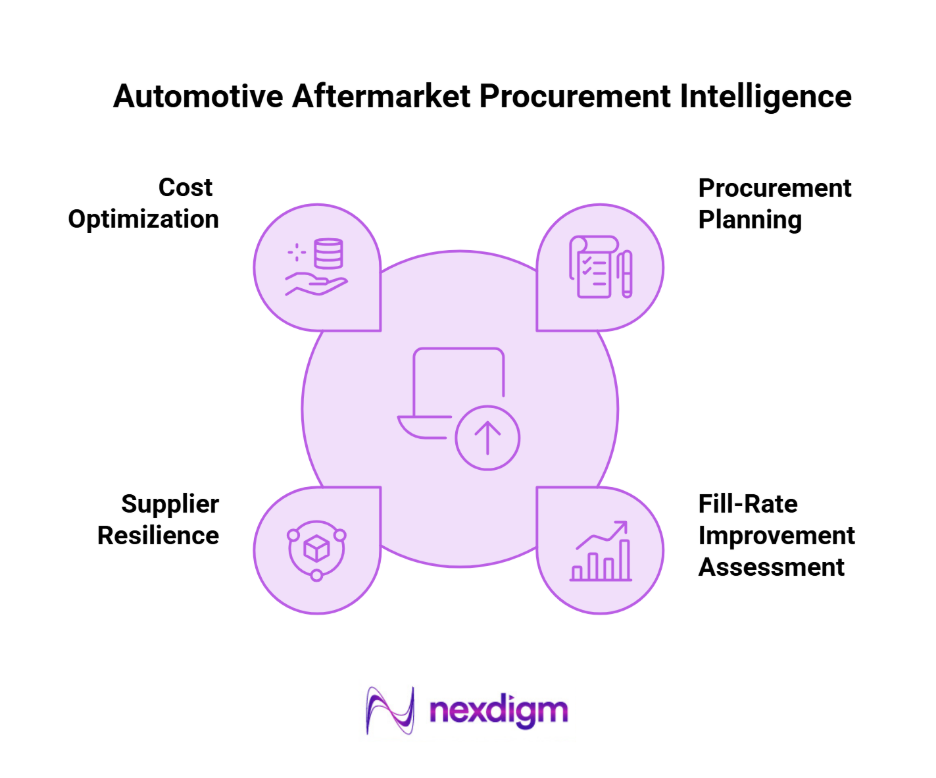
- Cost Optimization: Identify supplier, category, volume, and commercial opportunities that can improve purchasing economics without compromising availability.
- Fill-Rate Improvement: Assess supplier lead times, inventory positioning, replenishment patterns, and distribution coverage to address recurring availability gaps.
- Supplier Resilience: Identify concentration risks, alternative sources, regional dependencies, and capacity constraints that could affect continuity.
- Procurement Planning: Connect demand patterns and market signals with sourcing decisions to improve purchasing timing and resource allocation.
This allows automotive aftermarket procurement intelligence to support practical improvements across cost, service levels, and supply resilience.
Nexdigm’s Procurement Intelligence Delivering Strategic Business Outcomes
The value of procurement intelligence is reflected in how effectively it improves day-to-day sourcing and longer-term supply decisions. Nexdigm can help organizations translate its findings into measurable procurement priorities:
- Lower Procurement Costs: Identify supplier and category opportunities that can improve purchasing economics and reduce avoidable cost pressures.
- Higher Fill Rates: Address supplier, inventory, and replenishment issues that contribute to product shortages or inconsistent availability.
- Stronger Supply Resilience: Reduce exposure to concentrated suppliers and identify alternatives that can provide greater sourcing flexibility.
- Better Working Capital: Improve the alignment between purchasing decisions, demand patterns, inventory levels, and supplier lead times.
- More Informed Sourcing: Give procurement teams a clearer evidence base for supplier negotiations, allocation decisions, and future sourcing plans.
This connects automotive aftermarket procurement intelligence directly to the operational and commercial outcomes that matter most to aftermarket businesses.
Why Nexdigm’s Intelligence Stands Apart
Nexdigm’s intelligence goes beyond collecting supplier and procurement data. It connects cost, availability, demand, supplier performance, and supply risk to create a more complete view of aftermarket procurement. This helps organizations understand not only where a problem exists, but also what is driving it and which sourcing levers could address it.
The result is a more connected, decision-oriented view of automotive aftermarket procurement intelligence, supporting actions that balance cost efficiency, fill rates, and long-term supplier resilience.
Nexdigm’s Case
An aftermarket distributor assessed 29 suppliers across seven product categories and four regions using Nexdigm’s procurement intelligence approach. The assessment identified 27% potential sourcing-cost improvement opportunities, highlighted 14% supplier concentration exposure, and improved procurement analysis efficiency by 28%. The findings supported targeted supplier diversification, purchasing decisions, and inventory-planning actions.
To take the next step, simply visit our Request a Consultation page and share your requirements with us.
Harsh Mittal
+91-8422857704