
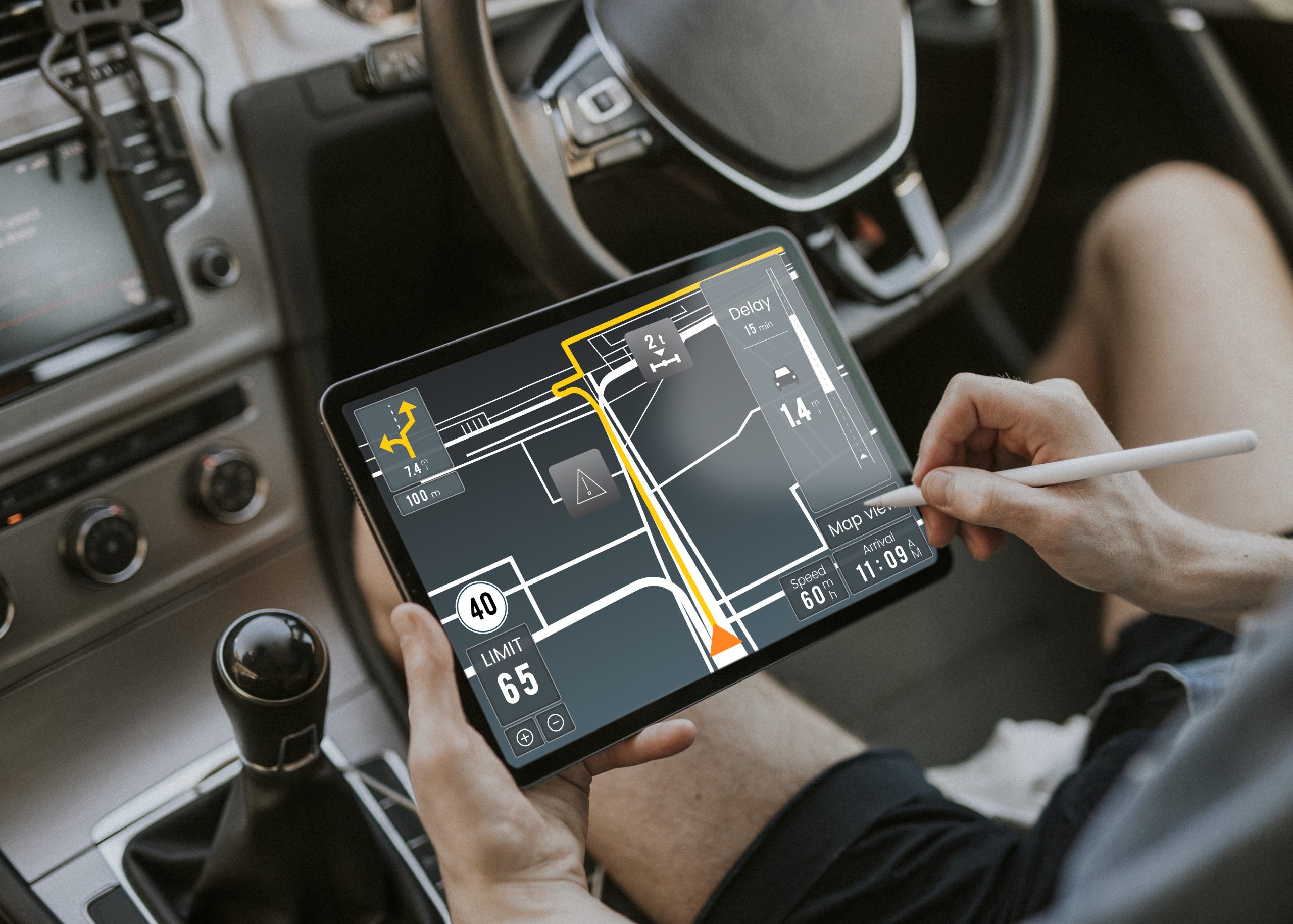
The automotive industry is experiencing a profound transformation. While electrification continues to reshape vehicle architectures, another equally significant trend is emerging: the rise of software-defined vehicles. Modern cars increasingly rely on software to manage performance, safety, connectivity, diagnostics, infotainment, and autonomous functions.
As software capabilities expand, the amount of electronic content embedded in every vehicle continues to grow. A comprehensive Automotive electronics market study shows that value creation is rapidly shifting toward advanced electronic systems, intelligent sensors, power electronics, connectivity modules, computing platforms, and software-enabled control units.
For suppliers, OEMs, investors, and technology providers, understanding these shifts is critical for long-term competitiveness. From a Nexdigm perspective, the automotive industry’s future will increasingly be defined not by mechanical complexity but by electronic intelligence.
What is an Electronic Content Per Vehicle?
Electronic Content Per Vehicle (ECPV) refers to the total value of electronic and electrical components installed in a vehicle. It includes systems such as electronic control units (ECUs), sensors, infotainment systems, advanced driver assistance systems (ADAS), power electronics, connectivity solutions, battery management systems, and other software-driven technologies.
As vehicles become increasingly connected, autonomous, and electrified, the electronic content per vehicle continues to rise, making electronics a major driver of value creation and innovation within the automotive industry.
Why Electronic Content Per Vehicle Is Rising
Traditional vehicles relied heavily on mechanical systems with limited digital functionality. Today’s vehicles increasingly depend on electronics for:
- Safety management
- Vehicle diagnostics
- Battery control
- Navigation
- Infotainment
- Connectivity
- Autonomous driving support
- Energy optimization
As a result, the share of electronics within the overall vehicle bill of materials continues to increase.
Key Drivers Behind This Shift
- Software-Defined Vehicle Architectures: Manufacturers are designing vehicles around software capabilities rather than standalone hardware systems.
- Electrification: EVs require significantly higher levels of power management, battery monitoring, and electronic control.
- Consumer Expectations: Customers increasingly expect seamless digital experiences inside vehicles.
- Safety and Regulatory Requirements: Advanced safety features rely heavily on electronic hardware and software integration.
Nexdigm Perspective
At Nexdigm, automotive industry assessments suggest that future vehicle differentiation will increasingly come from electronic architectures and software capabilities rather than traditional mechanical engineering alone. Organizations should evaluate:
- Electronics Content Growth: Understanding how electronic content is evolving across vehicle segments.
- Technology Investment Priorities: Identifying high-growth electronic component categories.
- Supply Chain Readiness: Ensuring access to critical semiconductor and electronics ecosystems.
- Product Portfolio Transformation: Aligning future offerings with software-driven vehicle platforms.
A strategic Automotive electronics market study highlights that companies that adapt early are likely to capture disproportionate growth opportunities.
Advanced Electronic Control Units (ECUs)
ECUs act as the brains of modern vehicles. They manage functions such as:
- Engine control
- Battery management
- Braking systems
- Climate control
- Driver assistance features
- Vehicle diagnostics
As vehicle software complexity increases, ECU demand continues to evolve.
Market Shift
The industry is moving from dozens of individual ECUs toward centralized and domain-based control architectures. This creates opportunities for:
- High-performance processors
- Smart control modules
- Integrated computing systems
Nexdigm Perspective
Nexdigm believes suppliers should focus on developing:
- High-Performance Computing Platforms: Supporting increasingly sophisticated vehicle functions.
- Scalable Architectures: Allowing OEMs to deploy software updates efficiently.
- Cybersecurity-Enabled Systems: Protecting connected vehicles from evolving digital threats.
The next generation of vehicle electronics will be defined by computational capability as much as hardware performance.
Sensors and Advanced Driver Assistance Systems (ADAS)
Modern vehicles are increasingly dependent on sensors to collect and process real-time information. Key technologies include:
- Cameras
- Radar systems
- Ultrasonic sensors
- LiDAR solutions
- Position tracking systems
These components support:
- Collision avoidance
- Lane-keeping assistance
- Adaptive cruise control
- Parking assistance
- Autonomous driving functions
Nexdigm Perspective
From a Nexdigm standpoint, sensor technologies represent one of the fastest-growing segments within the automotive electronics ecosystem. Manufacturers should focus on:
- Sensor Accuracy: Improving reliability and performance.
- Cost Optimization: Making advanced technologies economically viable for mass-market vehicles.
- Integration Capability: Combining sensing hardware with software analytics platforms.
A comprehensive Automotive electronics market study indicates that growing safety requirements will continue supporting strong sensor demand.
Connectivity and Telematics Solutions
Connected vehicles are becoming the industry standard. Consumers increasingly expect:
- Real-time navigation
- Remote diagnostics
- Over-the-air software updates
- Connected infotainment
- Vehicle tracking services
These capabilities depend on sophisticated communication systems.
Key Components
- Telematics control units
- Connectivity modules
- Antenna systems
- Embedded communication hardware
Nexdigm Perspective
At Nexdigm, market evaluations indicate that connectivity is evolving from a vehicle feature into an ongoing business model. Organizations should assess:
- Subscription-Based Services: Generating recurring revenue through connected capabilities.
- Data Monetization Opportunities: Leveraging vehicle-generated insights responsibly.
- Ecosystem Partnerships: Collaborating with telecom and software providers.
The connected vehicle trend is significantly expanding the scope of automotive electronics opportunities. That’s why it is important to understand the component opportunities to understand market demand and growth drivers.
Where Are the Biggest Component Opportunities?
The following are the five major opportunity areas:
- Advanced Electronic Control Units (ECUs)
- Sensors and Driver Assistance Systems
- Connectivity and Telematics Solutions
- Power Electronics
- Centralized Computing and Software Platforms
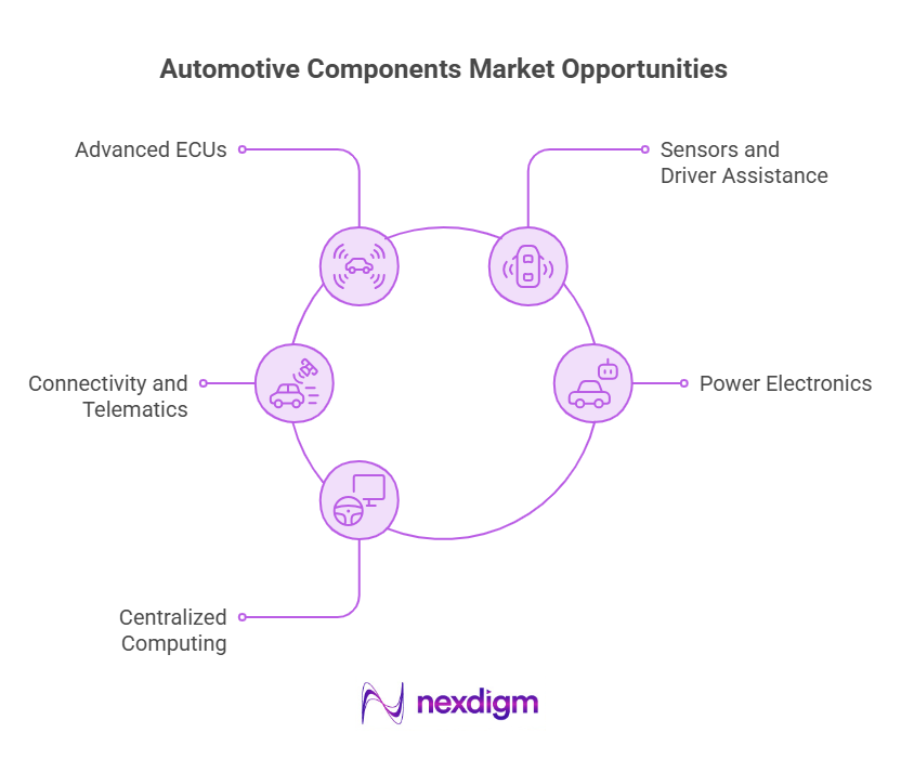
As vehicles become more connected, autonomous, and electrified, demand for these systems is expected to grow significantly. Hence, a forward-looking Nexdigm’s framework model becomes important to assess such opportunities and convert them into strategic insights through its key dimensions.
The Nexdigm Framework for Evaluating Component Opportunities
As automotive technologies continue to evolve, component suppliers and manufacturers must focus not only on current demand but also on long-term market relevance and value creation. To identify future growth areas and make informed investment decisions, Nexdigm recommends evaluating opportunities across four strategic dimensions:
- Technology Relevance
- Market Scalability
- Integration Potential
- Long-Term Value Creation
This framework helps organizations prioritize investments, identify high potential opportunities, and align product strategies with future industry trends. By adopting a structured evaluation approach, businesses can improve decision-making contributing to their long-term success.
Nexdigm’s Case
Nexdigm supported an automotive player in assessing electronics opportunities as India shipped 137 million ECUs in 2025. The study mapped software-rich controllers, ADAS, sensors, connectivity, and localization, identifying scalable component opportunities.
To take the next step, simply visit our Request a Consultation page and share your requirements with us.
Harsh Mittal
+91-8422857704