
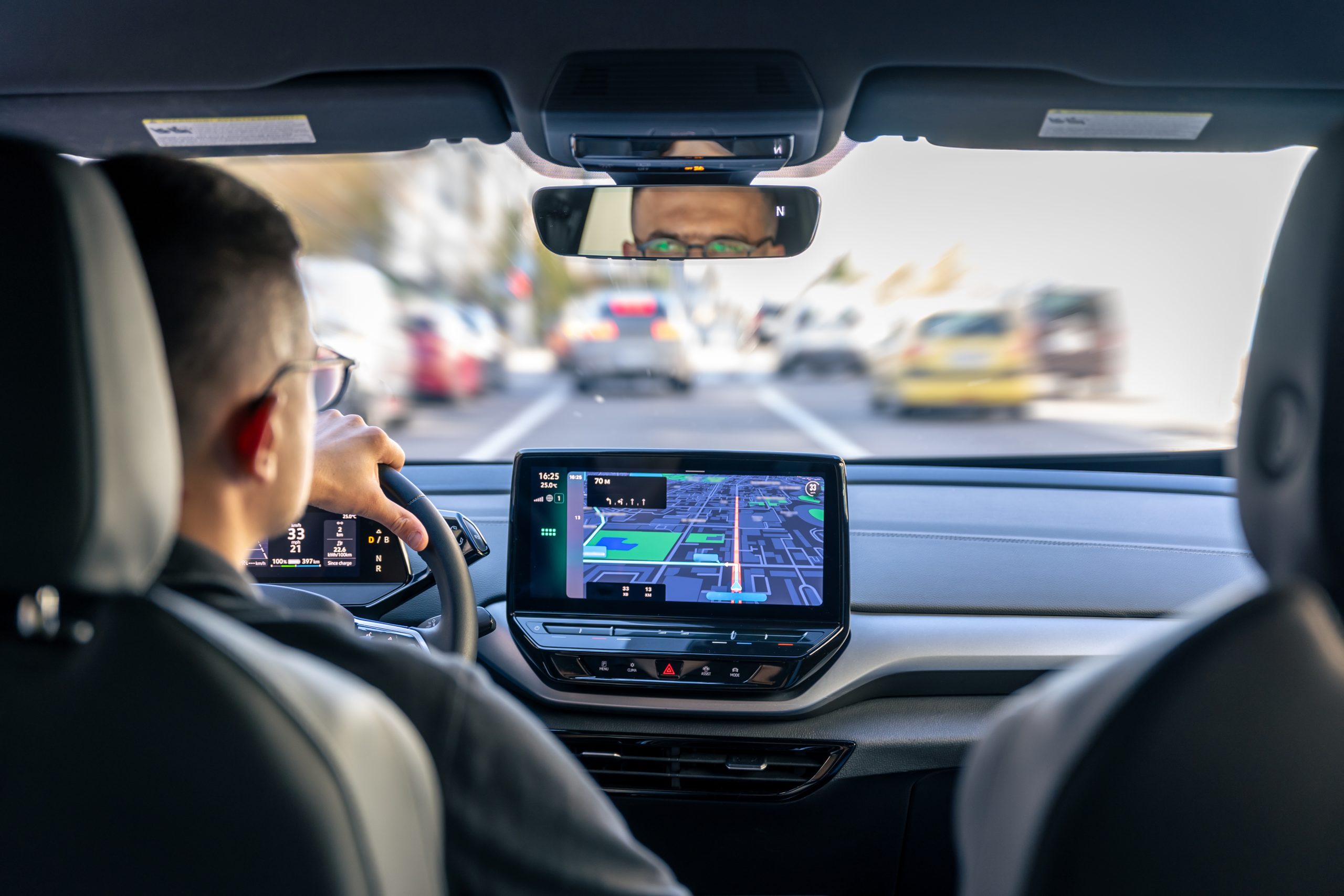
Automotive infotainment systems have developed from basic radio and navigation units into connected digital platforms combining displays, instrument clusters, operating systems, voice interfaces, connectivity and vehicle data. The supplier ecosystem now includes traditional automotive electronics manufacturers, display companies, semiconductor providers, software developers, and specialist user-interface businesses.
For OEMs, identifying relevant suppliers requires a view of the complete infotainment value chain. A company supplying displays may not provide the operating system or user-interface software, while a Tier 1 supplier may integrate several technologies into a complete cockpit system. Understanding these relationships is essential when evaluating sourcing options and technology partnerships.
What Makes Up the Automotive Infotainment Ecosystem?
The infotainment system is built from several interconnected hardware and software layers.
- Displays and instrument clusters include central touchscreen displays, digital instrument panels, passenger displays, and head-up display systems. Suppliers operate across display panels, modules, touch interfaces, and integrated cockpit hardware.
- Head units and cockpit computing platforms manage multimedia, navigation, connectivity, and interactions with other vehicle systems. Increasingly, these functions are integrated into larger computing architectures that support multiple cockpit applications.
- Operating systems and software platforms provide the underlying environment for applications, user interfaces, connected services, and over-the-air updates. Android Automotive OS, Linux-based platforms and proprietary OEM systems represent different approaches to vehicle software architecture.
- Connectivity and communication systems enable Bluetooth, Wi-Fi, cellular connectivity, navigation, and smartphone integration. These functions depend on communication modules, antennas, processors, and software.
- Human-machine interfaces include touchscreens, voice recognition, physical controls, gesture interfaces, and other interaction technologies. Their design influences usability, accessibility, and the overall in-vehicle experience.
Who Are the Major Suppliers?
The global infotainment landscape includes several established Tier 1 manufacturers.
- Harman, part of Samsung Electronics, supplies connected car systems, infotainment platforms, audio solutions and digital cockpit technologies. Its portfolio covers both hardware and software elements used in vehicle interiors.
- Panasonic Automotive Systems participates in cockpit electronics, infotainment systems, displays and connected vehicle technologies. Its capabilities make it relevant to OEMs evaluating integrated in-vehicle electronics.
- Visteon focuses on digital cockpit electronics, including instrument clusters, displays, and cockpit domain controllers. Its product portfolio is particularly relevant to manufacturers developing integrated digital interfaces.
- Continental has capabilities across displays, cockpit systems, vehicle electronics, and human-machine interfaces. Its role extends beyond individual infotainment components into broader cockpit integration.
- Bosch participates in in infotainment, connectivity, and vehicle-computing solutions, while Denso supplies automotive electronics and connected vehicle systems. Other relevant companies include Desay SV, Hyundai Mobis, LG Electronics, Valeo, Pioneer, and Joynext.
The software and semiconductor layers involve additional suppliers. Qualcomm provides automotive computing and connectivity platforms, while NVIDIA participates in vehicle computing and AI-related platforms. Companies such as Cerence specialise in conversational AI and voice technologies.
OEM Relationships and the Shift Towards Integrated Cockpits
OEM sourcing strategies differ according to vehicle segment, price point, software architecture, and the degree of control retained over the user experience. Some manufacturers procure complete infotainment systems from Tier 1 suppliers, while others retain control over software and interface design and source hardware from multiple vendors.
The automotive infotainment supplier mapping process should identify the relationship between the OEM, system integrator, hardware manufacturer, software provider, and semiconductor supplier. This is particularly important when a single vehicle platform combines products from several companies.
The market is also moving towards larger displays, connected services, voice-based interaction, and integrated digital cockpits. This creates opportunities for suppliers that can combine hardware, software, and vehicle-level integration. However, integration capability must be assessed alongside cost, system compatibility, cybersecurity, and long-term software support.
How Procurement Teams Should Evaluate the Supplier Landscape
A useful supplier map should distinguish between direct infotainment system suppliers and companies providing supporting technologies. It should also capture the vehicle segments and geographic markets in which each supplier operates.
Important research dimensions include:
- Product portfolio across displays, head units, clusters, cockpit controllers and connectivity.
- Software capabilities, operating system compatibility, and user-interface technologies.
- OEM relationships and evidence of participation in vehicle programmes.
- Geographic manufacturing and engineering presence.
- Technology partnerships across semiconductors, cloud platforms, and software providers.
- Commercial positioning, product specialisation and market coverage.
This information can help OEMs identify potential system integrators, specialist technology vendors, and alternative suppliers for individual infotainment components.
Automotive Infotainment Supplier Mapping Framework
Nexdigm can support procurement research through supplier discovery, technology segmentation and mapping of the commercial relationships that shape the infotainment ecosystem.
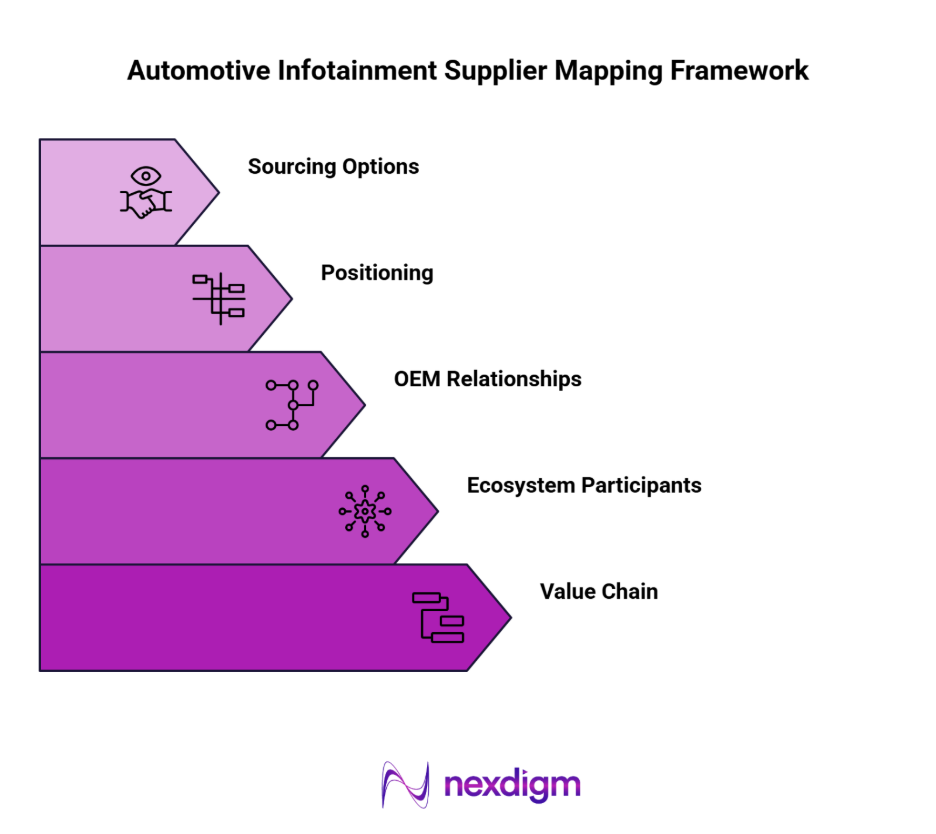
- Break Down the Infotainment Value Chain: Segment displays, head units, cockpit controllers, connectivity, software and user-interface technologies.
- Identify Ecosystem Participants: Map Tier 1 integrators, component manufacturers, semiconductor providers and software specialists.
- Trace OEM Relationships: Examine supplier participation across vehicle manufacturers, brands, segments and geographic markets.
- Compare Technology and Commercial Positioning: Assess product capabilities, partnerships, manufacturing footprints and market specialisation.
- Identify Sourcing and Partnership Options: Highlight relevant suppliers, overlapping capabilities, technology gaps, and alternative vendor relationships.
Case Study: Mapping the Digital Cockpit Supplier Base
An automotive manufacturer reviewing its next-generation infotainment architecture required visibility across hardware, software and integration providers. The assessment mapped 35 suppliers across six technology categories, identified 12 relevant vendors, and highlighted four potential integration and sourcing combinations for further assessment.
To take the next step, simply visit our Request a Consultation page and share your requirements with us.
Harsh Mittal
+91-8422857704