

India’s automotive market continues to expand, but understanding future demand requires looking beyond current vehicle sales. Passenger vehicle sales reached a record 4.64 million units in FY2025–26, growing 7.9%, while changing preferences around SUVs, alternative powertrains, technology, and affordability are influencing future purchases.
An Automotive purchase intent market study helps businesses understand who plans to purchase a vehicle, which brands they are considering, how much they expect to spend, their preferred powertrain, and when they intend to buy or upgrade. These insights can support product planning, positioning, pricing, and customer acquisition strategies.
Understanding the Automotive Purchase Intent
Purchase intent is shaped by several factors, including household income, vehicle prices, financing availability, running costs, existing vehicle ownership, brand perception, and changing mobility needs. Consumers may also reconsider their choices as new powertrains, features, and models enter the market.
Businesses can examine these factors to understand not only what customers currently prefer but also what they are likely to purchase next.
- Brand Consideration: Brand reputation, product quality, service support, resale value, and customer experience influence purchase decisions. Understanding brand preference helps identify which brands are gaining consumer attention and why.
- Budget Constraints: Vehicle affordability, financing options, monthly payments, and ownership costs determine a buyer’s consideration set. Assessing affordability thresholds helps businesses identify attractive price segments and pricing opportunities.
- Powertrain Preference: Consumer interest in petrol, diesel, CNG, hybrid, and EVs varies based on usage needs, cost considerations, and technology adoption. Evaluating powertrain preferences helps predict shifts in future vehicle demand.
- Upgrade Plans: Vehicle replacement timelines, changing customer needs, and new product offerings influence future purchase intent. Analyzing upgrade intentions provides insights into replacement demand and customer migration across segments.
By understanding these factors, businesses can better identify future demand and understand the areas where future purchase is developing.
Where Is the Future Purchase Developing?
Purchase-intent analysis provides an early indication of how demand could evolve before it appears in actual vehicle registrations or sales. Businesses use this analysis to understand:
- Budget & affordability: Identify intended spending levels, financing preferences, and acceptable monthly ownership costs.
- Powertrain intent: Assess future consideration of petrol, diesel, CNG, hybrid, and electric vehicles.
- Upgrade plans: Understand when existing owners intend to replace their vehicles and which segments they may move toward.
- Purchase timeline: Separate immediate buyers from customers considering purchases over the medium or longer term.
- Purchase barriers: Identify factors such as price, financing, charging infrastructure, running costs, product availability, or brand concerns that could delay purchases.
An Automotive purchase intent market study connects these factors to provide a clearer view of future customers, likely vehicle choices, and potential demand. Organizations like Nexdigm provide industry-led expertise in the same to help businesses grow.
Nexdigm’s Automotive Purchase Intent Market Study
Nexdigm’s strategic framework combines consumer research, market intelligence, competitive benchmarking, and demand analysis to analyze and interpret stated purchase intentions into valuable insights. This involves:
- Consumer Segmentation: Segment prospective buyers by demographics, income, geography, current vehicle ownership, usage, and expected purchase timeline.
- Purchase Intent Measurement: Assess purchase likelihood, timing, motivation, replacement requirements, and barriers to determine the strength of future demand.
- Brand & Product Consideration: Evaluate brands, models, body styles, price points, powertrains, and features consumers are considering.
- Affordability & Switching Analysis: Understand budgets, financing requirements, willingness to pay, brand switching, and movement between vehicle segments.
- Opportunity Roadmap: Prioritize customer segments, products, price bands, powertrains, and marketing opportunities based on purchase likelihood and commercial potential.
Through an Automotive purchase intent market study, Nexdigm helps businesses anticipate future demand, refine product strategies, identify priority customers, improve market positioning, and align sales and marketing initiatives with evolving purchase plans.
Assessing Future Demands with Nexdigm
Nexdigm helps automotive businesses assess purchase intent across customer segments, vehicle categories, price bands, and powertrains to identify where future demand is likely to emerge.
Through a structured Automotive Purchase Intent Study, Nexdigm enables businesses to assess future demands by:
- Forecasting future vehicle demand trends
- Evaluating emerging powertrain preferences
- Prioritizing products and features with the highest purchase potential
- Refining pricing, positioning, and go-to-market strategies
- Aligning sales and marketing initiatives with evolving consumer needs
By converting purchase intent into actionable insights, Nexdigm helps businesses make informed decisions that support product planning, market positioning, and long-term growth.
Strategic Benefits to Automotive Businesses
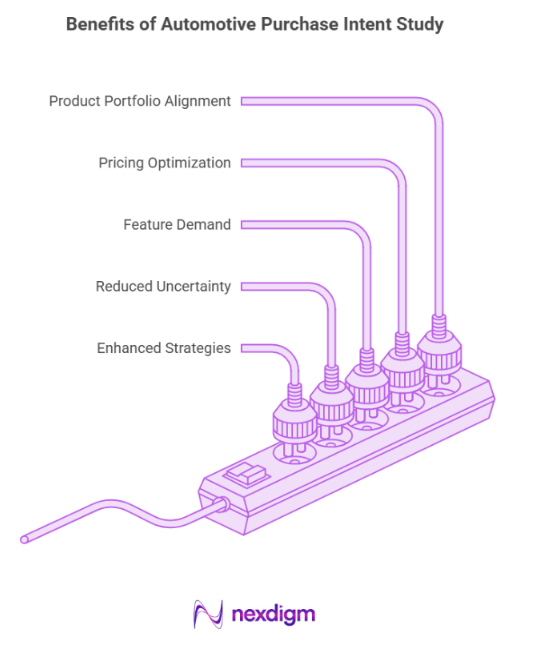
By leveraging Nexdigm’s Automotive Purchase Intent Market Study, automotive businesses can gain a clearer understanding of future customer demand and make more informed strategic decisions. The study helped them in the following ways:
- Aligned product portfolios with evolving consumer preferences
- Optimized pricing and positioning strategies
- Deeper understanding of vehicle features, technologies, and powertrains with higher demand potential
- Reduced uncertainty in product planning and forecasting
- Enhanced customer acquisition and retention strategies
Nexdigm’s Case
Nexdigm assisted an automotive player in evaluating purchase intent across key customer segments. The study identified high-potential buyers and purchase barriers, helping refine targeting and product positioning. The resulting strategy improved qualified customer leads by 12% and purchase conversion by 8%, strengthening overall sales effectiveness.
To take the next step, simply visit our Request a Consultation page and share your requirements with us.
Harsh Mittal
+91-8422857704