

Rare earth materials have become strategically important to automotive supply chains, particularly for electric motors that rely on high-performance permanent magnets. The IEA reports that magnet rare earths account for around 95% of total rare earth consumption by value. In 2024, China represented about 60% of global mined production of magnet rare earths, 91% of refined output, and 94% of sintered permanent magnet production.
Supply risks became more visible in 2025 when export controls on several rare earth elements and magnets created difficulties for automakers outside China, with some manufacturers reducing utilization or temporarily stopping production. Although restrictions were subsequently adjusted, the episode demonstrated how concentrated sourcing can affect vehicle production.
For OEMs, this makes automotive rare earth materials procurement more than a raw-material purchasing exercise. It requires visibility across mining, refining, magnet production, alternative suppliers, geographic dependencies, and strategic risks.
Why Rare Earths Require a Different Procurement View
Rare earth supply chains involve several technically distinct stages, from extraction and beneficiation to separation, refining, alloying, and permanent-magnet manufacturing. A diversified mine does not automatically provide a diversified supply of finished magnet materials. The IEA estimates that existing and announced capacity outside China could meet only around half of mining demand, 25% of refining demand, and less than 20% of magnet demand by 2035. This makes midstream and downstream capabilities particularly important when automakers evaluate alternative sourcing strategies.
Signals That Define Rare Earth Supply Risk
A robust procurement assessment needs to look beyond the location of a mine and examine the full supply chain.
- Supply Concentration: Map mining, separation, refining, alloying, and magnet production to identify dependencies on specific countries, facilities, or suppliers.
- Alternative Availability: Evaluate emerging producers, recycling routes, substitution opportunities, and planned capacity to determine whether credible alternatives exist.
Together, these signals help automakers distinguish between apparent supply diversity and genuine end-to-end supply resilience.
Nexdigm’s Industry-Led View on Rare Earth Procurement
Nexdigm can help automakers interpret rare earth market developments through an automotive and procurement lens. Its analysis can connect material demand, supplier capabilities, processing capacity, geographic concentration, regulatory developments, and alternative sourcing options with specific vehicle-program requirements.
Rather than viewing rare earths as a single commodity category, Nexdigm can assess the different supply-chain stages that ultimately determine the availability of automotive-grade magnet materials.
Nexdigm’s Automotive Rare Earth Materials Procurement Analysis
Nexdigm’s automotive rare earth materials procurement analysis can help OEMs build a structured view of the rare earth value chain and identify where supply dependencies, alternatives, and strategic opportunities exist:
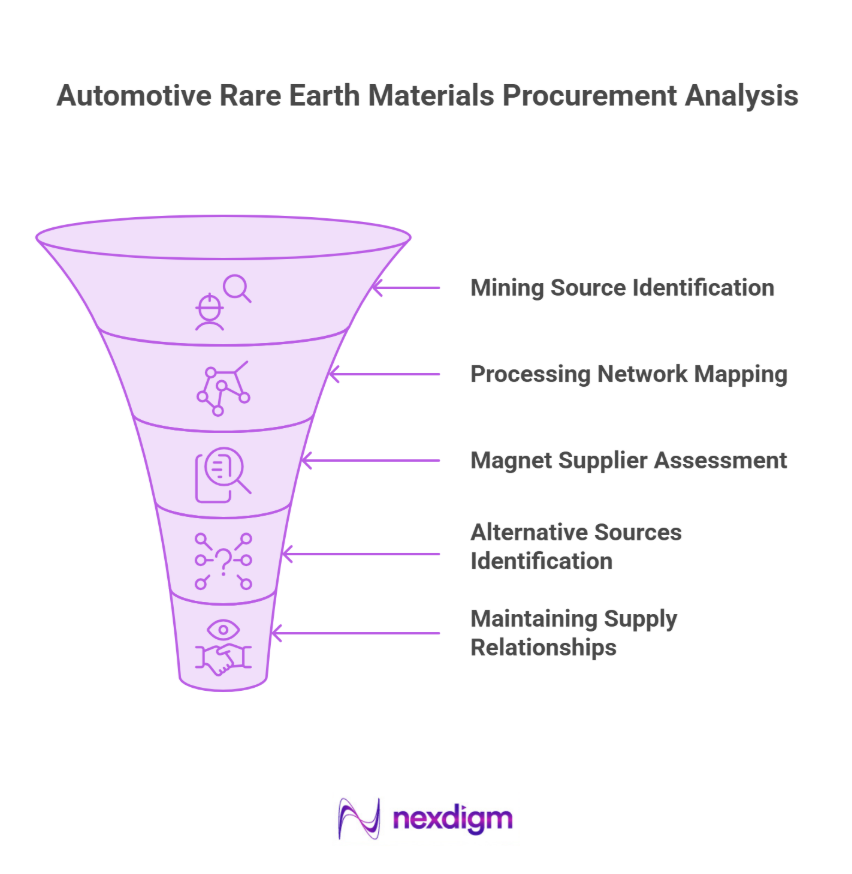
- Mining Sources: Identify producing countries, mines, resource projects, production capacity, ownership, and expansion plans.
- Processing Network: Map separation, refining, metal, and alloy production capabilities to identify critical midstream dependencies.
- Magnet Suppliers: Assess permanent-magnet manufacturers, production capacity, automotive customers, technology capabilities, and geographic footprint.
- Alternative Sources: Identify emerging suppliers, recycling projects, regional processing investments, and potential substitute technologies.
- Supply Relationships: Examine supplier partnerships, offtake agreements, customer concentration, and strategic investments that may influence future availability.
This gives automakers a clearer view of where their automotive rare earth materials procurement is exposed and which sourcing options could strengthen long-term supply resilience.
Why Nexdigm’s Rare Earth Analysis Becomes Important
Rare earth supply risks can extend from mining and refining to magnet manufacturing, making isolated supplier assessments insufficient. Nexdigm’s analysis brings these dependencies into one view, helping automakers identify concentration risks, evaluate credible alternatives, anticipate supply disruptions, and align procurement decisions with future EV production requirements. This enables a more proactive approach to material security rather than responding only after supply constraints emerge.
Nexdigm’s Analysis Strengthening Long-Term Rare Earth Supply Resilience
Nexdigm’s analysis can help OEMs move from identifying supply dependencies to building a more resilient sourcing position. The assessment can support:
- Source Diversification: Identify credible suppliers, regions, and processing routes that can reduce dependence on concentrated supply chains.
- Alternative Planning: Evaluate emerging producers, recycling options, substitute materials, and new processing capacity as potential alternatives to existing sources.
- Strategic Partnerships: Identify suppliers and projects where long-term agreements, investments, or partnerships could improve access to critical materials.
- Risk Monitoring: Track regulatory changes, export controls, capacity developments, project timelines, and geopolitical factors that could affect future availability.
By connecting these insights, Nexdigm can help automakers build a more diversified and forward-looking automotive rare earth materials procurement strategy, reducing exposure to disruptions while improving long-term material security.
Nexdigm’s Case
An automaker assessed 16 rare earth suppliers and processing partners across mining, refining, and magnet production. Nexdigm’s analysis identified 5 priority alternative sources, highlighted 8 critical supply dependencies, and reduced supplier-screening time by 30%, supporting diversification planning and more focused supplier discussions.
To take the next step, simply visit our Request a Consultation page and share your requirements with us.
Harsh Mittal
+91-8422857704