

Raw material costs influence automotive component prices, manufacturing margins, and the competitiveness of sourcing markets. Steel, aluminium, copper, rubber, plastics and specialty alloys are used across vehicle structures, powertrain systems, electrical components, interiors and safety equipment. Their prices are shaped by global commodity markets, domestic production conditions, processing capacity, and regional supply arrangements.
For procurement teams, the challenge is understanding how these factors translate into the actual cost of materials purchased by automotive manufacturers. Two suppliers sourcing the same material may offer significantly different prices because of differences in grade, processing, order volumes, logistics, and commercial terms. A useful benchmark must account for these differences rather than rely on commodity prices alone.
Which Raw Materials Have the Greatest Cost Exposure?
The material basket varies according to the component being manufactured. Steel is widely used in body structures, chassis systems, suspension components, fasteners, and transmission parts. Aluminium is important for lightweight structures, wheels, engine components, battery housings and castings. Copper supports wiring harnesses, electric motors, power electronics, and electrical distribution systems.
Rubber and polymers serve applications across tyres, seals, hoses, interiors, and engineered plastic components. Specialty alloys and other processed materials are relevant to components requiring specific strength, thermal resistance, or corrosion performance.
Each material has a different cost structure. Steel prices respond to iron ore, coking coal, scrap availability, energy costs and domestic mill capacity. Aluminium pricing is influenced by alumina availability, electricity costs, and international metal markets. Copper is particularly exposed to mining output, refining capacity, and demand from electrification-related industries.
Consequently, a procurement team comparing material costs across component categories needs separate benchmarks for each material and specification.
Why Do Material Prices Differ Across Suppliers and Regions?
The quoted price of a material reflects several layers of cost. A domestic processor purchasing from an established steel mill may have a different cost position from a manufacturer importing specialty grades. Similarly, aluminium suppliers may face different electricity, conversion, and scrap-recovery costs depending on their production locations.
Regional comparisons should account for:
- Availability of the required material grade and specification.
- Distance from mills, smelters, processors, and recycling facilities.
- Import duties, freight, insurance and customs costs.
- Energy, labour and conversion costs.
- Supplier purchasing volumes and inventory positions.
- Currency exposure and commodity-price movements.
For example, comparing two steel suppliers requires matching product form, grade, dimensions, coating and delivery terms. A lower-priced hot-rolled coil may not be a suitable substitute for a specification requiring a particular strength grade or surface treatment.
Comparing Commodity Prices with Actual Procurement Costs
A meaningful automotive raw material cost benchmarking exercise separates the commodity reference price from the processed-material price and the final landed cost.
The distinction is commercially important. A material may trade at a competitive international price, but local conversion costs, freight and import duties can reduce its attractiveness. Conversely, a supplier located near a manufacturing facility may offer a higher material price but lower logistics costs and shorter replenishment distances.
The comparison should also account for material yield and processing losses. In steel stamping, for example, scrap generation affects the effective material cost per usable component. In aluminium casting, alloy requirements, recovery rates, and production processes influence the economics of the input.
Contract structures also matter. Fixed-price agreements, index-linked contracts, periodic revisions and spot purchases expose buyers and suppliers to price movements differently. Benchmarks should compare equivalent purchasing conditions to avoid misleading conclusions.
Identifying Sustainable Regional Cost Advantages
A temporary price difference may result from inventory timing or short-term commodity movements. A more durable advantage may arise from access to competitive raw materials, efficient processing infrastructure, established recycling networks, or proximity to major automotive manufacturing clusters.
Procurement research should examine the reasons behind these differences. This helps manufacturers distinguish between short-term pricing opportunities and regional markets that may offer a more consistent cost advantage. It can also identify materials where supplier concentration, import dependence, or limited processing capacity creates additional exposure.
Automotive Raw Material Cost Benchmarking Framework
Nexdigm can support procurement research through material-market analysis, supplier cost comparisons, and assessment of regional sourcing conditions.
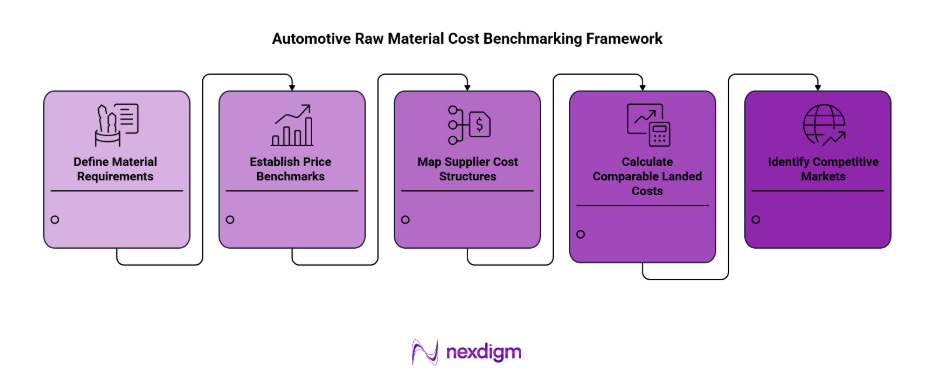
- Define Material Requirements: Identify materials, grades, specifications, component applications and annual volume requirements.
- Establish Price Benchmarks: Compile relevant commodity, domestic market and processed materials price references.
- Map Supplier Cost Structures: Compare supplier locations, processing capabilities, material access and regional cost drivers.
- Calculate Comparable Landed Costs: Account for freight, duties, conversion, material losses, packaging and contract terms.
- Identify Competitive Markets: Highlight cost differences, regional advantages, price exposure, and sourcing alternatives for further evaluation.
Case Study: Comparing Steel and Aluminium Input Markets
An automotive component manufacturer required a regional cost comparison for six material specifications. The assessment covered 24 suppliers across three sourcing markets, examining commodity references, processing costs, and logistics. Two markets emerged as potential alternatives for further commercial evaluation, particularly for selected aluminium and steel inputs.
To take the next step, simply visit our Request a Consultation page and share your requirements with us.
Harsh Mittal
+91-8422857704