

Automotive procurement is operating against a larger and increasingly regionalized production base. Global vehicle production reached 96.4 million units in 2025, up 3.9% from 2024, while global vehicle sales reached 99.8 million, up 4.7%. Asia-Oceania accounted for 59.2 million vehicles, approximately 61% of global production, while emerging markets collectively produced 58.2 million units, 8% more than in 2024.
These shifts matter for supplier pricing because component costs are shaped by production scale, regional manufacturing footprints, material exposure, logistics, labor, technology content, and supplier economics. As sourcing networks become more geographically diverse, comparing quoted prices alone can provide an incomplete picture. Automotive supplier pricing intelligence can help OEMs understand how supplier prices compare, what drives the differences, and where opportunities exist to improve procurement economics.
Pricing Is More Than a Quoted Number
A supplier quote reflects multiple underlying cost drivers, including materials, processing, labor, energy, logistics, tooling, capacity utilization, technology, and commercial terms. Two suppliers offering the same component at different prices may have very different cost structures and strategic positions.
For automakers, the challenge is therefore to determine whether a price is genuinely competitive, structurally justified, or influenced by factors that can be negotiated or optimized.
Benchmarking Supplier Prices Across Comparable Cost Structures
Effective automotive price intelligence goes beyond comparing supplier quotations and focuses on understanding the context behind those prices. Components should be evaluated against comparable suppliers, manufacturing locations, production volumes, material specifications, and technology requirements.
This enables procurement teams to identify whether pricing differences stem from genuine cost advantages, operational efficiencies, or market positioning. By benchmarking suppliers across key cost drivers, automakers can establish realistic target prices, strengthen negotiation strategies, and uncover sourcing opportunities that support long-term cost competitiveness without compromising quality or supply continuity.
How Nexdigm Helps Assesses Supplier Pricing Competitiveness
Supplier pricing can shift due to several interconnected factors. Nexdigm can help OEMs interpret these movements in context and understand what they mean for sourcing competitiveness:
- Market Drivers: Assess raw-material movements, labor costs, regional conditions, demand shifts, and capacity utilization to understand the factors influencing supplier pricing.
- Supplier Behavior: Examine how suppliers respond to changing costs, demand conditions, production pressures, and market dynamics to identify persistent or temporary pricing patterns.
- Sourcing Opportunities: Identify categories where pricing pressures may create negotiation opportunities, sourcing alternatives, cost optimization potential, or the need for deeper supplier evaluation.
This helps procurement teams understand not just what suppliers charge, but why prices move and where action may create value.
Nexdigm’s Role in Building Pricing Visibility
With pricing influenced by materials, geography, production economics, and supplier strategy, OEMs need a consistent view of how costs are evolving. Nexdigm can bring these variables together through automotive supplier pricing intelligence to create clearer visibility across sourcing categories:
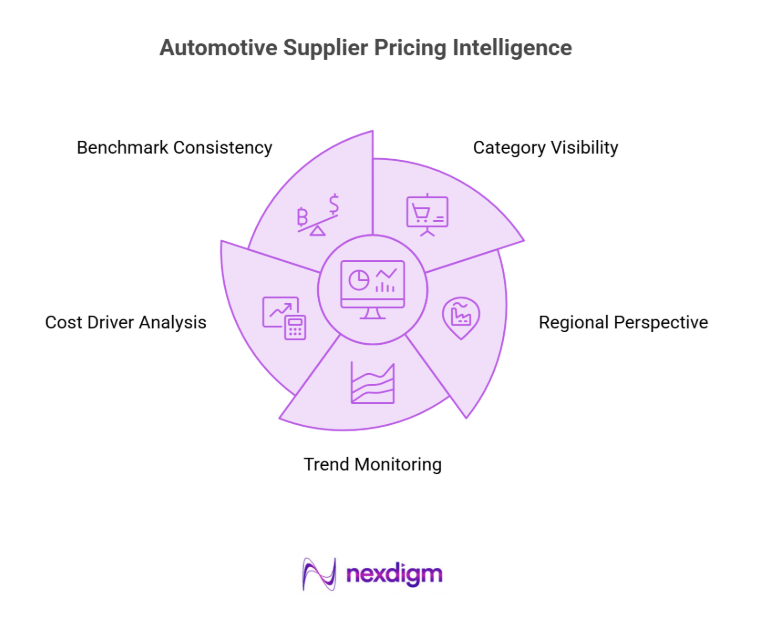
- Category Visibility: Track pricing patterns across components, materials, and supplier groups to identify where cost movements are concentrated.
- Regional Perspective: Compare supplier economics across manufacturing locations to understand how geography, logistics, labor, and local market conditions influence prices.
- Trend Monitoring: Identify emerging pricing movements and structural cost changes that could affect future sourcing decisions and procurement budgets.
- Cost Driver Analysis: Examine material, labor, energy, logistics, tooling, and conversion factors to understand the underlying causes of supplier price movements.
- Benchmark Consistency: Apply common assessment parameters across suppliers and categories to create more comparable pricing views and reduce inconsistencies in procurement analysis.
This gives procurement teams a stronger basis for understanding where costs are moving, what is driving them, and how those movements could affect sourcing strategy.
Nexdigm’s Pricing Intelligence for Enhancing Procurement Performance
Once pricing patterns and cost drivers are visible, Nexdigm can help procurement teams use these insights to improve sourcing performance across vehicle programs:
- Stronger Cost Control: Identify pricing deviations and underlying cost pressures early, helping teams address unfavorable movements before they affect procurement budgets.
- Better Sourcing Decisions: Combine price intelligence with supplier capability, regional economics, quality, and capacity to support more balanced sourcing choices.
- Proactive Procurement Planning: Use pricing trends and market signals to anticipate cost changes and prepare sourcing strategies, budgets, and supplier discussions accordingly.
- Improved Supplier Conversations: Give procurement teams objective benchmarks and market context to support more focused, evidence-based discussions with suppliers.
By connecting automotive supplier pricing intelligence with procurement priorities, Nexdigm can help organizations turn pricing visibility into more informed and proactive sourcing decisions.
Nexdigm’s Case
An automaker benchmarked 22 suppliers across five component categories using Nexdigm’s pricing intelligence approach. The assessment identified 36% of suppliers with notable pricing gaps, uncovered 14 negotiation opportunities, and improved supplier evaluation efficiency by 28%. The resulting benchmarks gave procurement teams stronger evidence for supplier discussions, cost optimization, and sourcing decisions.
To take the next step, simply visit our Request a Consultation page and share your requirements with us.
Harsh Mittal
+91-8422857704