
Bakery demand is becoming increasingly segmented. Consumers still purchase everyday bread and biscuits for routine household consumption, but premium sourdough, functional bread, cakes, pastries and convenient single-serve products are creating new occasions and price tiers.
India’s bakery industry recorded US$12.9 billion in demand in 2024, with households accounting for 80.1% of total demand. The industry is highly fragmented, with 862,714 companies and the top five accounting for 34.4% of production value.
That fragmentation creates room for brands that can identify specific customer missions rather than treating bakery as one category.
Frequency Is Splitting Across Everyday and Occasion-Led Products
Bread remains a high-frequency staple, while cakes, pastries and premium baked goods are more strongly tied to occasions, indulgence and convenience.
Euromonitor’s 2025 assessment highlights convenience, versatility, nutritional benefits and evolving lifestyles as important bakery demand drivers. It also identifies e-commerce as the fastest-growing retail channel for baked goods.
The commercial implication is significant. A brand selling bread needs to optimize household penetration and repeat purchase. A premium bakery brand may instead need to maximize average transaction value and occasion frequency.
Premiumization Is Creating New Price Ladders
Premium bakery products increasingly compete through ingredients, freshness, provenance and perceived health benefits.
Premium bakery data shows bread represented 34.78% of the premium bakery market in 2025, while fresh products accounted for 68.62%. Online retail is projected to grow at 7.42% CAGR through 2031, creating additional access to premium and specialty products.
This creates a need for price architecture rather than a single “premium price.” A ₹60 loaf, a ₹150 sourdough and a ₹300 specialty pastry may serve completely different purchase missions.
Clean Label and Convenience Are Converging
The uploaded market report identifies clean-label artisan breads, protein breads and functional gluten-free products as emerging premium formats. It also highlights the technical challenge of extending shelf life while maintaining ingredient simplicity.
For demand analysis, this means product attributes should be tested alongside price. Consumers may accept a premium for sourdough, protein density or convenience, but the acceptable premium differs by segment.
Building a Bakery Demand and Price Model
Nexdigm’s bakery customer demand analysis services can evaluate four dimensions:
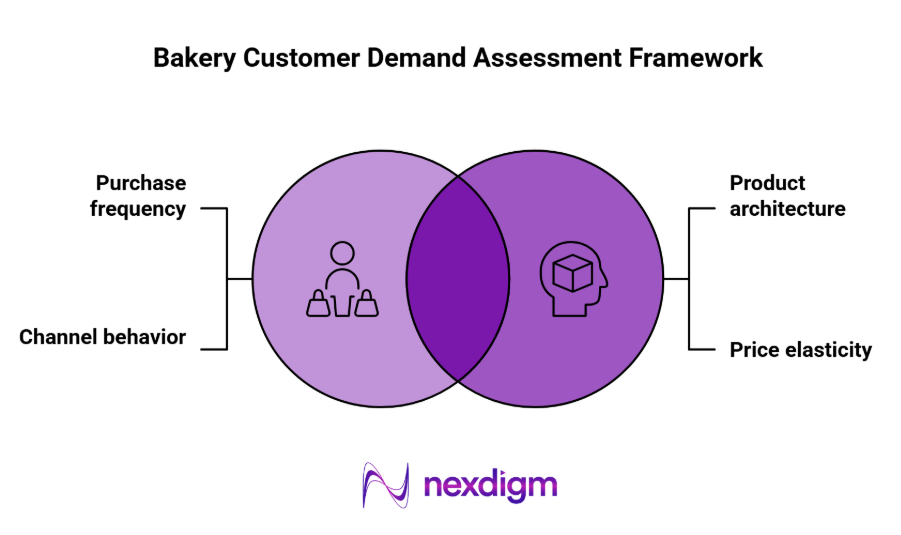
- Purchase frequency: Separate daily staples from weekly, monthly and occasion-led purchases.
- Product architecture: Compare bread, biscuits, cakes, pastries, functional products and single-serve formats.
- Price elasticity: Test purchase intent across multiple price points instead of relying on competitor prices alone.
- Channel behavior: Measure traditional retail, modern trade, bakery outlets, foodservice and online purchasing.
The resulting demand curve can identify which products should drive volume, which should build margin, and where price increases are likely to reduce conversion.
Nexdigm Case: Optimizing Bakery Pricing and Production
Nexdigm assessed 42 bakery SKUs across 18 stores, combining hourly sales data with 2,100 consumer observations. Production-linked pricing increased full-price sell-through by 11.8%, revenue per batch by 6.9%, and reduced stockouts by 8.3% across pilot stores.
To take the next step, simply visit our Request a Consultation page and share your requirements with us.
Harsh Mittal
+91-8422857704