
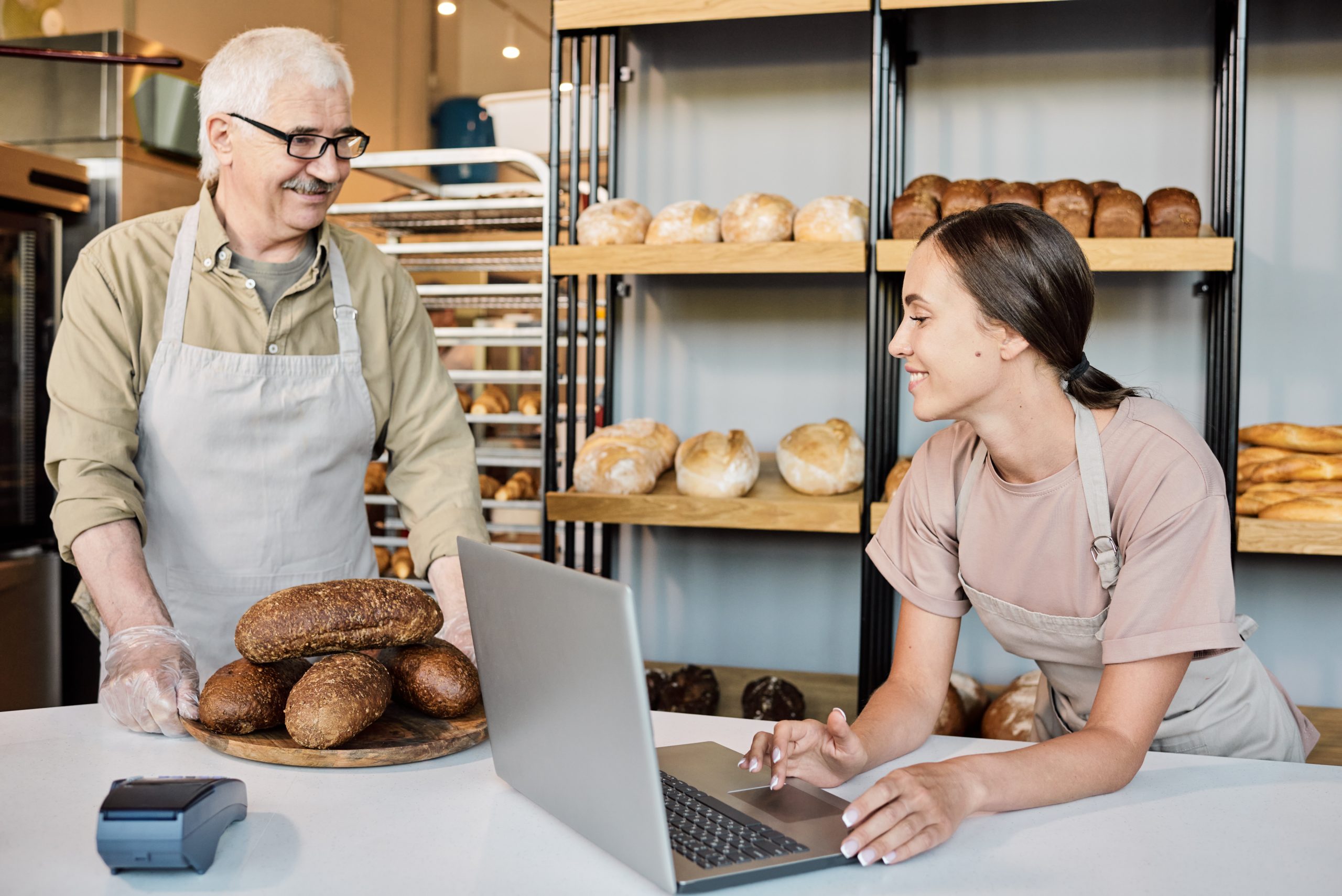
India’s bakery market is large, fragmented, and increasingly divided across different consumption occasions. Bread remains an everyday staple, while packaged cakes, pastries, cookies, premium baked goods, and convenience-oriented formats are competing for newer consumption occasions.
The scale of the category creates an unusual opportunity problem. A market can be large without every segment being equally attractive. The more relevant question for bakery companies is where consumer demand remains insufficiently served and whether that gap can support a commercially viable product.
India’s bakery products industry recorded production value of US$7.5 billion in 2024, while demand reached US$12.9 billion. Household spending accounted for 80.1% of total demand, and the industry remained highly fragmented, with 862,714 companies and the top five accounting for 34.4% of production value.
Bakery Growth Is Becoming More Occasion-Specific
Different bakery products solve different consumption needs.
Bread is closely associated with everyday meals and convenience. Cakes and pastries are linked more strongly to indulgence, celebration, and premium occasions. Cookies and biscuits compete across snacking, tea-time, and impulse consumption. Premium artisanal products increasingly compete around freshness, ingredients, craftsmanship, and perceived quality.
This creates several potential growth spaces within the same category.
A bakery brand looking for expansion therefore needs to understand not only what consumers buy, but when and why they buy it. Breakfast, between-meal snacking, children’s consumption, gifting, celebrations, office consumption, and at-home indulgence can produce very different willingness-to-pay patterns.
Euromonitor identifies convenience, versatility, nutritional benefits, evolving lifestyles, pack sizes, and flavors as important factors shaping India’s baked-goods demand. It also highlights e-commerce as one of the fastest-growing retail channels for the category.
Format Can Reveal Demand That Category Numbers Hide
Format is one of the first places to look for whitespace.
A market dominated by large family packs may have room for single-serve products. A category concentrated around shelf-stable products may offer opportunities through fresher formats. Conversely, premium fresh products may have limited reach if their price and shelf life restrict distribution.
The assessment should therefore examine:
- Pack and portion formats
- Fresh versus packaged products
- Shelf life and freshness expectations
- Consumption occasions
- Product attributes and ingredients
- Retail and digital availability
- Regional preferences
This helps identify whether the gap is genuinely a product gap or simply a distribution problem.
Price Points Can Expose the Missing Consumer
Price is another important source of whitespace.
Consumers do not necessarily divide themselves into only value and premium segments. There can be meaningful demand between entry-level and premium products, particularly where consumers are willing to pay more for freshness, better ingredients, convenience, or differentiated flavors but remain unwilling to absorb a large premium.
Pricing research can establish acceptable price ranges, price sensitivity, competitor benchmarks, promotional dependence, and the relationship between pack size and perceived value.
For bakery companies, this is particularly important because ingredient inflation, freshness losses, and production economics can quickly erode margins when pricing is based only on competitor shelf prices.
The Bakery Opportunity Assessment Framework
Nexdigm’s bakery opportunity market assessment can structure whitespace identification through four connected stages.
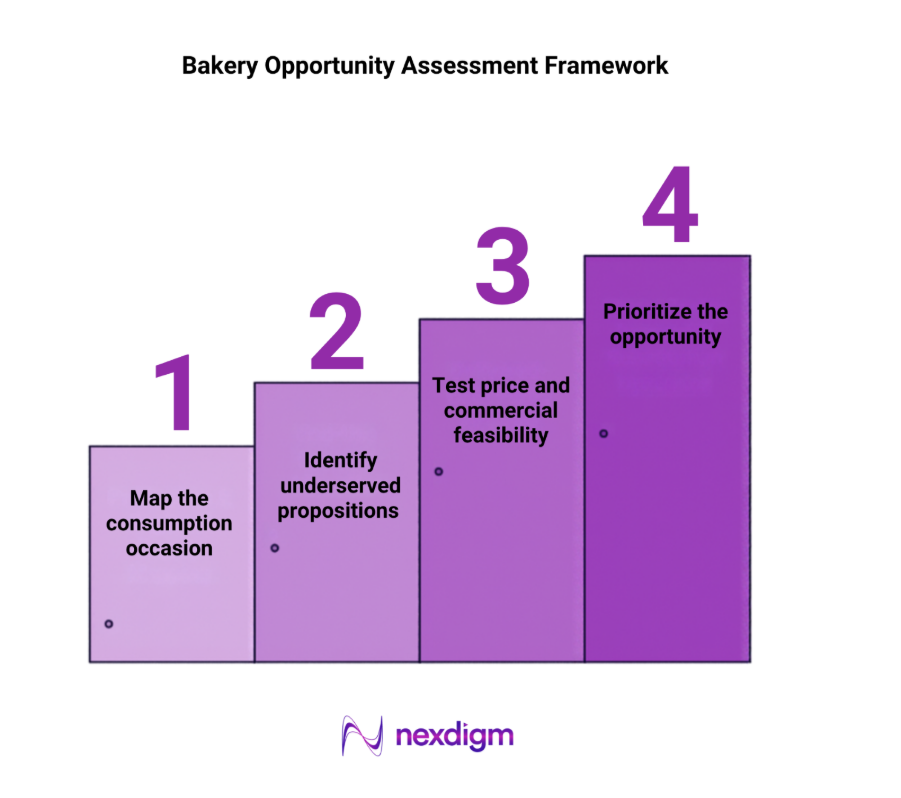
- Map the consumption occasion
Identify when consumers purchase bakery products and what role the product plays. Frequency, occasion, household type, purchase location, and consumption context establish where demand is concentrated. - Identify underserved propositions
Benchmark existing products by format, flavor, ingredients, pack size, freshness, nutritional positioning, and convenience. Consumer research can then identify where dissatisfaction, unmet needs, or low availability remain. - Test price and commercial feasibility
Assess willingness to pay against competitor prices, production costs, expected margins, promotional requirements, and channel economics. This determines whether a perceived white space can support a sustainable price proposition. - Prioritize the opportunity
Finally, compare potential opportunities by addressable demand, growth potential, competitive intensity, operational requirements, and route-to-market feasibility.
This can help a bakery company decide whether the stronger opportunity lies in a new format, a different price tier, an underserved occasion, a regional proposition, or a channel-specific product.
When Production-Linked Pricing Improved Bakery Performance
Nexdigm assessed a bakery brand using batch economics, freshness windows, channel margins, and hourly demand. Production-linked pricing increased full-price sell-through by 11.8%, revenue per batch by 6.9%, and reduced stockout incidents by 8.3% across pilot stores within five months.
To take the next step, simply visit our Request a Consultation page and share your requirements with us.
Harsh Mittal
+91-8422857704