
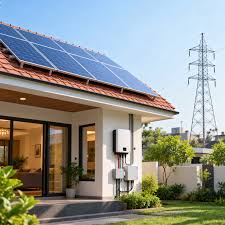
Bangladesh has emerged as one of the world’s most remarkable success stories in off-grid solar electrification. For millions of families living in remote villages where grid connectivity was once limited, solar energy has become more than just a power source. It has improved education, healthcare access, communication, and economic opportunities. The country’s innovative Solar Home System (SHS) model has brought electricity to approximately 20 million people through more than 4.1 million installed systems, making it one of the largest off-grid solar programs globally. As Bangladesh continues its renewable energy transition, off-grid solar solutions remain relevant for underserved communities, agricultural operations, and climate-resilient energy development. The market is now evolving beyond basic household electrification toward productive energy use and sustainable rural development.
Market Drivers Advancing the Bangladesh Off-Grid Solar Energy Industry
Expanding Energy Access Across Remote Communities
One of the strongest drivers of Bangladesh’s off-grid solar energy market has been the need to provide reliable electricity in geographically challenging regions. River islands, coastal zones, and remote villages have historically faced difficulties in accessing conventional grid infrastructure. The Solar Home System initiative successfully bridged this gap. More than 4.1 million systems have been installed across the country, supplying clean electricity to around 18-20 million people. For many families, solar power represented their first experience with dependable electricity. Children gained extended study hours after sunset, while households reduced their dependence on kerosene lamps. This practical impact continues to support demand for decentralized renewable energy solutions.
Rising Focus on Sustainable and Affordable Energy
Bangladesh’s growing population and increasing electricity consumption have strengthened the need for diversified energy sources. Solar technology offers a cost-effective solution for rural households seeking reliable power without recurring fuel expenses. The environmental benefits are equally significant. The country’s Solar Home System program has helped avoid approximately 9.6 million tonnes of CO₂ emissions while reducing consumption of nearly 4.4 billion liters of kerosene. As awareness of climate change increases, both consumers and policymakers are viewing solar energy as an essential component of sustainable development.
Microfinance and Innovative Business Models
Another key factor behind market success has been Bangladesh’s unique financing approach. Organizations partnered with Infrastructure Development Company Limited (IDCOL) to provide affordable payment plans that enabled low-income households to adopt solar technology. Rather than requiring large upfront investments, microfinance solutions made solar systems accessible to rural families. This model accelerated adoption and created one of the world’s most successful renewable energy deployment programs. The combination of financing support, installation services, and maintenance networks continues to influence market expansion.
Government Initiatives Supporting the Bangladesh Off-Grid Solar Energy Industry
Government institutions have played a vital role in developing the off-grid solar ecosystem. Through IDCOL, financial assistance, technical support, and partnerships with development organizations enabled large-scale deployment of Solar Home Systems across rural Bangladesh. The government also introduced renewable energy incentives and supportive policies aimed at expanding clean energy adoption. These initiatives have helped establish Bangladesh as a global example of successful rural solar electrification while encouraging continued investment in decentralized energy solutions.
Competitive Landscape of Bangladesh Off-Grid Solar Energy Industry
The market consists of government-backed institutions, microfinance organizations, renewable energy developers, and local service providers. IDCOL remains a key facilitator of project financing and implementation. Numerous partner organizations have contributed to installation, maintenance, and customer outreach activities. Competition increasingly focuses on technology quality, battery performance, after-sales service, and innovative financing offerings. Companies are also exploring solar-powered irrigation systems, mini-grids, and productive-use applications to diversify growth opportunities across rural Bangladesh.
Challenges Facing Bangladesh’s Off-Grid Solar Energy Sector
Grid Expansion Reducing Traditional SHS Demand
As national grid coverage has expanded significantly across Bangladesh, demand for conventional solar home systems has slowed in some regions. Households that gain access to grid electricity may reduce dependence on standalone solar systems, creating new challenges for market participants.
Financing and System Upgrade Requirements
Many early installations now require battery replacements, upgrades, or modernization. Ensuring affordable financing for system maintenance remains important. In addition, companies must adapt their business models to meet changing customer expectations for higher-capacity and more technologically advanced energy solutions.
Future Outlook
The future of Bangladesh’s off-grid solar energy market remains promising despite evolving energy infrastructure. Growth opportunities are expected to emerge from solar mini-grids, solar-powered irrigation, agricultural applications, healthcare facilities, and productive rural enterprises. Increasing emphasis on climate resilience and clean energy security will further strengthen investment interest. The success achieved by bringing electricity to nearly 20 million people demonstrates the sector’s long-term value. Going forward, Bangladesh is well-positioned to leverage its experience, institutional expertise, and renewable energy ecosystem to drive the next phase of decentralized solar innovation while continuing to improve quality of life for rural communities.
Consultants at Nexdigm, in their latest publication “Bangladesh Off-Grid Solar Energy Market to 2035“ analyze the sector By User Segment (Off-Grid Residential Households and Smallholder Agricultural Farmers), By Battery Storage Technology (Lead-Acid Deep Cycle and Lithium Iron Phosphate) and By Financing Mechanism (Pay-As-You-Go Models, Micro-Credit Loan Facilities and Direct Cash-Basin Procurement).
Nexdigm suggests that businesses in “Bangladesh Off-Grid Solar Energy Industry” focusses on oilfield, desalination, construction, and industrial applications, strengthen local warehousing, develop application-specific grades, improve technical support, and build resilient sourcing networks to serve expanding energy, water, and manufacturing demand.
To take the next step, simply visit our Request a Consultation page and share your requirements with us.
Harsh Mittal
+91-8422857704