

Banks increasingly rely on third-party suppliers for technology, data processing, payments, and critical business operations. This dependence makes supplier compliance an important part of maintaining regulatory readiness and operational resilience. A 2026 Global Third-Party Risk Management Survey found that regulatory compliance was a leading driver of third-party risk strategies, cited by 48% of respondents.
Separately, ProcessUnity’s 2026 study reported that 90% of financial services organizations experienced at least one third-party breach in the preceding year, while 58% took more than four months to complete third-party risk assessments. These findings highlight the need for consistent supplier oversight. Bank supplier compliance evaluation consulting can help institutions identify control deficiencies, assess documentation quality, and prioritize corrective action.
Why Supplier Compliance Gaps Need Attention
Supplier compliance weaknesses can affect a bank’s ability to maintain consistent oversight and demonstrate regulatory readiness. Two areas deserve particular attention:
- Inconsistent Control Implementation: Suppliers may have documented policies but lack consistent procedures or evidence demonstrating that controls operate effectively.
- Incomplete Compliance Records: Missing audit reports, expired certifications, outdated policies, or unclear contractual responsibilities can make it difficult to verify supplier compliance.
What a Supplier Compliance Evaluation Should Establish
A supplier compliance evaluation should establish whether vendors meet the bank’s defined regulatory, contractual, and operational expectations. It should examine the effectiveness of existing controls, the reliability of supporting documentation, and the clarity of compliance responsibilities. This helps institutions identify unresolved gaps, understand potential exposure, and determine where corrective action or closer supplier oversight is necessary.
What Supplier Compliance Insights Reveal
Supplier compliance findings can provide banks with a practical basis for reviewing existing vendor relationships and strengthening governance. Nexdigm can help institutions interpret evaluation outcomes, understand recurring documentation and control issues, and identify areas requiring supplier engagement. These insights can support more informed oversight decisions and help banks address compliance gaps before they develop into broader concerns.
How Nexdigm Helps Banks Strengthen Supplier Compliance
Once compliance gaps are identified, banks need a clear understanding of their significance and the actions required to address them. Nexdigm can support this process through bank supplier compliance evaluation consulting services , helping institutions assess available evidence and translate findings into practical improvements. Our support can focus on three areas:
- Compliance Gap Assessment: Identify deviations from regulatory expectations, internal policies, and contractual obligations across supplier relationships.
- Documentation and Control Review: Examine supplier records and control evidence to highlight missing information, inconsistencies, and areas requiring further validation.
- Remediation Prioritization: Organize findings based on their significance and potential implications, helping banks determine appropriate corrective actions and supplier follow-ups.
This can help financial institutions establish clearer compliance priorities and strengthen accountability across their supplier ecosystem.
Nexdigm’s Support Towards Ongoing Supplier Compliance Monitoring
Addressing identified gaps is only part of maintaining supplier compliance. Banks also need a structured process to verify corrective actions and monitor continued compliance. Nexdigm can help institutions support this process through the following steps:
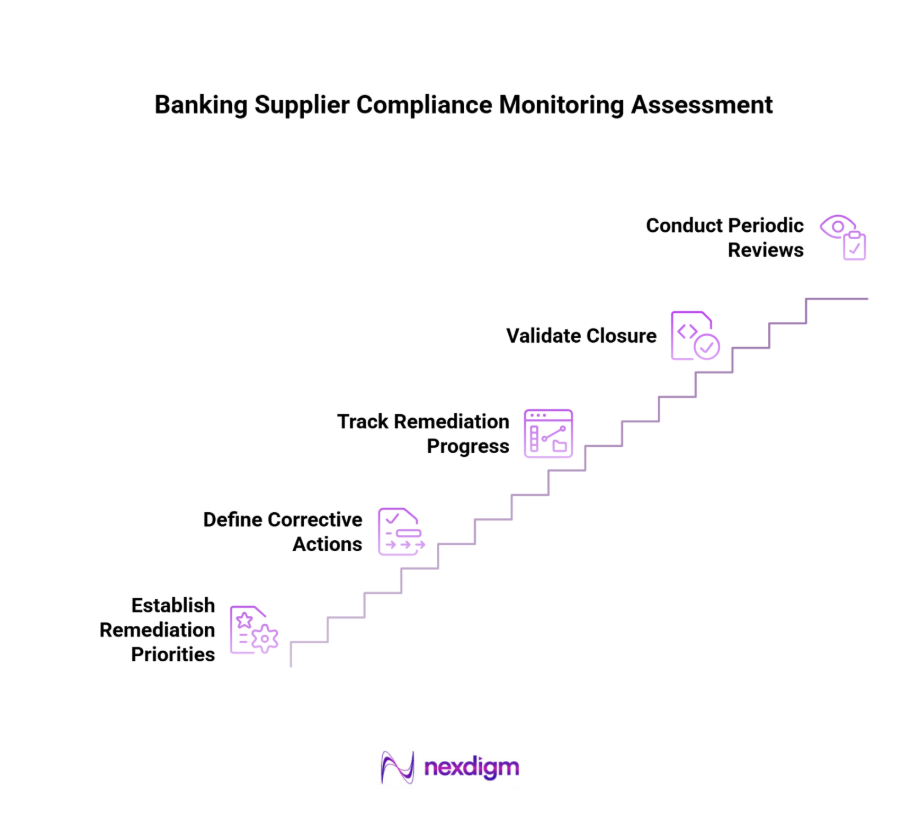
- Establish Remediation Priorities: Classify identified gaps based on their severity, compliance implications, and urgency to determine which issues need immediate attention.
- Define Corrective Actions: Outline the documentation, control improvements, or supplier interventions required to address each identified gap.
- Track Remediation Progress: Monitor action owners, agreed timelines, and supporting evidence to review whether corrective measures are progressing.
- Validate Closure: Examine submitted evidence to determine whether identified deficiencies have been adequately addressed.
- Conduct Periodic Reviews: Revisit supplier compliance records and control information to identify recurring gaps or emerging concerns.
Following these steps can help banks create a more consistent process for supplier remediation and ongoing compliance oversight.
How Nexdigm’s Supplier Compliance Evaluation Benefits Banks
Through bank supplier compliance evaluation consulting, Nexdigm can help banks strengthen supplier oversight, improve audit preparedness, and address compliance gaps more systematically. Its evaluation support can benefit procurement, compliance, risk management, and vendor governance teams by providing clearer insights into supplier performance, documentation deficiencies, and control weaknesses. This enables more informed decisions and stronger third-party accountability.
Nexdigm’s Case
A banking institution engaged Nexdigm to review supplier compliance across key service categories. The evaluation identified 21% of suppliers with incomplete compliance documentation, 12% with control deficiencies, and 15% requiring corrective action. The findings helped prioritize supplier reviews, improve audit readiness, and strengthen compliance oversight across third-party relationships.
To take the next step, simply visit our Request a Consultation page and share your requirements with us.
Harsh Mittal
+91-8422857704