

Bank technology spending is expanding across software, cloud, cybersecurity, data, payments, infrastructure, and managed services, making vendor pricing increasingly important to procurement decisions. Global enterprise IT spending in banking and investment services is forecast to reach $857.5 billion in 2026, growing 9.5% year over year. Spending is expected to reach approximately $1.1 trillion by 2029, reflecting sustained technology investment.
The broader technology market is also experiencing strong price and investment momentum. Global software spending is projected to reach $1.464 trillion in 2026, up 15.5%, while infrastructure-as-a-service spending is expected to grow 29.3%. Banks are therefore managing a supplier environment where pricing can vary significantly depending on deployment model, consumption, functionality, service scope, and contract structure.
Bank technology is also becoming a larger cost consideration. Industry benchmarking indicates that technology spending can represent more than 10% of bank revenues, while global bank IT spending is expected to continue growing at roughly 9% annually. In this environment, bank vendor pricing intelligence can help institutions understand whether supplier costs are competitive and where commercial differences may warrant closer examination.
Why Vendor Pricing Is Becoming Harder to Compare
Bank technology procurement now spans multiple pricing models and service structures. This makes simple rate comparisons less reliable and increases the need for normalized commercial analysis.
- Different Pricing Models: Software, cloud, payments, cybersecurity, and managed services use different pricing metrics, making direct comparisons difficult.
- Changing Usage Patterns: Transaction volumes, users, workloads, and consumption levels can materially change effective costs across otherwise comparable supplier arrangements.
- Complex Commercial Structures: Discounts, minimum commitments, renewals, support fees, and implementation charges can significantly influence the final cost paid.
Therefore, banks need a broader view of pricing, usage, service scope, and commercial terms to determine whether vendor costs are genuinely competitive.
What Determines Whether a Bank Vendor Price Is Competitive?
A bank vendor price is competitive when it reflects the right balance of cost, functionality, service scope, usage, and contractual flexibility. Comparing these factors across relevant suppliers helps institutions understand whether pricing differences represent genuine value or simply different commercial structures. This broader view supports more informed vendor selection, negotiation, renewal planning, and long-term procurement decisions.
Nexdigm in Creating a Comparable View of Bank Vendor Pricing
Nexdigm’s experts apply bank vendor pricing intelligence through a structured comparison that accounts for the commercial and operational differences between suppliers:
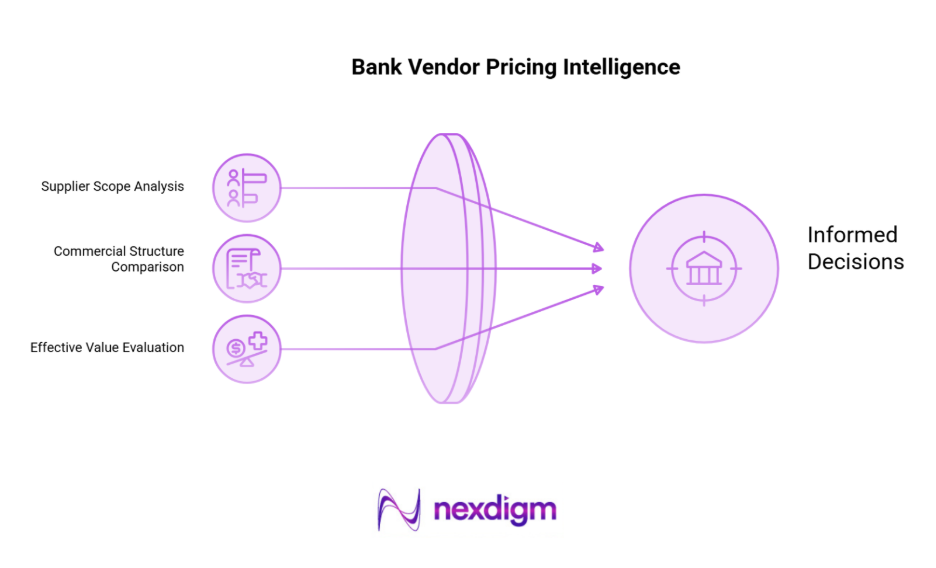
- Normalize Supplier Scope: Compare vendors across functionality, service scope, users, transaction volumes, deployment models, and other relevant pricing variables.
- Assess Commercial Structures: Examine discounts, minimum commitments, renewal terms, support charges, implementation costs, usage thresholds, and contract duration.
- Compare Effective Value: Evaluate pricing alongside service levels, scalability, technology capabilities, and utilization to determine whether differences represent genuine value.
This approach helps banks use bank vendor pricing intelligence to distinguish competitive pricing from commercially driven differences and make more informed supplier and procurement decisions.
Why Bank Vendor Pricing Intelligence Matters
Bank vendor pricing intelligence matters because technology and service costs can directly influence procurement efficiency, operating margins, investment decisions, and supplier strategy. A structured view of market pricing helps banks identify whether they are paying competitively, understand the reasons behind price differences, and recognize emerging commercial risks. It also provides stronger evidence for negotiations, renewals, supplier selection, and longer-term technology-spend planning.
How Nexdigm Makes Bank Vendor Pricing Intelligence Decision-Ready
Nexdigm can turn fragmented supplier and market information into actionable bank vendor pricing intelligence through:
- Consolidated Supplier View: Bring supplier pricing, market positioning, commercial terms, usage patterns, and service scope into one structured assessment.
- Commercial Context: Explain whether pricing differences arise from functionality, contract structures, volumes, service levels, or supplier positioning.
- Decision-Relevant Insights: Highlight which pricing differences have meaningful implications for negotiations, renewals, sourcing, or supplier selection.
- Actionable Procurement Priorities: Identify areas where banks may benefit from deeper supplier discussions, commercial restructuring, right-sizing, or alternative sourcing.
This approach helps banks move from scattered pricing information to structured intelligence that can directly support procurement and supplier decisions.
Nexdigm’s Case
Nexdigm assessed a bank’s technology and service suppliers across pricing, contract structures, utilization, and service scope. Against a market where banking and investment-services IT spending is projected to reach $857.5 billion in 2026, growing 9.5%, the assessment helped identify pricing differences, negotiation priorities, renewal opportunities, and areas for improved supplier and procurement efficiency.
To take the next step, simply visit our Request a Consultation page and share your requirements with us.
Harsh Mittal
+91-8422857704