
In the highly competitive alcohol industry, evaluating market share, pricing strategies, and consumer loyalty is essential for maintaining brand competitiveness and profitability. Companies rely on competitive intelligence to monitor market trends, analyze customer preferences, and assess competitor positioning. Through benchmarking alcohol brands performance, businesses can compare pricing models, sales growth, customer retention, and brand perception across different market segments.
The global alcoholic beverages market was valued at approximately $1.5 trillion and is projected to grow at a CAGR of 3.5% till 2030. According to recent industry reports, pricing adjustments can influence up to 25% of a brand’s market share, with premium pricing strategies driving consumer loyalty for 37% of high-end alcohol brands.
Additionally, about 60% of consumers in the U.S. reported brand loyalty in alcoholic drinks, with craft beer and premium spirits seeing significant consumer retention.
These insights help organizations identify emerging opportunities, optimize promotional strategies, and improve consumer engagement. Data-driven benchmarking also supports strategic decision-making, enabling alcohol brands to strengthen market presence and sustain long-term business growth.
Analyzing Pricing Strategies in the Alcohol Industry through competitive intelligence
Analyzing pricing strategies in the alcohol industry using competitive intelligence involves tracking competitors’ pricing models, assessing consumer behavior, market trends, and price elasticity to optimize brand positioning, maximize profit, and ensure competitiveness.
Consumer Price Sensitivity Analysis
Understanding consumer reactions to price changes enables brands to adjust their pricing based on demand elasticity and customer preferences.
Impact of Premium Pricing Strategies
Premium pricing models can increase brand loyalty and consumer perception, especially in craft spirits or luxury alcohol segments.
Dynamic Pricing and Market Trends
Adapting pricing based on market fluctuations and emerging trends ensures brands remain competitive and responsive to changing consumer demands.
Price-Quantity Relationship
Evaluating the balance between pricing and sales volume allows brands to identify optimal price points that maximize both revenue and market share.
Nexdigm’s Advanced Analytics for Pricing Optimization for Alcohol Brands
Nexdigm offers advanced analytics for pricing optimization by leveraging market data, consumer behavior insights, and competitor analysis. Using predictive models and pricing elasticity analysis, Nexdigm helps alcohol brands identify optimal price points, enhance market positioning, and maximize profitability. This data-driven approach enables businesses to stay competitive, adapt to market changes, and improve consumer loyalty while maintaining pricing integrity.
Nexdigm’s Impact of Product Innovation on Alcohol Brand Loyalty
Nexdigm helps alcohol brands leverage product innovation to strengthen brand loyalty by analyzing market trends, consumer preferences, and competitive offerings, driving differentiation and fostering long-term customer engagement and retention:
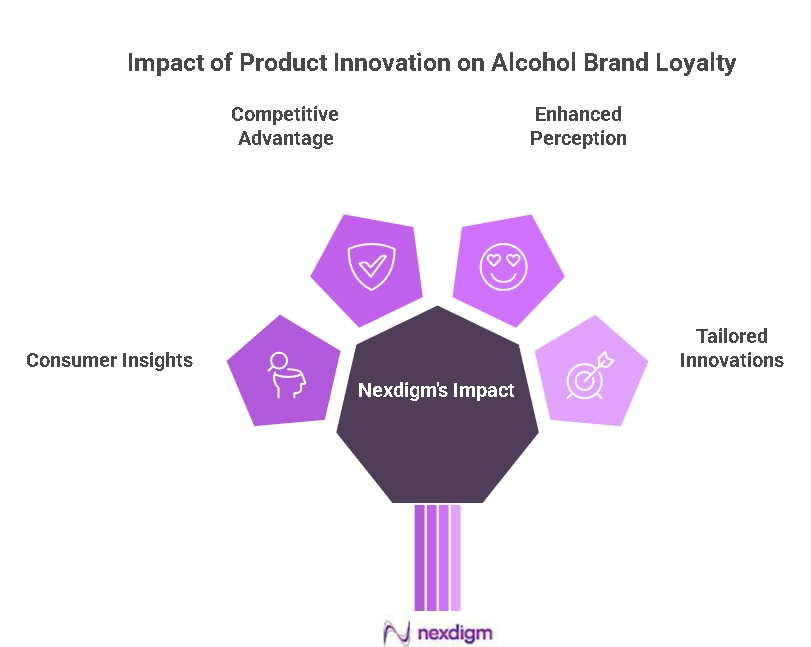
Leveraging Consumer Insights for Innovation
Nexdigm uses consumer feedback and market research to drive product innovations that align with evolving preferences, enhancing brand loyalty.
Competitive Advantage Through Product Differentiation
Innovative offerings set alcohol brands apart, increasing differentiation, consumer attachment, and long-term brand loyalty in a competitive market.
Enhancing Brand Perception with New Products
Product innovation improves brand perception, driving consumer engagement and fostering loyalty through fresh, appealing, and quality-focused alcohol options.
Tailoring Innovations to Niche Markets
Nexdigm helps brands create products targeting specific market segments, strengthening brand loyalty by meeting the unique preferences of consumers.
Nexdigm’s case:
In a recent project, Nexdigm helped a premium whiskey brand evaluate market share, pricing, and consumer loyalty. By analyzing competitive pricing models and consumer behavior, Nexdigm optimized the brand’s pricing strategy, resulting in a 12% increase in market share and a 20% improvement in customer retention within six months. Additionally, the brand’s net promoter score (NPS) rose by 18 points, demonstrating a stronger consumer loyalty and more effective pricing strategy.
To take the next step, simply visit our Request a Consultation page and share your requirements with us.
Harsh Mittal
+91-8422857704