

In the rapidly evolving global trade environment, benchmarking global shipping lines has become essential for organizations seeking to improve logistics efficiency, control freight costs, and strengthen supply chain resilience across high-capacity trade routes. Shipping line benchmarking involves evaluating carrier performance, transit reliability, route capacity, freight pricing, and operational efficiency against industry standards and competitor benchmarks.
Research indicates that transportation disruptions and port congestion can increase shipping costs by 15–25% across major trade routes, significantly impacting supply chain performance. Organizations leveraging shipping line benchmarking and logistics analytics report improved freight utilization, stronger schedule reliability, and reduced transit variability. Additionally, companies using real-time shipping visibility and carrier performance monitoring achieve better inventory planning, lower detention costs, and improved customer service levels across international logistics operations.
Benchmarking Global Shipping Line Performance
Benchmarking global shipping line performance involves evaluating carrier reliability, transit efficiency, freight costs, route capacity, and operational responsiveness to improve decision-making and optimize international logistics performance across high-capacity trade routes.
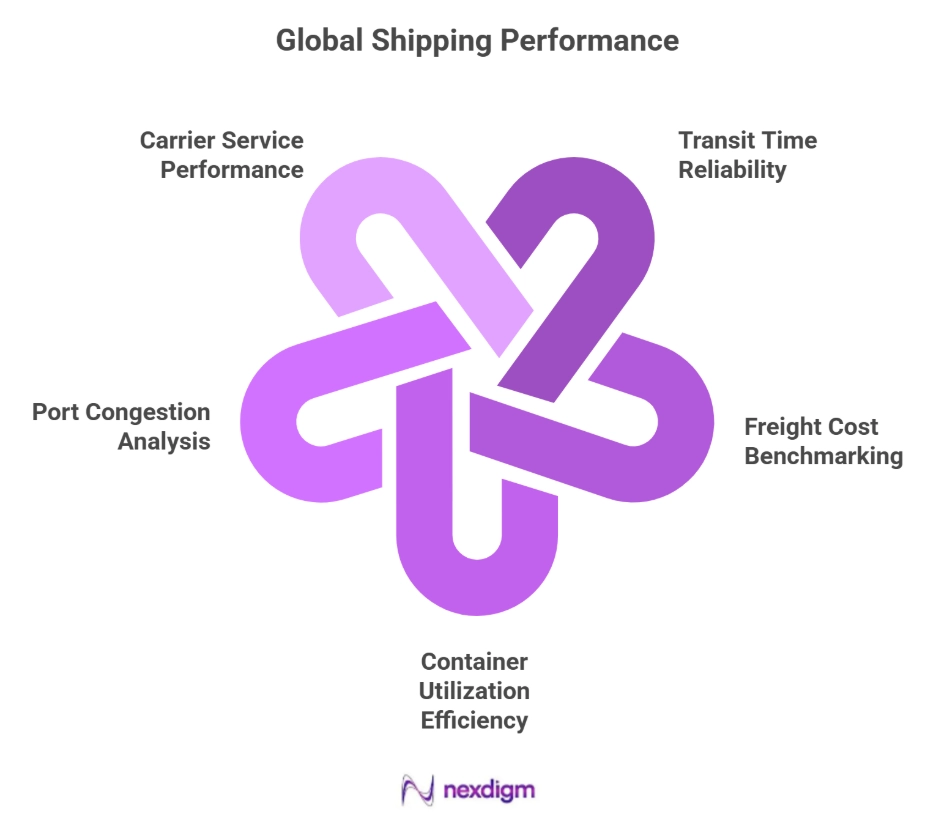
- Transit Time Reliability – Measure schedule adherence and shipment consistency across trade routes to minimize delays and improve supply chain predictability.
- Freight Cost Benchmarking – Compare carrier pricing structures, surcharges, and route-specific freight rates to identify cost optimization opportunities.
- Container Utilization Efficiency – Evaluate container availability, capacity utilization, and turnaround efficiency to improve shipping productivity and reduce bottlenecks.
- Port Congestion and Dwell Time Analysis – Monitor port delays, cargo handling timelines, and unloading efficiency to strengthen logistics planning and operational continuity.
- Carrier Service Performance Metrics – Assess shipping lines based on customer responsiveness, shipment visibility, claims management, and operational flexibility across trade networks.
Nexdigm Global Shipping Line Benchmarking and Logistics Assessment
Nexdigm Global Shipping Line Benchmarking and Logistics Assessment and benchmarking global shipping lines evaluates international carrier performance, route efficiency, freight cost structures, and operational reliability across global trade lanes. By combining logistics analytics with competitive intelligence and market benchmarking, Nexdigm identifies inefficiencies, capacity risks, and carrier optimization opportunities. These assessments enable organizations to strengthen transportation planning, improve freight cost management, enhance supply chain visibility, and optimize logistics performance across complex global shipping operations.
How Does Nexdigm Improve Global Shipping Performance?
Nexdigm improves global shipping performance by implementing logistics benchmarking frameworks, real-time shipment visibility tools, carrier performance monitoring, and analytics-driven transportation strategies to improve efficiency across international supply chain operations:
- Carrier Performance Monitoring – Track schedule reliability, freight movement, and service quality metrics to improve shipping line accountability and operational consistency, ensuring better coordination and enhanced transportation decision-making across international trade operations.
- Freight Cost Optimization Analytics – Analyze shipping expenses, trade lane pricing, and surcharge trends to identify cost-saving opportunities and improve budgeting accuracy, supporting long-term freight planning and improved logistics cost management efficiency.
- Real-Time Shipment Visibility Solutions – Implement digital tracking platforms to monitor cargo movement, reduce delays, and improve logistics coordination globally, enabling proactive responses to disruptions and improved customer service reliability standards.
- Trade Route Risk Assessment – Evaluate congestion risks, geopolitical disruptions, and port performance trends to strengthen supply chain resilience and continuity planning, minimizing operational disruptions and improving international shipping network stability across regions.
- Integrated Logistics Benchmarking Dashboards – Enable centralized reporting systems for comparing shipping line performance against industry benchmarks and contractual KPIs, improving operational transparency and supporting data-driven transportation performance improvement initiatives globally.
Nexdigm’s Case
Nexdigm optimized international freight operations for a multinational manufacturer through shipping line benchmarking, carrier assessment, and shipment visibility enhancements, reducing freight costs by 16%, improving transit reliability by 22%, and strengthening logistics efficiency, responsiveness, and global supply chain resilience.
To take the next step, simply visit our Request a Consultation page and share your requirements with us.
Harsh Mittal
+91-8422857704