

The beverage industry continues to attract new entrants across categories such as functional drinks, energy beverages, flavored waters, plant-based beverages, premium juices, ready-to-drink products, and wellness-focused formulations. Companies must carefully evaluate market demand, pricing dynamics, channel accessibility, competitive intensity, and long-term commercial potential before investing in significant resources.
This is where specialized beverage industry feasibility study consulting becomes essential. At Nexdigm, we help beverage companies assess whether a market is genuinely ready for a new entrant and identify the strategic pathways that maximize growth while minimizing risk.
The Beverage Market Entry Reality
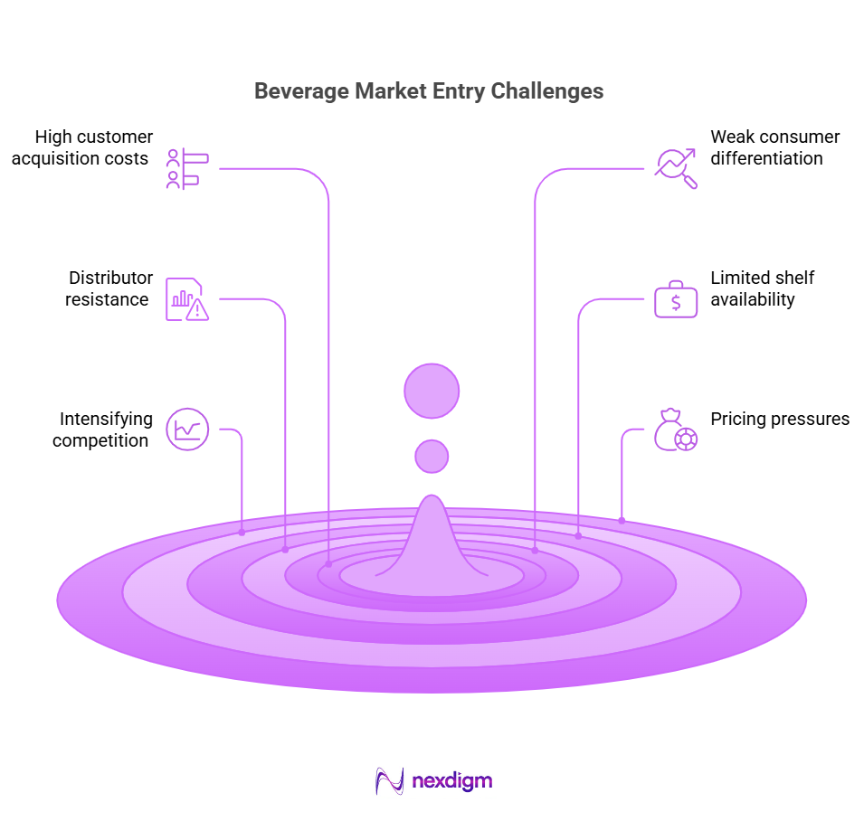
A growing beverage category does not automatically guarantee success for new brands. Many companies enter attractive markets only to face challenges such as:
- Intensifying competition
- High customer acquisition costs
- Distributor resistance
- Pricing pressures
- Limited shelf availability
- Weak consumer differentiation
At Nexdigm, we believe market entry decisions should be guided by evidence, not assumptions. Our beverage industry feasibility study consulting approach focuses on understanding whether the market has enough room for another brand and, if so, where the greatest opportunities exist.
Can the Market Support Another Beverage Brand?
Entering the beverage industry can be highly rewarding, but success depends on more than having a great product. Before launching a new brand, businesses must determine the following factors to understand effectively how the brand can compete against established players:
- Demand: Demand determines whether there is sufficient customer interest to support a new beverage brand. Businesses should assess characteristics, and unmet needs to understand the true market opportunity and identify potential growth segments.
- Pricing: Pricing influences both customer adoption and profitability. A successful beverage brand must establish price points that align with consumer expectations while maintaining sustainable margins and supporting long-term business growth.
- Channels: Distribution channels determine how effectively products reach target consumers. Evaluating retail stores, supermarkets, convenience outlets, e-commerce platforms, food service channels, and distributor networks helps businesses maximize availability, visibility, and sales performance across the market.
- Competition: Competition analysis helps determine whether the market has room for another brand. Assessing competitor strengths, product portfolios, pricing strategies, market share, customer loyalty, and market gaps enables businesses to develop differentiated offerings and effective go-to-market strategies.
Nexdigm evaluates these dimensions collectively rather than in isolation, providing businesses with a realistic assessment of market readiness.
Understanding Demand Assessment
The first step in evaluating market potential is understanding actual consumer demand. Many brands focus on broad industry growth statistics. Hence, Nexdigm’s demand assessment framework helps businesses evaluate market demand using a structured and data-driven approach:
- Category growth trends
- Consumer behavior patterns
- Demand forecasts
- Regional consumption differences
- Emerging beverage preferences
- Market maturity levels
This enables businesses to identify not only where demand exists today but where future growth is likely to occur.
Pricing Assessment
Consumer interest alone does not determine market success. A critical question is whether consumers are willing to purchase the product at a price that supports long-term profitability. Successful beverage brands align pricing with:
- Consumer purchasing power
- Competitive benchmarks
- Perceived value
- Brand positioning
- Channel economics
A premium wellness beverage entering a value-driven market may face adoption challenges despite strong product quality.
Nexdigm helps companies assess pricing strategies through a comprehensive evaluation of market conditions and profitability objectives. This approach ensures that pricing decisions support both commercial success and long-term business sustainability, by understanding:
- Consumer willingness to pay
- Price sensitivity levels
- Competitive pricing structures
- Margin opportunities
- Promotional requirements
As part of our beverage industry feasibility study consulting, Nexdigm helps businesses determine whether their planned pricing model is commercially sustainable within the target market.
Channel Evaluation
Even a strong product with an attractive price point can struggle if it lacks access to the right channels. Understanding route-to-market dynamics is essential before entering a new geography. This involves evaluating Key Beverage Distribution Channels, such as:
- Modern Trade: Large-format retailers provide visibility and scale.
- Traditional Trade: Neighborhood stores and local retailers often remain critical for market penetration.
- E-commerce and Quick Commerce: Digital channels increasingly influence beverage purchases, particularly in urban markets.
- Foodservice: Restaurants, cafés, hotels, and institutions can support volume growth and brand awareness.
How Nexdigm Assesses Channel Viability
Nexdigm conducts detailed evaluations of:
- Distribution infrastructure
- Retail access requirements
- Channel profitability
- Geographic coverage potential
- Logistics feasibility
- Channel-specific demand
Our beverage industry feasibility study consulting framework helps businesses identify the most efficient route-to-market strategy before committing resources.
Competition Analysis
This is often the decisive factor in market feasibility assessments. A market may have strong demand and attractive pricing opportunities, but excessive competition can significantly limit growth potential. A successful market assessment examine:
- Global brands
- Regional competitors
- Local challengers
- Emerging niche players
- Private-label products
Understanding competitor strengths and weaknesses helps identify whether meaningful differentiation is possible. This is where Nexdigm’s deep competitive analysis approach helps businesses determine whether they can establish a sustainable competitive advantage.
The Nexdigm Feasibility Framework for Beverage Market Entry
Nexdigm applies an integrated methodology designed to deliver actionable insights to the business through the following methods. This strategic approach helps them drive sustainable growth and profitability at the same time, in the following ways:
- Market Attractiveness Assessment: Identifying high-potential markets and growth drivers.
- Consumer Demand Analysis: Understanding the customers most likely to adopt the product.
- Competitive Benchmarking: Assessing category saturation and whitespace opportunities.
- Pricing Evaluation: Determining commercial viability and profitability potential.
- Channel Feasibility Review: Evaluating distribution effectiveness and accessibility.
- Financial Opportunity Assessment: Modeling revenue potential, investment requirements, and long-term returns.
Through our beverage industry feasibility study consulting, clients gain a clear understanding of whether a market can support an additional beverage brand and what strategies will be required for success.
Nexdigm’s Case
In a recent engagement, Nexdigm supported a beverage client in assessing market potential across demand, pricing, channels, and competition. Real-time insights improved demand forecasting by 31%, optimized price positioning by 26%, increased channel effectiveness by 28%, and strengthened competitive differentiation by 30%.
Nexdigm’s beverage market assessment approach enabled the client to validate opportunity size, refine go-to-market priorities, and pursue sustainable growth with greater commercial confidence.
To take the next step, simply visit our Request a Consultation page and share your requirements with us.
Harsh Mittal
+91-8422857704