
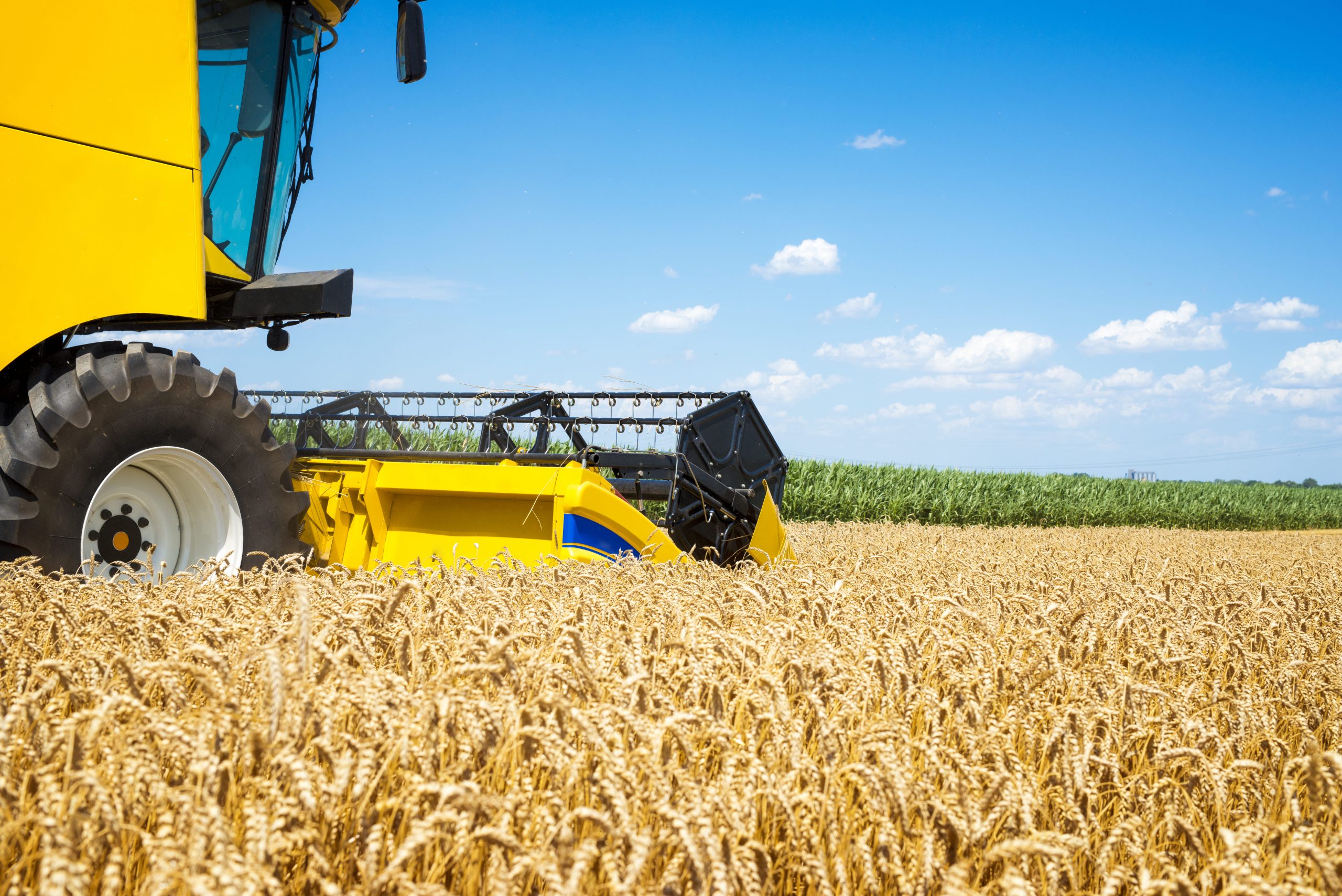
Brazil’s agricultural sector continues to play a pivotal role in global food supply, positioning the country as one of the largest exporters of soybeans, corn, sugarcane, and coffee. As of 2026, Brazil remains among the world’s top soybean and corn producers, with large-scale commercial farming concentrated in states such as Mato Grosso, Paraná, and Rio Grande do Sul. This strong agricultural base is driving sustained demand for modern harvesting equipment. Increasing farm consolidation, rising export competitiveness, and pressure to enhance operational efficiency are accelerating mechanization levels across the country. The agricultural harvester market in Brazil is therefore entering a phase of technological modernization, fleet replacement, and precision-driven expansion toward 2035.
What’s Driving the Agricultural Harvester Market in Brazil?
Rising Grain Production and Export Competitiveness
Brazil’s dominance in soybean and corn exports continues to expand, supported by favorable climatic conditions and large-scale farming operations. Harvesting efficiency is critical in minimizing crop losses and ensuring timely exports through major ports. As farms expand in size, the adoption of high-capacity combine harvesters is increasing. Producers are prioritizing machines with larger grain tanks, advanced threshing systems, and GPS-enabled precision harvesting to improve yield optimization. The need to reduce post-harvest losses and manage tight harvesting windows is a key driver supporting new equipment purchases.
Technological Advancements and Precision Agriculture
Brazilian farmers are increasingly integrating precision agriculture technologies into harvesting operations. Modern harvesters equipped with telematics, yield monitoring systems, and automated steering are becoming standard among medium and large farms. Integration with farm management software enables real-time performance tracking, fuel optimization, and predictive maintenance. These advancements are particularly relevant in large soybean and corn belts, where operational efficiency directly impacts profitability. As digital agriculture adoption accelerates, demand for technologically advanced harvesters is expected to grow steadily.
Expansion of Sugarcane Mechanization
Brazil is the world’s largest sugarcane producer, and mechanized harvesting has become widespread, especially in São Paulo state. Environmental regulations limiting pre-harvest burning have accelerated the transition to mechanical sugarcane harvesters. This shift continues to create replacement demand as older fleets are phased out in favor of more fuel-efficient and environmentally compliant models.
Government Support and Rural Financing
The Brazilian government continues to support farm mechanization through rural credit programs such as the Moderfrota program under the Plano Safra framework. These financing mechanisms provide subsidized credit lines for the purchase of agricultural machinery, including harvesters. Access to structured financing remains critical for mid-sized farmers seeking to upgrade equipment. Additionally, sustainability-linked credit lines are encouraging farmers to adopt machines with lower emissions and improved fuel efficiency.
Market Competition and Key Players
The Brazil agricultural harvester market is moderately consolidated, with global OEMs maintaining a strong manufacturing and distribution presence in the country. Key players include John Deere, AGCO Corporation (owner of Massey Ferguson and Valtra brands), and CNH Industrial (manufacturer of New Holland and Case IH equipment). These companies operate manufacturing facilities within Brazil, enabling localized production and better supply chain responsiveness. Competitive strategies focus on product innovation, financing partnerships, and expanding dealer networks across high-production states. Telematics-enabled service offerings and extended warranty packages are increasingly used to differentiate brands.
High Capital Costs and Currency Volatility
Despite strong agricultural fundamentals, high capital investment requirements remain a challenge. Combine and sugarcane harvesters involve substantial upfront costs, making smaller farmers reliant on cooperatives or custom-hiring services. Additionally, currency volatility impacts equipment pricing, especially where imported components are involved. Fluctuations in commodity prices can also influence farmers’ purchasing decisions, often delaying capital expenditure during periods of lower global crop prices.
Future Outlook
The Brazil agricultural harvester market is expected to witness steady growth through 2035, driven by expanding grain cultivation areas, productivity enhancement goals, and increasing automation. By 2035, precision-enabled harvesters with advanced analytics, remote diagnostics, and semi-autonomous capabilities are expected to account for a larger share of new sales. Replacement demand will remain strong as farms upgrade to higher-capacity machines to manage larger acreages efficiently. Sustainability will also shape future purchasing decisions, with growing emphasis on fuel efficiency, reduced soil compaction, and carbon footprint management. Electrification in heavy harvesters may remain limited in the short term, but hybrid technologies and improved engine efficiency standards are likely to gain traction.
Consultants at Nexdigm, in their latest publication “Brazil Agricultural Harvester Market Outlook to 2035”, analyzed the market by Product Type (Combine Harvesters, Sugarcane Harvesters, Forage Harvesters), By Power Output (Below 150 HP, 150–300 HP, Above 300 HP), By Farm Size (Small & Medium Farms, Large Commercial Farms), and By Distribution Channel (Direct Sales, Dealers, Cooperatives, Equipment Leasing). Nexdigm believes that businesses should prioritize precision technology integration, localized manufacturing partnerships, flexible financing solutions, and strong after-sales service networks to capitalize on Brazil’s evolving mechanization landscape through 2035.
To take the next step, simply visit our Request a Consultation page and share your requirements with us.
Harsh Mittal
+91-8422857704