
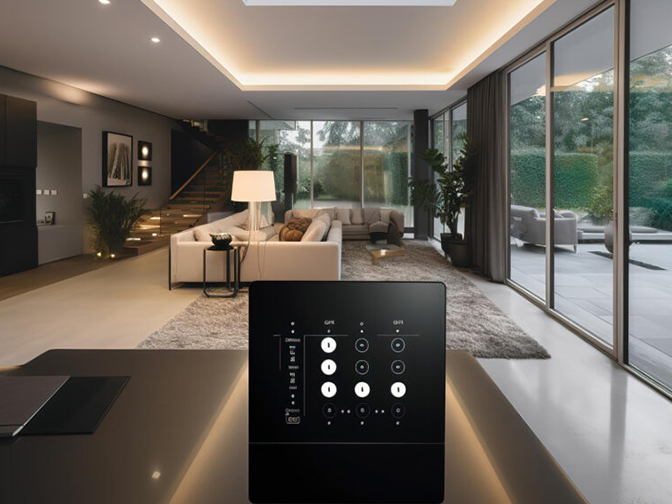
Brazil’s Lighting Control and Management Systems Market is witnessing robust growth, supported by a population exceeding 215 million, an urbanization rate of approximately 85%, and more than 94 million residential units requiring efficient energy-management solutions. As Latin America’s largest economy, Brazil is increasingly investing in smart buildings, digital infrastructure, and energy-efficiency programs to reduce operational costs and improve sustainability. Lighting accounts for nearly 15–25% of electricity consumption in commercial buildings, encouraging facility owners to deploy IoT-enabled controls, occupancy sensors, and automated lighting systems. Additionally, rising investments in commercial real estate, smart cities, industrial automation, and connected building technologies are accelerating demand for intelligent lighting management solutions across residential, commercial, and industrial sectors.
Key Market Drivers for Brazil’s Lighting Control and Management Systems Market
Energy Efficiency Initiatives Drive Adoption of Smart Lighting Solutions
Electricity costs remain a key operational concern for residential and commercial building operators across Brazil. Lighting can account for 15–25% of total electricity consumption in commercial buildings, making automated lighting controls an attractive solution for reducing energy expenses. Occupancy sensors, daylight harvesting technologies, and centralized lighting management systems are increasingly being deployed to optimize energy use while improving building performance.
Commercial Real Estate and Smart Building Growth Strengthen Market Demand
Brazil’s commercial real estate sector continues to expand across major metropolitan regions including São Paulo, Rio de Janeiro, Brasília, and Belo Horizonte. Office towers, shopping centers, hospitals, educational institutions, airports, and mixed-use developments are increasingly integrating intelligent building management systems. The growing adoption of green building certifications and smart infrastructure projects is creating substantial opportunities for advanced lighting control technologies.
Industrial Automation and Digital Transformation Create New Opportunities
Brazil possesses one of Latin America’s largest industrial sectors, contributing approximately 20% of GDP. Manufacturing facilities, logistics centers, warehouses, and industrial parks are investing in automation and IoT-enabled systems to improve productivity and reduce operating costs. Smart lighting systems integrated with industrial automation platforms support predictive maintenance, occupancy-based operation, and real-time energy monitoring, enhancing operational efficiency.
Government Initiatives Supporting Brazil’s Lighting Control and Management Systems Market
The Brazilian government continues to promote energy efficiency through programs led by the National Electric Energy Conservation Program (PROCEL) and national sustainability initiatives. Energy-efficiency regulations encourage the adoption of intelligent lighting technologies in commercial, industrial, and public-sector facilities. Additionally, ongoing investments in smart cities, public infrastructure modernization, and digital transformation projects are supporting demand for connected lighting systems. As Brazil continues to strengthen its energy-efficiency standards and carbon-reduction efforts, smart lighting solutions are expected to play an increasingly important role in achieving national sustainability objectives.
Competitive Landscape of Brazil’s Lighting Control and Management Systems Market
Brazil’s Lighting Control and Management Systems Market is becoming increasingly competitive as demand for intelligent building technologies grows. Competition is focused on wireless lighting controls, IoT connectivity, cloud-based energy management platforms, occupancy sensing technologies, and AI-driven analytics. Market participants are developing integrated solutions that enhance energy efficiency, improve user comfort, and enable centralized facility management. Growth across smart offices, industrial facilities, educational campuses, healthcare institutions, logistics hubs, and retail developments continues to create opportunities for advanced lighting management solutions.
Major Challenges Facing Brazil’s Lighting Control and Management Systems Market
High Retrofit Costs for Existing Building Infrastructure
Many commercial and residential buildings in Brazil were constructed without advanced automation systems. Retrofitting these facilities with intelligent lighting control technologies often requires significant investment in sensors, networking infrastructure, and system integration.
Limited Awareness and Technical Expertise
Despite growing adoption, some building owners and facility managers remain unfamiliar with the long-term benefits of advanced lighting control systems. Limited technical expertise and implementation experience can slow adoption in certain market segments.
Future Outlook
Brazil’s Lighting Control and Management Systems Market is expected to witness strong growth through 2035, supported by increasing investments in smart buildings, energy-efficient infrastructure, and digital transformation initiatives. With more than 94 million housing units, a rapidly expanding commercial real estate sector, and growing adoption of IoT-enabled building technologies, demand for intelligent lighting management solutions is expected to rise substantially. Emerging technologies such as AI-powered occupancy analytics, cloud-based facility management platforms, wireless lighting controls, and smart city infrastructure projects will further accelerate market growth. Companies investing in interoperable, energy-efficient, and data-driven lighting solutions will be well-positioned to capitalize on Brazil’s evolving smart building ecosystem.
Consultants at Nexdigm, in their latest publication “Brazil Lighting Control and Management Systems Market Outlook to 2035,” analyse the sector By Control Technology Type (DALI 2.0 Architecture, KNX Building Automation and 0-10V Analog Dimming), By Application Vertical (Commercial Infrastructure and Public Municipal Steet Lighting) and By Connectivity Protocol (Cloud-Based Management Platforms and On-Premise Local Controllers).
Nexdigm suggests that businesses in Brazil’s Lighting Control and Management Systems Industry prioritize IoT-enabled lighting platforms, AI-driven energy optimization solutions, wireless lighting controls, and integrated smart-building technologies to capitalize on the country’s 94 million+ housing units, expanding commercial real estate sector, growing industrial automation initiatives, and increasing demand for energy-efficient and digitally connected infrastructure across residential, commercial, and industrial applications.
To take the next step, simply visit our Request a Consultation page and share your requirements with us.
Harsh Mittal
+91-8422857704