
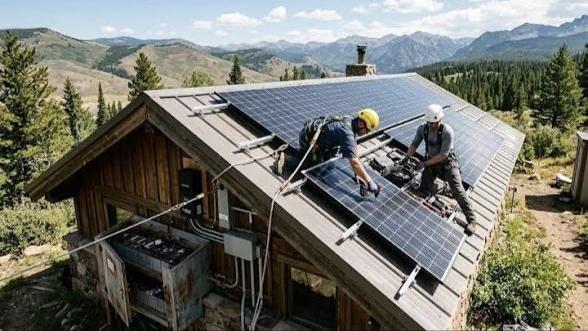
Brazil has emerged as one of the leading solar energy markets globally, with installed solar capacity exceeding 55 GW, highlighting the country’s strong commitment to renewable energy. While large-scale solar farms often capture headlines, off-grid solar solutions are quietly transforming lives across Brazil’s remote regions. From isolated Amazon communities to rural agricultural areas, off-grid systems are providing reliable electricity where extending traditional grid infrastructure is often expensive and impractical. As technology becomes more affordable and accessible, the Brazil off-grid solar energy market is creating new opportunities for economic growth, energy independence, and sustainable development.
Market Drivers Advancing the Brazil’s Off-Grid Solar Energy Industry
Rural Electrification Needs Creating Strong Demand
Brazil’s vast geography includes thousands of communities located far from centralized power networks. For many residents, consistent electricity access remains a challenge. Off-grid solar systems offer an effective solution by supplying clean and dependable energy directly to homes, schools, healthcare centers, and community facilities. These installations help improve quality of life while reducing reliance on costly diesel-powered generation systems.
Falling Solar and Battery Costs Improving Accessibility
The affordability of solar technology has improved significantly over recent years. Declining photovoltaic panel prices, combined with more efficient battery storage systems, have made off-grid installations increasingly attractive to households and businesses. Modern energy storage solutions allow users to store excess solar power and use it after sunset, improving system reliability and supporting wider adoption across rural Brazil.
Agricultural Sector Accelerating Off-Grid Solar Adoption
Agriculture remains a major pillar of Brazil’s economy, and solar energy is becoming an increasingly valuable tool for farmers. Off-grid systems are being deployed to power irrigation equipment, water pumps, cold storage facilities, and livestock operations. By reducing fuel expenses and improving operational efficiency, solar-powered solutions help agricultural businesses lower costs while maintaining reliable energy supplies in remote locations.
Government Initiatives Supporting the Brazil Off-Grid Solar Energy Industry
Government-led rural electrification initiatives and renewable energy policies continue to encourage off-grid solar deployment throughout Brazil. Financial incentives, distributed generation frameworks, and development financing programs are helping communities and businesses invest in cleaner energy solutions. These efforts align with national sustainability goals while supporting improved energy access for underserved populations across the country.
Competitive Landscape of the Brazil Off-Grid Solar Energy Sector
The competitive environment includes global solar manufacturers, local energy solution providers, battery suppliers, and engineering companies. Market participants are focusing on delivering efficient and cost-effective systems that meet the unique requirements of remote users. Strategic collaborations with local distributors, agricultural organizations, and community development programs are becoming important for expanding market reach and strengthening customer engagement.
Challenges Impacting Brazil’s Off-Grid Solar Energy Industry
Upfront Installation Costs Remain a Barrier
Although solar equipment prices continue to decline, initial system investments can still be substantial for many rural households and small businesses. Battery storage remains one of the most significant cost components, impacting purchasing decisions and adoption rates.
Complex Logistics Across Remote Locations
Installing and servicing solar systems in distant regions of Brazil can present logistical difficulties. Transportation challenges, limited technical expertise in remote areas, and maintenance requirements may increase project costs and operational complexity for solution providers.
Future Outlook
The outlook for Brazil’s off-grid solar energy market remains highly positive as demand for decentralized and sustainable power continues to grow. Advances in energy storage technologies, smart monitoring systems, and solar efficiency are expected to enhance system performance and affordability. Continued government support, increasing private-sector investments, and growing awareness of clean energy benefits will further strengthen market expansion. As more communities and businesses seek reliable electricity solutions, off-grid solar energy is expected to play a crucial role in Brazil’s long-term energy transformation and rural development journey.
Consultants at Nexdigm, in their latest publication “Brazil Off-Grid Solar Energy Market to 2035” analyze the sector By Hybrid Solar-Storage Arrays (Lithium-Ion Integrated Modules and Flow Battery Hybrid Systems), By Component Technology Class (Monocrystalline PERC Panels and Polycrystalline Standard Panels), By Geographic Operational Zone (Amazonas Basin Territory and Northeast Semi-Arid Region).
Nexdigm suggests that businesses in “Brazil Off-Grid Solar Energy Industry” focusses on oilfield, desalination, construction, and industrial applications, strengthen local warehousing, develop application-specific grades, improve technical support, and build resilient sourcing networks to serve expanding energy, water, and manufacturing demand.
To take the next step, simply visit our Request a Consultation page and share your requirements with us.
Harsh Mittal
+91-8422857704