
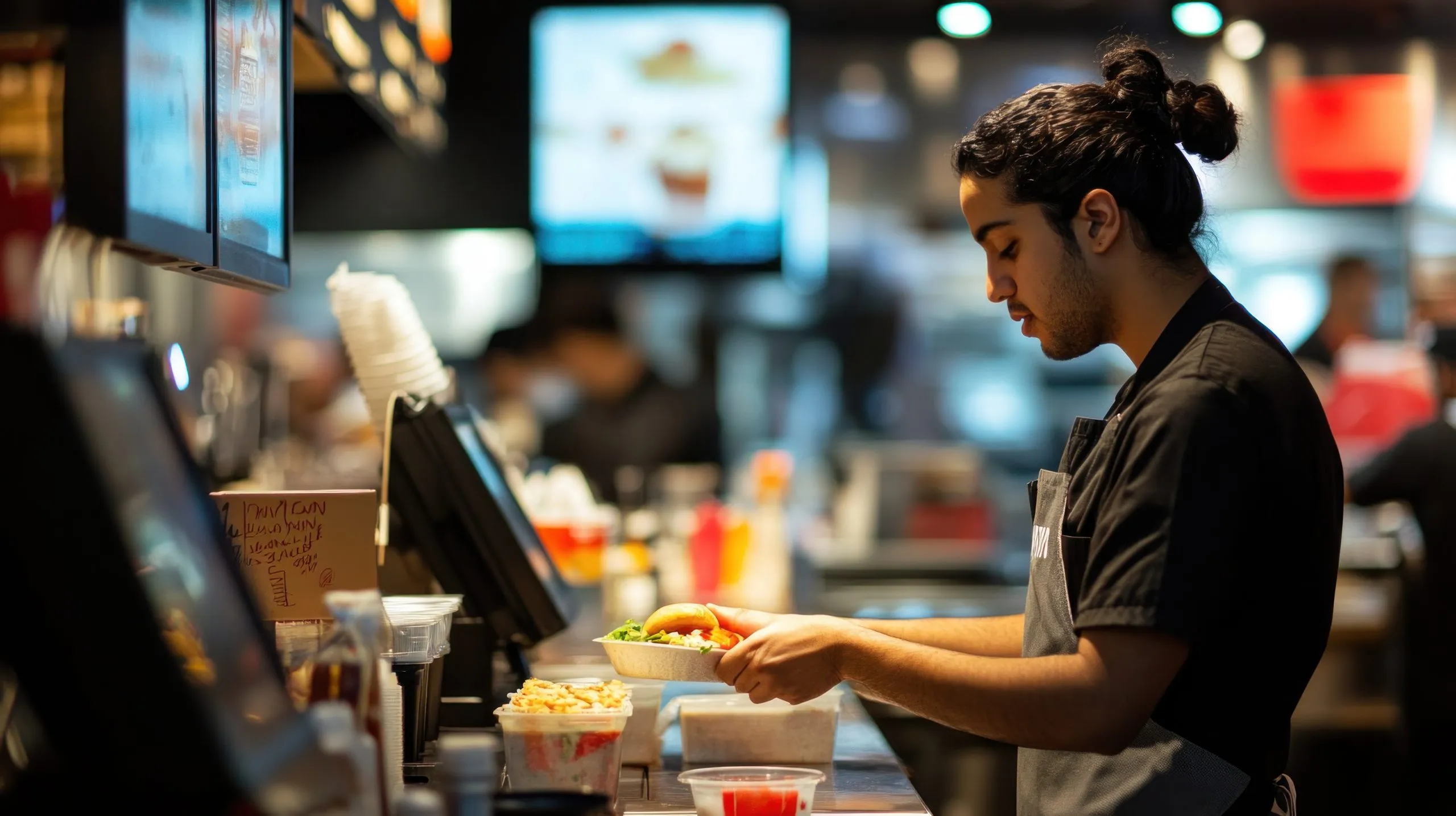
The Brazil quick service restaurant market is expanding as consumers increasingly look for affordable, fast, and convenient meal options. Busy urban lifestyles, long commuting hours, mall culture, delivery platforms, and franchise-led expansion are reshaping how Brazilians eat outside the home. QSRs accounted for 39.3% of Brazil’s foodservice market share in 2025, supported by strong demand from working professionals, students, and families. As digital ordering, mobile payments, and value-focused menus become more common, quick service restaurants are becoming an important part of Brazil’s evolving foodservice landscape.
Key market drivers are strengthening Brazil’s quick service restaurant growth
Urban lifestyles are increasing demand for fast and affordable meals
Brazil’s highly urbanized population is a major driver of QSR demand. Consumers in cities such as São Paulo, Rio de Janeiro, Brasília, Curitiba, and Belo Horizonte often prefer quick meals that fit into workdays, shopping trips, school schedules, and evening outings. Burgers, chicken meals, pizza, sandwiches, bakery products, Brazilian snacks, desserts, and beverages remain popular across different income groups. QSR brands are benefiting from consumers who want predictable taste, fast service, clear pricing, and accessible locations. Food courts, transport hubs, shopping malls, and high-street outlets continue to support steady traffic.
Digital ordering and delivery platforms are reshaping customer access
Delivery platforms and mobile ordering are transforming Brazil’s QSR market. Consumers are increasingly using apps to browse menus, compare offers, customize orders, and access promotions. iFood, one of Brazil’s leading food delivery platforms, serves millions of users and connects restaurants across hundreds of cities. For QSR operators, digital platforms help increase order frequency, improve customer visibility, and support data-led promotions. Delivery-first formats, pickup counters, and app-based loyalty programs are becoming important tools for improving convenience and customer retention.
Franchise expansion is supporting wider market reach
Franchise-led growth is helping QSR brands expand across Brazil’s large and diverse market. International chains, domestic brands, and regional operators are using franchising to enter new cities, standardize operations, and scale faster. Localized menus, flexible store sizes, and value bundles are helping brands connect with Brazilian consumers. Chain formats are also gaining traction as consumers look for consistency, hygiene, affordability, and convenience.
Government policies and meal benefit systems are supporting foodservice demand
Government policies related to food safety, labour rules, taxation, franchising, and consumer protection influence how QSR businesses operate in Brazil. The Worker Food Program and meal voucher system also play an important role in supporting restaurant spending. Brazil’s meal voucher market processes around BRL 170 billion annually and serves more than 22 million workers. Recent reforms aimed at reducing fees and improving payment terms may help restaurants manage transaction costs and cash flow more efficiently.
Competitive landscape is becoming more digital and franchise focused
The Brazil QSR market includes global fast-food chains, domestic restaurant brands, bakery cafés, pizza chains, burger outlets, chicken specialists, delivery-first brands, and independent quick-service operators. Competition is shaped by menu pricing, location, delivery speed, brand familiarity, product consistency, digital visibility, and promotional offers. Large chains benefit from scale, marketing strength, and standardized processes, while local players compete through regional flavors, affordability, and neighborhood presence. Operators that balance value, speed, and digital convenience are likely to gain stronger consumer traction.
Market challenges continue to pressure profitability and expansion
Cost pressures are affecting menu pricing and margins
QSR operators in Brazil face rising costs related to food ingredients, wages, rent, utilities, packaging, and delivery commissions. These pressures can affect margins, especially for brands that depend on value meals and high transaction volumes.
Price sensitivity and operational complexity remain key concerns
Many consumers remain price-conscious, making it difficult for restaurants to pass on cost increases. At the same time, managing delivery quality, staffing, supply consistency, and franchise standards across regions can be challenging for growing QSR brands.
Future outlook
The future outlook for the Brazil quick service restaurant market remains positive, supported by urbanization, delivery adoption, franchise expansion, and demand for affordable convenience dining. Growth opportunities are expected across digital ordering, value meals, breakfast menus, delivery-first formats, food courts, and regional franchise expansion. As consumers continue to balance price, speed, and quality, QSR brands will need to invest in efficient operations, localized menus, stronger delivery partnerships, and data-driven customer engagement. Businesses that combine affordability with convenience and consistent service will be better positioned for long-term growth.
Consultants at Nexdigm, in their latest publication “Brazil quick service restaurant market outlook to 2035,” analyze the sector By Product Type (Burgers and Sandwiches, Pizza and Pasta, Chicken-based QSR, Mexican and Tex-Mex), By Service Model (Dine-in, Takeaway, Drive-thru)
Nexdigm suggests that businesses in the Brazil quick service restaurant market should focus on digital ordering, delivery efficiency, and value-led menu strategies to attract convenience-driven consumers.
To take the next step, simply visit our Request a Consultation page and share your requirements with us.
Harsh Mittal
+91-8422857704