
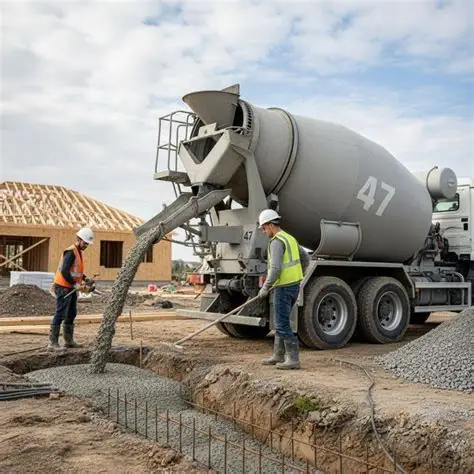
Brazil’s ready-mix concrete market is poised for steady expansion, driven by large-scale infrastructure development, urbanization, residential construction, and industrial investment across the country. As Latin America’s largest economy, Brazil generates over USD 2 trillion in GDP and maintains a construction sector valued at more than BRL 500 billion annually. With a population exceeding 215 million people and increasing demand for transportation networks, logistics facilities, housing, and energy infrastructure, ready-mix concrete remains a critical construction material. Additionally, infrastructure projects under development and planned investments exceeding BRL 1.7 trillion are expected to support long-term market growth, creating significant opportunities for suppliers of high-performance and sustainable concrete solutions.
Key Market Drivers for Brazil’s Ready-Mix Concrete Industry
Expanding Infrastructure and Logistics Investments
Infrastructure modernization remains one of the strongest demand drivers for Brazil’s ready-mix concrete market. The country has announced infrastructure concessions and investment programs exceeding BRL 1.7 trillion, covering highways, railways, ports, airports, sanitation networks, and energy projects. Brazil currently operates more than 1.7 million kilometers of road infrastructure, and ongoing upgrades to logistics corridors continue to require substantial volumes of ready-mix concrete. Increased public-private partnership activity and transportation modernization efforts are expected to generate significant demand throughout the forecast period.
Growing Residential Construction and Housing Demand
Brazil continues to face substantial housing requirements due to population growth and urbanization. More than 87% of Brazil’s population lives in urban areas, creating ongoing demand for residential developments and urban infrastructure. Government-backed housing initiatives and private-sector residential projects continue to support construction activity across major metropolitan regions. Ready-mix concrete is extensively used in residential foundations, structural frameworks, pavements, drainage systems, and high-rise developments. As housing demand remains robust, the residential sector is expected to remain a major consumer of concrete products.
Rising Investments in Industrial and Commercial Construction
Brazil’s manufacturing, mining, agribusiness, and logistics sectors are encouraging new investments in warehouses, production facilities, distribution centers, and industrial parks. The industrial sector contributes approximately 20% of Brazil’s GDP, supporting demand for factories, processing facilities, and supporting infrastructure. Ready-mix concrete plays a critical role in industrial flooring, foundations, heavy-load structures, and commercial developments. The expansion of e-commerce logistics hubs and modern industrial facilities is expected to further strengthen market demand.
Government Support and Infrastructure Development Programs Accelerate Brazil’s Ready-Mix Concrete Industry
Brazil continues to strengthen its construction and infrastructure sector through long-term investment programs focused on transportation, sanitation, housing, and energy development. The federal government’s infrastructure concession pipeline exceeds BRL 1.7 trillion, covering highways, railways, ports, airports, and urban mobility projects. Additionally, Brazil’s updated sanitation framework aims to achieve 99% potable water coverage and 90% sewage treatment coverage, requiring investments estimated at over BRL 890 billion by 2033. The country has also attracted significant investments in renewable energy, with installed wind and solar capacity surpassing 60 GW, creating strong demand for ready-mix concrete in foundations, substations, and supporting infrastructure. These initiatives are expected to sustain concrete consumption across both public and private construction projects throughout the forecast period.
Competitive Landscape of Brazil’s Ready-Mix Concrete Market Driven by Urbanization, Infrastructure Demand, and Sustainable Construction Trends
Brazil’s ready-mix concrete market is characterized by a combination of large-scale producers, regional suppliers, and integrated construction-material providers serving residential, commercial, industrial, and infrastructure developments. Competition is increasingly centered on production efficiency, distribution networks, sustainability performance, product consistency, and project delivery capabilities. With the construction sector generating more than BRL 500 billion annually, urbanization exceeding 87% of the population, and infrastructure investments surpassing BRL 1.7 trillion, suppliers are expanding production capacities and investing in digital batching systems, recycled aggregates, and lower-carbon concrete technologies. Growing demand from housing developments, logistics facilities, renewable energy projects, and transportation infrastructure is encouraging market participants to focus on cost optimization, sustainability, and operational excellence to strengthen their competitive positioning.
Major Challenges Facing Brazil’s Ready-Mix Concrete Industry
Volatility in Raw Material and Energy Costs
Ready-mix concrete producers remain vulnerable to fluctuations in cement, aggregates, fuel, and electricity costs. Variations in input prices can impact profitability and project budgets, particularly for large-scale infrastructure developments.
Logistics and Transportation Constraints
Brazil’s vast geography can create transportation challenges for ready-mix concrete suppliers, particularly in remote regions. Maintaining delivery efficiency and product quality while managing rising transportation costs remains a key challenge for industry participants.
Future Outlook
Looking ahead, Brazil’s ready-mix concrete market is expected to maintain strong growth momentum, supported by large-scale infrastructure modernization, rising urban construction activity, and increasing investments in renewable energy and sanitation projects. With planned infrastructure investments exceeding BRL 1.7 trillion, a construction sector generating more than BRL 500 billion annually, and an urbanization rate surpassing 87%, demand for ready-mix concrete is projected to remain robust through 2035. Additionally, Brazil’s sanitation expansion plans require investments of over BRL 890 billion, while the country’s installed wind and solar energy capacity has already exceeded 60 GW, creating significant opportunities for concrete usage in foundations, transmission networks, and utility infrastructure. Future growth is also expected to be driven by logistics parks, residential developments, industrial facilities, and smart-city projects. Companies investing in low-carbon concrete technologies, recycled materials, digital production systems, and efficient distribution networks will be best positioned to capitalize on Brazil’s evolving construction and infrastructure landscape over the long term.
Consultants at Nexdigm, in their latest publication “Brazil Ready-Mix Concrete Market Outlook to 2035” analyse the sector By Concrete Compressive Strength Class (C15 Concrete Mix, C20 Concrete Mix and C25 Concrete Mix), By Geographic Region (Southern Brazil and South Brazil) and By Supply Chain Tier (Tier 1 National Producers, Regional Independent Suppliers and Local Family-Owned Batching Units).
Nexdigm suggests that businesses in Brazil’s Ready-Mix Concrete Industry prioritize infrastructure-focused partnerships, low-carbon concrete solutions, logistics-driven expansion strategies, and sustainable construction technologies to capitalize on growing demand from transportation projects, housing developments, sanitation infrastructure, and industrial construction activities.
Tio take the next step, simply visit our Request a Consultation page and share your requirements with us.
Harsh Mittal
+91-8422857704