
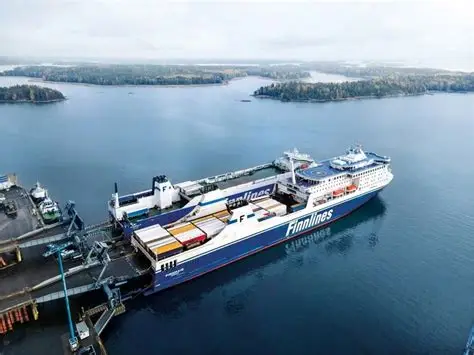
Brazil’s Shore Power Systems Market is witnessing steady growth as the country modernizes its maritime infrastructure and advances sustainable port operations. Brazil handles more than 13 million TEUs of container traffic annually, while approximately 95% of the nation’s foreign trade by volume is transported through its seaports, highlighting the critical role of maritime logistics in the economy. Major ports such as Port of Santos, which handles over 30% of Brazil’s trade value, continue to expand capacity and adopt smart-port technologies. Rising cargo volumes, increasing cruise tourism, and growing pressure to reduce vessel emissions are encouraging investments in shore power systems that enable ships to connect to onshore electricity while berthed, supporting cleaner, more efficient, and environmentally sustainable port operations across the country.
Key Market Drivers for Brazil’s Shore Power Systems Market
Port Modernization and Rising Cargo Volumes Fuel Demand
Brazil’s major ports, including Port of Santos, Port of Paranaguá, Port of Rio Grande, and Port of Itajaí, continue to expand capacity to accommodate increasing trade flows. The Port of Santos alone handles over 5 million TEUs annually and accounts for more than 30% of Brazil’s trade value. Ongoing modernization projects, automation initiatives, and terminal expansions are creating strong demand for advanced port electrification technologies that can improve operational efficiency while supporting environmental objectives.
Maritime Decarbonization Initiatives Accelerate Adoption
As global shipping companies work toward International Maritime Organization (IMO) emission-reduction targets, shore power systems are becoming an essential technology for reducing emissions at ports. By allowing vessels to switch off onboard generators while docked, shore power can significantly reduce emissions of CO₂, sulfur oxides, nitrogen oxides, and particulate matter. Growing pressure from international trade partners and shipping operators to reduce environmental impacts is encouraging Brazilian ports to invest in cleaner infrastructure.
Growth in Cruise Tourism and Coastal Shipping Creates New Opportunities
Brazil’s cruise tourism sector continues to recover and expand, with major destinations including Rio de Janeiro, Santos, Salvador, and Recife attracting increasing passenger traffic. Cruise vessels often remain berthed for extended periods and require substantial electrical power, making them ideal candidates for shore power connections. In addition, domestic coastal shipping and container transport activities are creating further opportunities for port electrification solutions.
Government Initiatives Supporting Brazil’s Shore Power Systems Market
The Brazilian government is supporting port modernization and sustainable transport development through the National Logistics Plan (PNL) and long-term infrastructure concession programs. Billions of dollars are being invested in logistics corridors, port capacity expansion, and smart infrastructure projects. Additionally, Brazil’s clean-energy matrix, where more than 85% of electricity generation comes from renewable sources, provides a strong foundation for low-carbon shore power deployment. Government efforts to improve trade competitiveness while reducing transport emissions are creating favorable conditions for market growth.
Competitive Landscape of Brazil’s Shore Power Systems Market
Brazil’s Shore Power Systems Market is evolving as port authorities, shipping operators, energy utilities, and infrastructure developers increasingly prioritize sustainable port operations. Competition is centered on IEC/IEEE 80005-compliant shore connection systems, high-voltage power conversion technologies, automated cable-management systems, and smart energy-management platforms. Market participants are focusing on scalable electrification solutions, digital monitoring technologies, and renewable-energy integration capabilities to meet the growing requirements of modern ports and shipping operators.
Major Challenges Facing Brazil’s Shore Power Systems Market
High Infrastructure Investment Requirements
The deployment of shore power systems requires significant investments in substations, transformers, frequency converters, cable management systems, and grid upgrades. These capital costs can present challenges for some port operators, particularly at smaller regional terminals.
Grid Integration and Vessel Compatibility Issues
Effective implementation depends on ensuring compatibility between port-side infrastructure and onboard vessel systems. Ports may require additional electrical capacity and technical upgrades to support large-scale shore power adoption across multiple vessel types.
Future Outlook
Brazil’s Shore Power Systems Market is expected to witness strong growth through 2035, supported by annual container throughput exceeding 13 million TEUs, continued expansion of strategic ports, and increasing focus on sustainable maritime operations. As approximately 95% of Brazil’s foreign trade volume continues to move through seaports, investments in smart ports, green shipping corridors, and renewable-powered logistics infrastructure are expected to accelerate. Additional opportunities are likely to emerge from cruise terminal modernization, digital port management systems, and low-carbon transportation initiatives. Companies investing in advanced power conversion technologies, automated shore connection solutions, and smart energy-management platforms will be well-positioned to capitalize on Brazil’s evolving maritime ecosystem.
Consultants at Nexdigm, in their latest publication “Brazil Shore Power Systems Market to 2035,” analyse the sector By Connection Technology (6.6kV Systems, 11kV Systems and Automated Cable Management Units), By Port Location (Port of Santos and Paranagua) and By Power Source (National Interconnected System, Renewable Power Purchase Agreement Sourcing and Microgrid Independent Power).
Nexdigm suggests that businesses in Brazil’s Shore Power Systems Industry prioritize IEC/IEEE 80005-compliant shore connection technologies, advanced power-conversion systems, renewable-energy-integrated port electrification solutions, and smart energy-management platforms to capitalize on the country’s 13 million+ TEU container throughput, strong renewable-powered electricity mix, expanding port modernization projects, and growing demand for low-emission maritime operations across commercial shipping and cruise terminals.
To take the next step, simply visit our Request a Consultation page and share your requirements with us.
Harsh Mittal
+91-8422857704