
The global bus industry is undergoing a significant transformation as cities expand public transportation networks, educational institutions modernize student transportation, employers strengthen workforce mobility, and governments accelerate vehicle electrification initiatives. Demand is no longer concentrated within a single segment. Instead, growth is emerging across multiple use cases, each shaped by unique operational and regulatory requirements.
A comprehensive Bus market opportunity analysis suggests that demand is increasingly diversifying across public transit, school transportation, staff mobility solutions, intercity travel, and electric bus deployment, creating new opportunities for manufacturers, operators, investors, and ecosystem partners.
Understanding the Shift in Bus Demand
The short answer is that bus demand is moving from a traditional volume-driven model toward a purpose-specific mobility ecosystem. Instead of relying primarily on conventional diesel-powered fleets serving limited transportation needs, stakeholders are investing in:
- Public transit buses for urban mobility
- School buses for student transportation
- Staff buses for workforce commuting
- Intercity coaches for regional connectivity
- Electric buses for sustainable transportation
Each category serves a distinct market need and offers unique commercial opportunities.
Where are the Biggest Opportunities Emerging?
Public Transit
Public transportation remains one of the largest contributors to overall bus demand. Rapid urbanization and increasing traffic congestion are encouraging governments and municipalities to expand bus networks as a cost-effective mobility solution.
Key growth drivers include:
- Smart city initiatives
- Dedicated bus rapid transit systems
- Growing urban populations
- Sustainability policies
- Public transit modernization programs
As cities focus on improving accessibility and reducing private vehicle dependence, demand for advanced and high-capacity transit buses continues to grow. Manufacturers capable of offering fuel-efficient, connected, and low-emission transit vehicles are likely to benefit from expanding government procurement programs.
School Buses
The school transportation segment is witnessing increased attention as educational institutions prioritize safer and more reliable student mobility services. Demand is being influenced by:
- Rising student enrollment
- Enhanced safety standards
- Route optimization technologies
- Fleet replacement programs
- Regulatory compliance requirements
Modern school buses increasingly incorporate advanced safety systems, GPS tracking, telematics, and enhanced passenger monitoring features. Fleet operators and manufacturers can benefit from growing investments in student safety and transportation modernization initiatives.
Staff Transportation
Employee transportation is becoming a strategic priority for organizations operating large facilities, business parks, industrial zones, and remote locations. Staff buses help employers:
- Improve workforce accessibility
- Enhance employee experience
- Reduce commuting challenges
- Support sustainability objectives
- Improve attendance and productivity
Industries driving demand include:
- Information technology
- Manufacturing
- Business process outsourcing
- Mining
- Infrastructure development
As organizations focus on employee well-being and operational efficiency, staff transportation fleets are expected to remain an important growth segment.
Intercity Buses
Intercity transportation continues to play a critical role in connecting cities, towns, and economic corridors. Several factors are supporting demand growth:
- Infrastructure development
- Tourism recovery
- Affordable travel preferences
- Expanding regional trade corridors
- Rising passenger movement
Operators are increasingly investing in premium buses featuring enhanced comfort, digital connectivity, improved safety features, and better fuel efficiency. Intercity operators willing to modernize fleets and improve passenger experience can capture significant growth opportunities in both developed and emerging markets.
Electric Buses
Electric buses are rapidly transforming the bus industry. Governments worldwide are promoting zero-emission transportation through incentives, procurement programs, and sustainability mandates. Key benefits include:
- Lower operating costs
- Reduced emissions
- Improved urban air quality
- Lower noise pollution
- Enhanced regulatory compliance
The growing availability of charging infrastructure and battery technology improvements is further accelerating adoption. Electric buses represent one of the most promising areas identified in any forward-looking Bus market opportunity analysis, particularly for manufacturers, operators, charging infrastructure providers, and investors.
Turning Bus Market Opportunities into Growth Strategies with Nexdigm
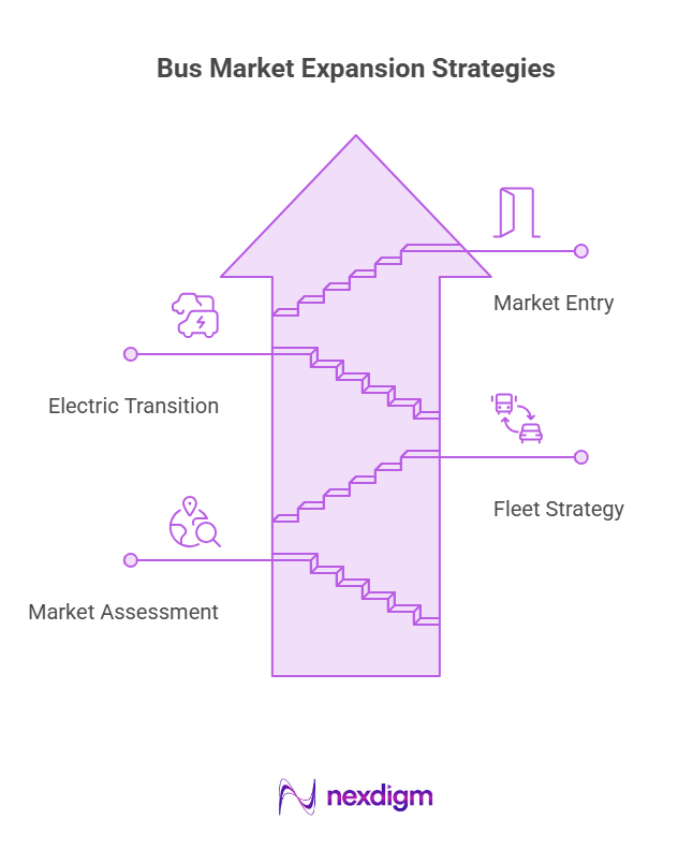
While demand across bus segments continues to evolve, businesses must carefully evaluate where to invest, how to position their offerings, and which operational models will deliver sustainable returns. This is where Nexdigm can provide strategic support.
Market Opportunity Assessment and Demand Analysis
Understanding where demand is shifting is the foundation of successful growth planning. Nexdigm can support organizations through:
- Market sizing and forecasting
- Segment attractiveness assessment
- Demand trend evaluation
- Regional opportunity mapping
- Customer requirement analysis
A data-driven understanding of market dynamics enables businesses to focus investments on the most promising growth segments.
Fleet Strategy and Investment Planning
Different bus categories require different fleet strategies. Nexdigm can assist businesses in evaluating:
- Fleet mix optimization
- Vehicle technology selection
- Capital investment priorities
- Lifecycle cost analysis
- Capacity planning
Effective investment decisions help organizations maximize utilization, profitability, and long-term asset performance.
Electric Bus Transition Advisory
The shift toward electrification creates both opportunities and challenges for industry participants. Nexdigm can support organizations with:
- Electric vehicle transition roadmaps
- Charging infrastructure assessments
- Cost-benefit evaluations
- Policy and incentive analysis
- Sustainability strategy development
Organizations can accelerate adoption while minimizing operational and financial risks associated with technology transitions.
Market Entry and Expansion Strategy
As bus demand patterns change, manufacturers and operators may seek entry into new markets and customer segments. Nexdigm can help with:
- Go-to-market planning
- Geographic expansion assessments
- Distribution network strategy
- Partnership evaluations
- Business model development
Structured expansion strategies improve market penetration and reduce investment uncertainty.
Nexdigm’s Case
Nexdigm assisted an automotive player in assessing bus demand as India’s electric bus registrations reached 2,944 units in H1 2026, up 40% YoY. The study evaluated public transit, school, staff, intercity, and EV opportunities, identifying growth pathways.
To take the next step, simply visit our Request a Consultation page and share your requirements with us.
Harsh Mittal
+91-8422857704