
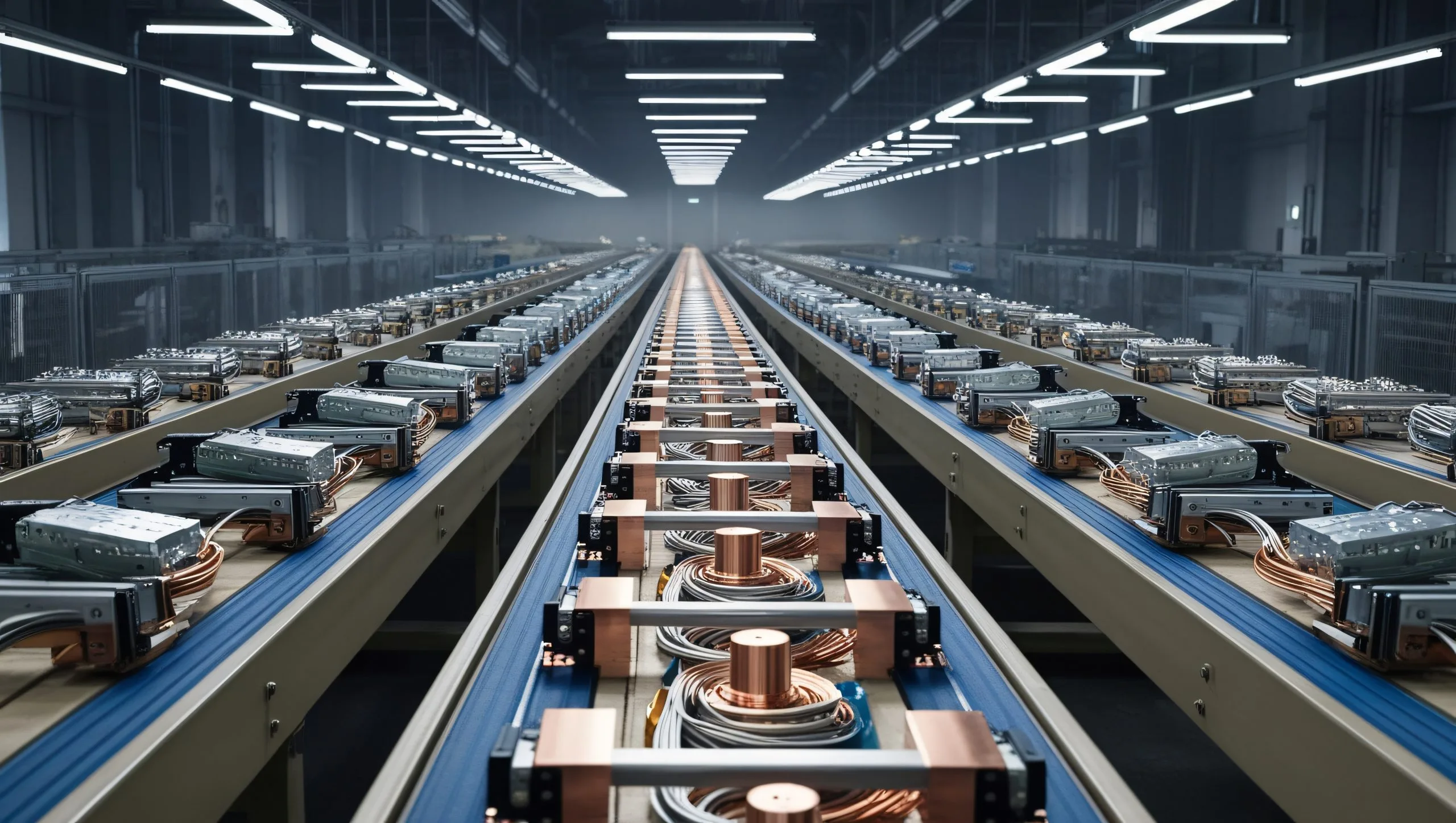
Canada’s advanced materials market is positioned for steady growth through 2035, supported by demand from electric vehicles, batteries, aerospace, defence, clean energy, electronics, medical devices, and low-carbon construction. Advanced materials—including composites, nanomaterials, biomaterials, specialty polymers, ceramics, advanced metals, and battery materials—are becoming central to Canada’s industrial competitiveness. The market’s outlook is closely tied to critical minerals, domestic processing capacity, and clean-technology manufacturing. Canada’s Critical Minerals Strategy covers 31 minerals across exploration, processing, manufacturing, and recycling, creating a strong foundation for advanced materials value chains.
Key Growth Drivers Accelerating Canada’s Advanced Materials Market
Battery Materials and Electric Vehicle Supply Chains
Battery materials are one of the strongest growth engines for Canada’s advanced materials market. Canada has large reserves or production potential in lithium, nickel, cobalt, graphite, copper, rare earths, and aluminum—materials required for batteries, electric motors, light weighting, grid storage, and power electronics. A 2024 EV battery supply-chain report estimated that Canada’s EV battery supply chain could support 60,000 to 250,000 direct and indirect jobs and contribute up to C$24 billion to GDP by 2030.
Clean Energy, Decarbonization, and Lightweighting
Net-zero targets are accelerating demand for lighter, stronger, and more durable materials. Aerospace, automotive, wind energy, hydrogen, and construction industries are increasing the use of carbon-fiber composites, advanced alloys, specialty coatings, membranes, and high-performance polymers. These materials help reduce energy consumption, improve equipment life, and lower emissions. Canada’s manufacturing base also supports this shift, Statistics Canada reported that manufacturing employment rose by 229,000 jobs from 2020 to 2024, with export-related production accounting for around 161,000 of that increase.
Domestic Processing and Supply-Chain Security
Geopolitical risk is pushing governments and manufacturers to diversify from concentrated global supply chains. Canada is increasingly viewed as a secure, ESG-aligned supplier of critical minerals and advanced materials for North America and allied markets. In October 2025, Canada announced more than 20 investments, partnerships, and measures intended to unlock C$6.4 billion in critical minerals projects through the Critical Minerals Production Alliance.
Government Support Strengthening Canada’s Advanced Materials Ecosystem
Government policy is a major catalyst. Canada’s federal Critical Minerals Strategy was launched with C$3.8 billion over eight years, targeting exploration, infrastructure, processing, recycling, and value-chain development. The strategy supports minerals such as lithium, graphite, nickel, cobalt, copper, rare earth elements, uranium, potash, and aluminum. Provincial initiatives are also expanding; Ontario, for example, announced a C$500 million Critical Minerals Processing Fund in 2025 to strengthen domestic processing capacity.
Competitive Dynamics in Canada’s Advanced Materials Industry
The market is moderately fragmented, with activity spread across mining firms, chemical processors, battery-material companies, aerospace suppliers, composite manufacturers, research institutes, and clean-tech start-ups. Key competitive areas include battery-grade minerals, rare-earth recycling, lightweight composites, specialty coatings, and additive manufacturing materials. International investors are also entering Canada’s materials ecosystem; Volkswagen’s 2024 investment in Patriot Battery Metals included a 10-year supply agreement for 100,000 tones of spodumene concentrate annually, showing the strategic value of Canadian inputs.
Key Barriers to Advanced Materials Market Expansion in Canada
Long Project Timelines and Permitting Complexity
Advanced materials growth depends on new mines, refineries, recycling plants, and manufacturing facilities. These projects require large capital expenditure, environmental assessments, Indigenous consultation, skilled labour, and supporting infrastructure. Long approval timelines may slow commercialization and reduce Canada’s ability to respond quickly to global demand.
Global Price Volatility and Technology Risk
Critical mineral prices can fluctuate sharply, affecting investment decisions in battery materials and specialty metals. At the same time, battery chemistry, recycling technologies, and composite manufacturing methods continue to evolve.
Future Outlook
By 2035, Canada’s advanced materials market is expected to become more integrated with clean energy, EVs, aerospace, defence, healthcare, and next-generation manufacturing. Growth will likely be strongest in battery materials, rare-earth recycling, lightweight composites, high-performance alloys, and low-carbon construction materials. Canada’s advantage lies in combining mineral resources, renewable electricity, research capacity, and proximity to U.S. industrial demand.
Consultants at Nexdigm, in their latest publication “Canada Advanced Materials Market Outlook to 2035,” analyze the sector by System Type (Composite Materials, Nanomaterials, Smart Materials, High-Performance Polymers), By Platform Type (Automotive Platforms, Aerospace Platforms, Electronics Platforms), and By Fitment Type (On-premise Solutions, Cloud-based Solutions, Hybrid Solutions). Nexdigm suggests that businesses should prioritize investments in high-growth application areas such as battery materials, lightweight composites, advanced alloys, and specialty coatings, while strengthening partnerships across research institutions, critical mineral suppliers, and downstream manufacturers to build resilient, innovation-led value chains in Canada’s advanced materials market.
To take the next step, simply visit our Request a Consultation page and share your requirements with us.
Harsh Mittal
+91-8422857704