
Canada’s large-scale agricultural equipment market is entering a new phase of transformation as commercial farms expand acreage, consolidate operations, and adopt precision agriculture technologies. As of 2026, Canada remains one of the world’s leading grain and oilseed producers, supported by vast arable land across provinces such as Saskatchewan, Alberta, and Manitoba. Large farms, particularly those exceeding 1,000 acres, account for a substantial share of total agricultural output, driving demand for high-horsepower tractors, advanced combines, air seeders, and self-propelled sprayers. While the market is mature and highly mechanized, ongoing technological upgrades, sustainability mandates, and rising global food demand are reshaping purchasing patterns. Canada is not only maintaining its agricultural competitiveness but also positioning itself at the forefront of smart and sustainable farm mechanization.
What’s Driving the Large-Scale Agricultural Equipment Market in Canada?
Expansion of Large Commercial Farms and Farm Consolidation
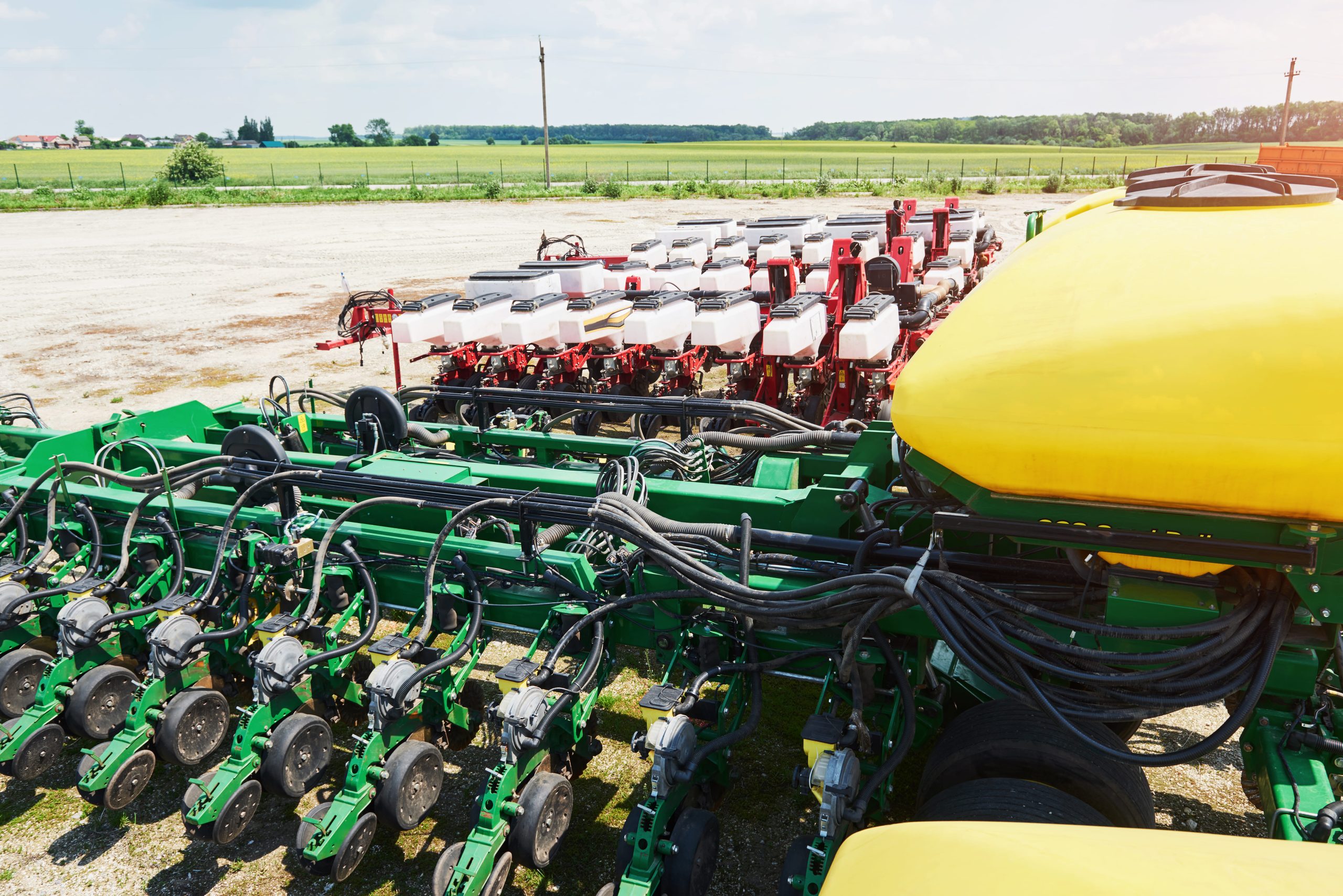
Canadian agriculture has witnessed steady consolidation, with fewer but larger farms dominating production. Large-scale operations require high-capacity equipment to optimize planting, harvesting, and field management across extensive land parcels. High-horsepower tractors (300+ HP), wide-header combines, and advanced air drills are increasingly preferred to improve operational efficiency and reduce labor dependency. The push for higher productivity per acre is encouraging farmers to upgrade fleets with technologically advanced machinery capable of handling short planting and harvesting windows.
Adoption of Precision Agriculture and Smart Farming Technologies
The integration of GPS-guided systems, telematics, variable rate technology (VRT), and data analytics is accelerating across Canada’s Prairie provinces. Precision agriculture solutions enable farmers to optimize seed placement, fertilizer application, and irrigation practices, improving yields while controlling input costs. Equipment manufacturers are embedding AI-driven analytics, autonomous steering, and real-time monitoring systems into machinery. This technological shift is increasing the average selling price of equipment but also enhancing long-term farm profitability through data-driven decision-making.
Strong Export-Oriented Crop Production
Canada is a major exporter of wheat, canola, barley, and pulses. Global demand for food grains and oilseeds continues to influence domestic production volumes. To remain competitive in export markets, large-scale farmers are investing in high-efficiency harvesting and post-harvest equipment to minimize losses and improve throughput. The volatility of global commodity prices also drives cyclical investment patterns, with equipment purchases often aligned with favorable crop price cycles.
Government-Led Initiatives and Sustainability Push
The Canadian government, through federal and provincial programs, continues to promote sustainable farming and emissions reduction. Incentives for adopting climate-smart agricultural practices and fuel-efficient equipment are encouraging machinery upgrades. Carbon reduction targets and soil health initiatives are prompting farmers to adopt precision seeding and reduced tillage practices, which in turn influence equipment demand. Programs supporting digital agriculture and rural broadband expansion are also enhancing connectivity in farming regions, facilitating the adoption of connected and autonomous farm machinery. Sustainability goals aligned with Canada’s broader climate commitments are expected to accelerate demand for next-generation low-emission and hybrid-powered equipment by 2035.
Market Competition and Industry Landscape
The Canada large-scale agricultural equipment market is highly consolidated, dominated by global OEMs with strong dealership networks across provinces. Key players include John Deere, CNH Industrial (parent company of New Holland and Case IH), AGCO Corporation (owner of Massey Ferguson and Fendt), and Kubota Corporation. John Deere continues to lead in precision agriculture integration, offering autonomous-ready tractors and AI-enabled harvesting solutions. CNH Industrial and AGCO are expanding their smart farming portfolios with connected platforms and data-driven farm management tools. Strong dealer networks, after-sales service capabilities, and financing solutions remain critical competitive differentiators in the Canadian market.
High Capital Costs and Interest Rate Sensitivity
Large-scale agricultural equipment requires substantial upfront investment, with high-horsepower tractors and advanced combines often priced in the hundreds of thousands of dollars. As a result, purchasing decisions are closely tied to interest rates, farm profitability, and global commodity price trends. Fluctuations in crop prices or rising borrowing costs can significantly impact farmers’ cash flows. During periods of economic uncertainty, many producers postpone capital expenditures, slowing equipment sales growth.
Future Outlook
The Canada large-scale agricultural equipment market is expected to witness steady growth through 2035, driven by farm consolidation, export demand, and technological advancement. Autonomous tractors, AI-powered combines, and fully integrated farm management systems are projected to gain significant traction over the next decade. By 2035, a substantial share of new large-scale equipment sales is expected to feature semi-autonomous or fully autonomous capabilities. Sustainability will play a defining role in shaping the market. Adoption of electric or hybrid utility tractors, precision spraying technologies, and carbon-efficient field practices is anticipated to rise steadily. Data integration across machinery fleets will become standard practice, transforming farms into highly connected, analytics-driven operations.
Consultants at Nexdigm, in their latest publication “Canada Agricultural Equipment Large-Scale Market Outlook to 2035,” analyzed the market by Equipment Type (Tractors, Combine Harvesters, Seeding & Planting Equipment, Sprayers), By Horsepower (Below 150 HP, 150–300 HP, Above 300 HP), By Application (Grain & Oilseed Farming, Pulses, Commercial Crops), and By Region (Prairies, Ontario, Quebec, Atlantic Canada). Nexdigm believes that businesses should prioritize autonomous technology integration, flexible financing models, and sustainability-aligned product innovation to capture long-term growth opportunities in Canada’s evolving large-scale agricultural equipment landscape.
To take the next step, simply visit our Request a Consultation page and share your requirements with us.
Harsh Mittal
+91-8422857704