
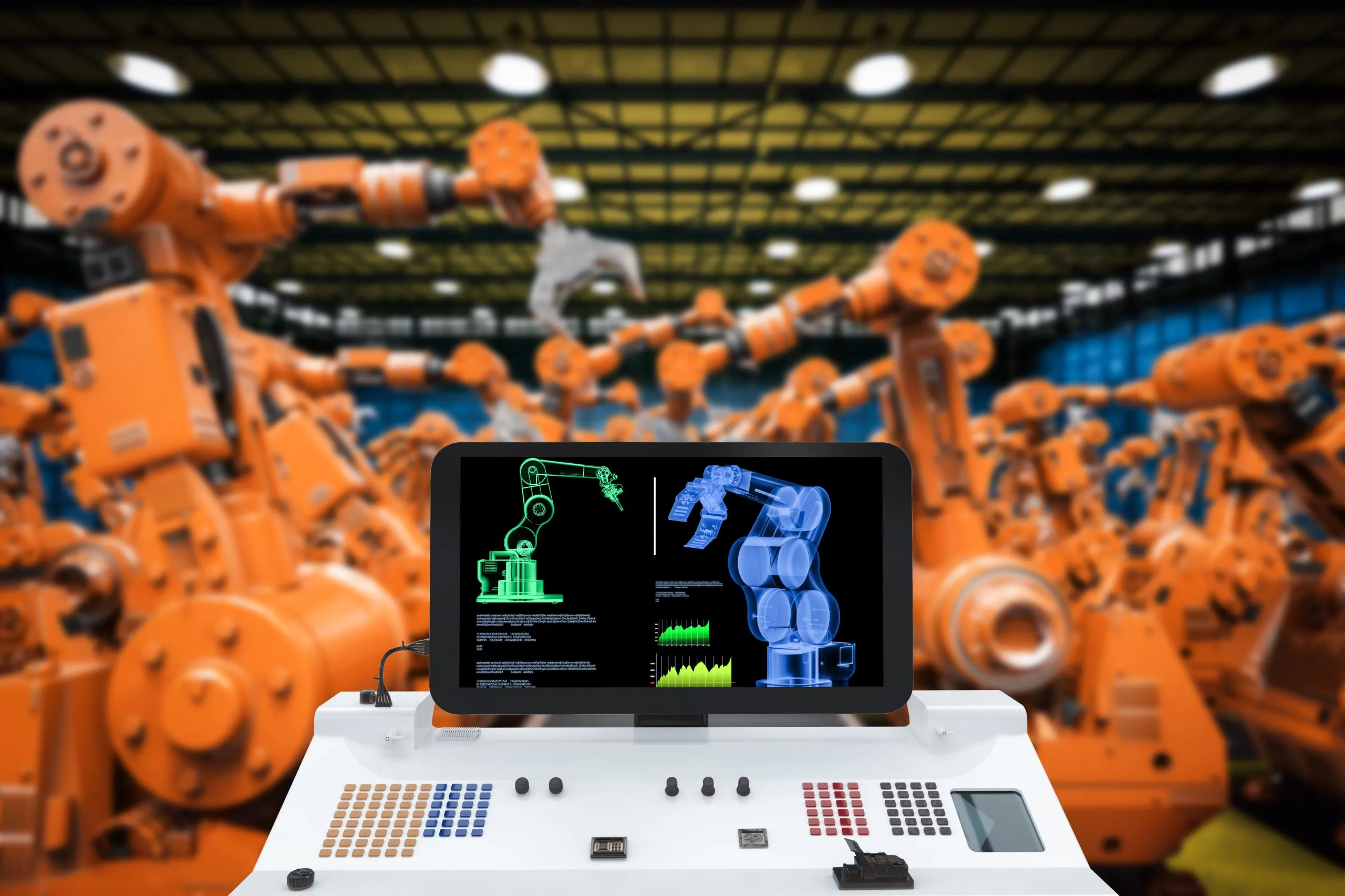
Canada’s industrial automation market is set for steady expansion through 2035 as manufacturers modernize plants, improve productivity, and respond to labour shortages, supply-chain uncertainty, and rising quality requirements. Automation adoption is driven by robotics, industrial IoT, AI-enabled monitoring, cloud-based controls, machine vision, and advanced manufacturing systems. The opportunity is supported by Canada’s large manufacturing base: in 2024, manufacturing generated about $931.2 billion in total revenue, despite a 0.9% annual decline.
Key Market Drivers Accelerating Industrial Automation Adoption in Canada
Productivity Pressure and Smart Manufacturing
Canada’s industrial sector is under pressure to raise output per worker, reduce downtime, and improve asset utilization. A 2025 report noted that Canada’s labour productivity in 2024 was only 0.8% above its 2019 level, highlighting why automation is becoming a strategic priority rather than a discretionary upgrade. Manufacturers are therefore investing in programmable logic controllers, sensors, predictive maintenance platforms, automated inspection, and robotics to increase throughput and reduce operating variability.
Labour Shortages and Workforce Transformation
Automation is also accelerated by demographic shifts and skill gaps in technical trades, maintenance, robotics programming, and data-driven operations. The federal government’s 2026 economic measures included a C$2 billion plan to recruit, train, and hire 80,000 to 100,000 skilled trade workers by 2030/31, directly supporting sectors that depend on advanced manufacturing capabilities. Rather than replacing labour wholesale, automation is increasingly being used to augment workers in repetitive, hazardous, or precision-intensive tasks.
Export Competitiveness and Supply-Chain Resilience
Canada’s export-linked manufacturing base is another major driver. Statistics Canada reported that from 2020 to 2024, manufacturing-sector jobs rose by 229,000, with around 161,000 of the net increase directly or indirectly tied to export production. Automation helps exporters meet stricter delivery timelines, quality standards, traceability requirements, and cost pressures, especially in automotive, food processing, metals, aerospace, chemicals, and energy-related manufacturing.
Government-Led Programs Advancing Smart Manufacturing in Canada
Government policy is reinforcing automation adoption through advanced manufacturing, innovation, training, and industrial resilience programs. Canada’s Next Generation Manufacturing Canada initiative operates under the federal Global Innovation Clusters program and supports industry-led advanced manufacturing projects involving firms, start-ups, and research organizations. Recent measures also include tariff-response support, such as a C$1 billion loan program for affected industries and C$500 million for regional development agencies. These initiatives create a stronger funding environment for modernization and digital transformation.
Competitive Landscape of Canada’s Industrial Automation Market
The Canadian industrial automation market includes global automation leaders, system integrators, robotics firms, software providers, and domestic advanced manufacturing specialists. Major international players such as Siemens, Rockwell Automation, ABB, Schneider Electric, Honeywell, Emerson, Mitsubishi Electric, and Omron compete across controls, drives, sensors, robotics, process automation, and industrial software. Competition is increasingly shifting from standalone hardware toward integrated solutions combining edge devices, cloud analytics, cybersecurity, machine vision, AI, and lifecycle services.
Key Challenges Limiting Industrial Automation Adoption in Canada
High Upfront Costs
Automation projects require capital investment in equipment, integration, training, software, cybersecurity, and maintenance. Small and mid-sized manufacturers may delay adoption because payback periods can be uncertain, especially when production volumes fluctuate.
Skills and Integration Gaps
Legacy equipment, fragmented data systems, and a shortage of automation engineers can slow down implementation. Canada’s broader AI adoption is rising—business use of AI doubled from 6% to 12% between the 2023–2024 and 2024–2025 periods—but industrial deployment still requires specialized operational expertise.
Future Outlook
By 2035, Canada’s industrial automation market is expected to be more software-defined, connected, and service-oriented. Growth will likely be strongest in robotics, autonomous material handling, predictive maintenance, digital twins, industrial cybersecurity, and AI-enabled quality control. Manufacturing modernization will remain central, particularly as companies seek productivity gains, energy efficiency, and resilience against trade and supply-chain shocks. While adoption may be uneven across large enterprises and SMEs, Canada’s combination of manufacturing scale, public support, skilled-trades investment, and export exposure points to a sustained automation upcycle through 2035.
Consultants at Nexdigm, in their latest publication “Canada Industrial Automation Market Outlook to 2035,” analyze the sector by System Type (PLC-based Automation, DCS-based Automation, SCADA-based Automation, Industrial Robots), By Platform Type (Cloud-based Platforms, Edge Computing Platforms, On-premise Platforms), and By Fitment Type (On-site Solutions, Cloud-based Solutions, Hybrid Solutions). Nexdigm suggests that businesses should invest in scalable automation solutions, strengthen digital capabilities, and align technology adoption with long-term productivity and competitiveness goals to stay resilient in Canada’s evolving industrial landscape.
To take the next step, simply visit our Request a Consultation page and share your requirements with us.
Harsh Mittal
+91-8422857704