
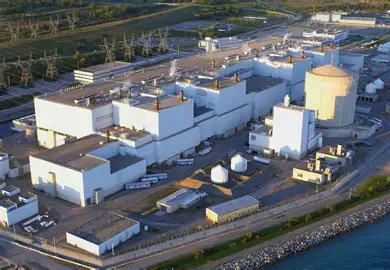
Canada’s Nuclear Reactor Construction Market is experiencing renewed growth as the country strengthens its commitment to energy security, clean electricity generation, and industrial decarbonization. Nuclear energy remains a cornerstone of Canada’s low-carbon power sector, with approximately 15 GW of installed nuclear capacity operating across 19 commercial reactors, supplying nearly 15% of the nation’s electricity. Rising electricity demand from electric vehicles, critical minerals processing, data centers, hydrogen production, and advanced manufacturing is increasing the need for reliable baseload power. Additionally, Canada has emerged as a global leader in Small Modular Reactor (SMR) development, creating significant opportunities for new reactor construction and nuclear infrastructure expansion.
Key Market Drivers for Canada’s Nuclear Reactor Construction Market
Small Modular Reactor Development Creates Significant Growth Opportunities
Canada is among the first countries actively advancing commercial SMR deployment through national and provincial nuclear strategies. Ontario, Saskatchewan, New Brunswick, and Alberta are supporting SMR development to provide clean electricity, industrial heat, and remote power generation. The proposed deployment of the 300 MW BWRX-300 SMR at the Darlington site represents one of the world’s most advanced small modular reactor projects. Growing interest in SMRs is expected to accelerate demand for reactor construction, engineering services, and nuclear supply chain capabilities.
Rising Electrification and Industrial Decarbonization Increase Power Demand
Canada’s electricity demand is expected to rise significantly as transportation, industry, and buildings become increasingly electrified. Electric vehicle adoption, battery manufacturing investments, green hydrogen projects, and critical mineral processing facilities require reliable low-carbon electricity. Nuclear power plants typically operate with capacity factors exceeding 90%, making them an attractive solution for meeting long-term energy needs while supporting Canada’s emissions reduction objectives.
Aging Nuclear Fleet Modernization Supports Construction Activity
Several existing nuclear generating units are undergoing refurbishment and modernization programs to extend operational lifespans and maintain generation reliability. Major refurbishment projects and future reactor replacement requirements are creating long-term opportunities for construction firms, equipment suppliers, engineering contractors, and advanced nuclear technology providers.
Government Initiatives Supporting Canada’s Nuclear Reactor Construction Market
The Canadian government continues to support nuclear energy through the SMR Action Plan, clean electricity initiatives, and net-zero emissions policies. Federal and provincial governments have committed billions of dollars toward clean energy infrastructure, electricity grid modernization, reactor refurbishment, and advanced nuclear technologies. Canada aims to achieve a net-zero electricity grid by 2035, while nuclear energy remains a key component of national decarbonization strategies. Support for SMR commercialization, nuclear fuel innovation, and domestic nuclear supply chains is creating favorable conditions for future reactor construction activities.
Competitive Landscape of Canada’s Nuclear Reactor Construction Market
Canada’s Nuclear Reactor Construction Market is characterized by strong engineering expertise, advanced reactor technology development, and a well-established nuclear supply chain. Competition is increasingly centered on reactor efficiency, modular construction methods, project execution capabilities, safety innovations, and cost optimization. Market participants are investing in SMR technologies, digital engineering tools, advanced fuel systems, and modular construction strategies to improve project economics and deployment timelines. Growing demand from utilities, industrial operators, mining projects, and clean hydrogen facilities continues to support market expansion.
Major Challenges Facing Canada’s Nuclear Reactor Construction Market
High Capital Costs and Long Development Timelines
Nuclear reactor construction projects require significant upfront investment and extensive planning. Regulatory requirements, financing arrangements, environmental assessments, and infrastructure development can contribute to higher project costs and longer construction timelines.
Skilled Workforce and Supply Chain Requirements
The expansion of Canada’s nuclear infrastructure requires a highly specialized workforce, including engineers, technicians, reactor operators, and construction professionals. Scaling supply chain capabilities while maintaining stringent safety and quality requirements remains a key industry challenge.
Future Outlook
Canada’s Nuclear Reactor Construction Market is expected to witness robust growth through 2035, supported by SMR deployment, reactor refurbishment programs, and increasing electricity demand from industrial electrification. With approximately 15 GW of installed nuclear capacity, nuclear power providing nearly 15% of national electricity generation, and multiple SMR projects progressing through development stages, new construction activity is expected to accelerate. Additional opportunities are likely to emerge from clean hydrogen production, critical minerals processing, remote energy systems, and growing data center investments. Companies investing in advanced reactor technologies, modular construction techniques, and localized nuclear supply chains will be well-positioned to benefit from Canada’s evolving low-carbon energy landscape.
Consultants at Nexdigm, in their latest publication “Canada Nuclear Reactor Construction Market Outlook to 2035,” analyse the sector By Reactor Technology Type (CANDU 6 Units, Enhanced CANDU 6 and CANDU ACR-1000, By Construction Phase (Site Preparation and Licensing and Containment Building Erection) and By Contracting Model (Engineering, Procurement, Construction, Turnkey Design-Build Projects and Integrated Project Delivery (IPD)).
Nexdigm suggests that businesses in Canada’s Nuclear Reactor Construction Industry prioritize Small Modular Reactor (SMR) technologies, advanced nuclear engineering capabilities, modular construction methodologies, and domestic supply chain development strategies to capitalize on the country’s 15 GW nuclear capacity, expanding clean electricity investments, growing industrial electrification requirements, and increasing demand for reliable low-carbon baseload power generation.
To take the next step, simply visit our Request a Consultation page and share your requirements with us.
Harsh Mittal
+91-8422857704