
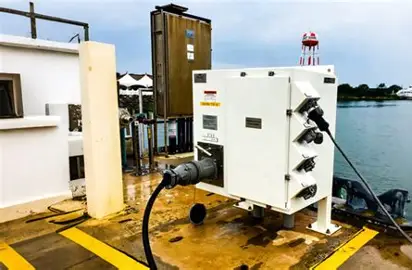
Canada’s Shore Power Systems Market is gaining momentum as the country advances maritime decarbonization, port modernization, and sustainable transportation initiatives. Shore power systems, also known as onshore power supply (OPS) or cold ironing, allow vessels to connect to landside electricity while docked, eliminating the need to run auxiliary diesel engines and significantly reducing emissions. Canada’s major ports, including Port of Vancouver, Port of Montreal, Port of Prince Rupert, and Port of Halifax, collectively handle more than 6 million TEUs of container traffic annually and facilitate trade worth hundreds of billions of dollars. Growing environmental regulations, clean-energy objectives, and investments in green port infrastructure are expected to accelerate shore power deployment through 2035.
Key Market Drivers for Canada’s Shore Power Systems Market
Port Modernization and Trade Growth Accelerate Demand
Canada’s ports serve as critical gateways for North American and global trade. The Port of Vancouver, the country’s largest port, handles more than 3.5 million TEUs annually and manages over CAD 300 billion worth of goods each year. Rising cargo volumes, increasing vessel traffic, and investments under the National Trade Corridors Fund are encouraging ports to adopt advanced electrification technologies that improve operational efficiency while reducing environmental impacts.
Maritime Decarbonization Initiatives Support Adoption
Canada has committed to achieving net-zero emissions by 2050, increasing the focus on reducing emissions from transportation and port operations. Shore power systems help eliminate emissions from vessels while berthed, reducing CO₂, nitrogen oxides, sulfur oxides, and particulate matter. As shipping companies strengthen ESG commitments and ports pursue low-carbon operations, demand for shore-side power infrastructure is expected to increase significantly.
Cruise Tourism and Green Port Development Create Opportunities
Canada’s cruise tourism sector, particularly in Vancouver, Victoria, Quebec City, and Halifax, continues to grow. Cruise ships require substantial electrical power while docked, making shore power systems an effective solution for reducing fuel use and improving local air quality. In addition, ports are increasingly integrating renewable electricity sources and smart energy-management systems to support sustainability objectives.
Government Initiatives Supporting Canada’s Shore Power Systems Market
The Canadian government is actively advancing port decarbonization through the National Trade Corridors Fund (NTCF), the Green Shipping Corridor Program, and broader net-zero transportation initiatives. Canada has committed to achieving net-zero emissions by 2050, while allocating billions of dollars toward sustainable transportation, port modernization, and trade infrastructure upgrades. In addition, Canada’s electricity system is among the cleanest globally, with approximately 82% of electricity generated from non-emitting sources, including hydropower, nuclear, wind, and solar energy. The government has also supported shore power projects at major ports such as Vancouver, Halifax, and Montreal, encouraging the adoption of low-emission technologies that help reduce vessel-related air pollution and improve port sustainability.
Competitive Landscape of Canada’s Shore Power Systems Market
Canada’s Shore Power Systems Market is evolving rapidly as port authorities, shipping operators, utilities, and infrastructure developers intensify investments in green maritime infrastructure. Competition is increasingly focused on IEC/IEEE 80005-compliant shore connection systems, high-voltage power conversion technologies, grid-integration capabilities, and smart energy-management platforms. The market benefits from annual container throughput exceeding 6 million TEUs, while the Port of Vancouver alone handles more than 3.5 million TEUs annually and facilitates over CAD 300 billion in trade each year. Growing investments in green ports, cruise terminal electrification, renewable-energy integration, and smart logistics infrastructure are encouraging market participants to develop advanced shore-side power solutions capable of supporting Canada’s long-term maritime decarbonization and trade growth objectives.
Major Challenges Facing Canada’s Shore Power Systems Market
High Capital Investment Requirements
Implementing shore power systems requires significant investments in substations, transformers, converters, electrical networks, and cable-handling equipment. These infrastructure costs can affect deployment timelines and investment decisions across various ports.
Seasonal Demand and Grid Integration Requirements
Canada’s ports must ensure sufficient electrical capacity and compatibility between vessel systems and port-side infrastructure. Coordinating power requirements, vessel diversity, and seasonal traffic fluctuations remains an important consideration for effective shore power deployment.
Future Outlook
Canada’s Shore Power Systems Market is expected to witness strong growth through 2035, supported by container throughput exceeding 6 million TEUs annually, growing cruise traffic, and increasing investments in green port infrastructure. As Canada strengthens its net-zero transition strategy and maritime sustainability commitments, ports are expected to expand shore power capabilities for container vessels, cruise ships, ferries, and cargo fleets. Additional opportunities are likely to emerge from renewable-energy-powered ports, digital port management systems, green shipping corridors, and smart logistics infrastructure. Companies investing in advanced power-conversion technologies, automated shore connection systems, and intelligent energy-management platforms will be well-positioned to capitalize on Canada’s evolving maritime electrification landscape.
Consultants at Nexdigm, in their latest publication “Canada Shore Power Systems Market to 2035,” analyse the sector By Power connection Topology (Low Voltage Shore Connection, High Voltage Shore Connection and High-Voltage Shore Connection) and By Vessel Type (Container Ships and Bulk Carriers).
Nexdigm suggests that businesses in Canada’s Shore Power Systems Industry prioritize IEC/IEEE 80005-compliant shore connection technologies, advanced power-conversion systems, renewable-energy-integrated port electrification solutions, and smart energy-management platforms to capitalize on the country’s 6 million+ TEU container throughput, expanding green port initiatives, growing cruise tourism activity, and increasing demand for low-emission maritime operations across commercial and passenger terminals.
To take the next step, simply visit our Request a Consultation page and share your requirements with us.
Harsh Mittal
+91-8422857704