
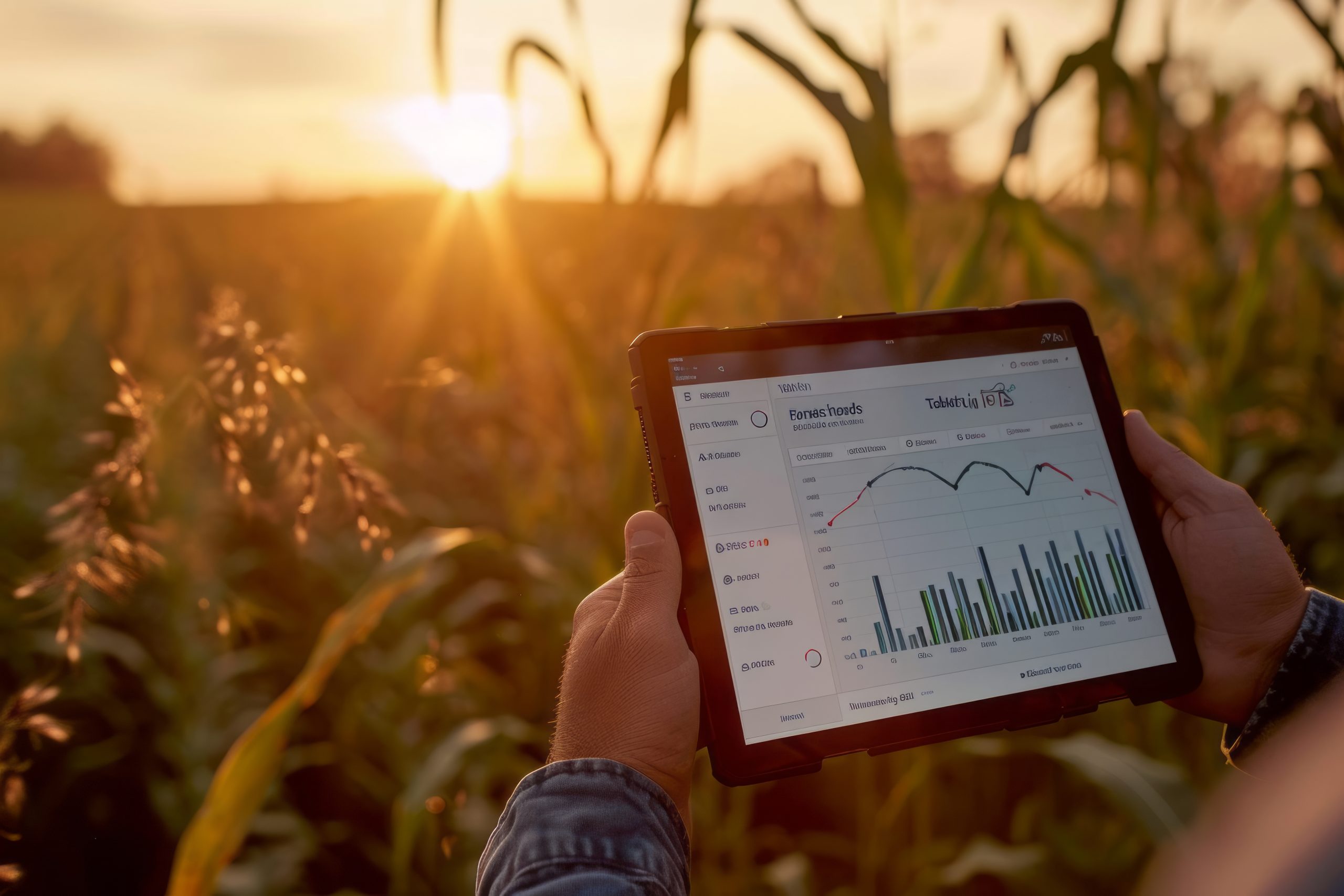
Carbon farming is moving from a climate-focused concept toward a potential agricultural revenue stream, as farmers, agribusinesses, and investors explore ways to monetize measurable emissions reductions and carbon removals. The opportunity is significant as agrifood systems generated 16.5 billion tonnes of CO₂-equivalent emissions in 2023, while agriculture, forestry, and other land use remain major contributors to global emissions.
At the same time, agrifood systems account for more than 10% of voluntary carbon-market projects but only around 1% of credits issued, highlighting an important commercialization gap. For farmers, revenue potential ultimately depends on credible measurement, verification, aggregation, carbon-credit quality, market prices, and transparent payment mechanisms.
From Climate Practice to Farm-Level Economics
Carbon farming can create value when environmental improvements are connected to credible measurement and viable market mechanisms. The commercial potential depends on factors such as practice adoption, carbon sequestration potential, verification costs, credit prices, farm size, and access to aggregators or buyers. Understanding these variables is essential for assessing whether carbon farming can generate meaningful commercial outcomes and sustainable farmer income or not.
What Determines Carbon Farming Commercial Viability?
Once farm-level economics are understood, the next question is whether carbon projects can generate sufficient value at scale. Commercial viability depends on the volume and quality of credits generated, project development costs, verification requirements, buyer demand, and the ability to aggregate fragmented farms efficiently.
- Credit Generation: Higher and more consistent carbon outcomes can strengthen project economics.
- Project Costs: Monitoring, reporting, verification, and implementation expenses directly influence farmer returns.
- Aggregation: Grouping smaller farms can help distribute fixed project costs and improve scalability.
These factors determine whether carbon farming can progress from individual sustainability initiatives into commercially sustainable agricultural revenue models.
Nexdigm’s Expertise in Evaluating Carbon Farming Opportunities
As carbon farming moves toward greater commercial consideration, organizations need to understand both its environmental potential and underlying economics. Nexdigm combines agriculture sector expertise, market intelligence, and strategic advisory to help businesses evaluate carbon-farming opportunities, understand farmer-level economics, and identify viable pathways for project development and market participation.
This provides a natural foundation for a structured Carbon farming market opportunity analysis, covering market potential, project economics, carbon-credit dynamics, partnerships, and scalability.
Nexdigm’s Carbon Farming Market Opportunity Analysis
Determining whether carbon farming can generate meaningful farmer income requires an integrated view of agricultural economics, carbon-market dynamics, project feasibility, and buyer demand.
Nexdigm helps agribusinesses, investors, carbon-market participants, and agricultural organizations evaluate these factors through its Carbon farming market opportunity analysis, which supports:
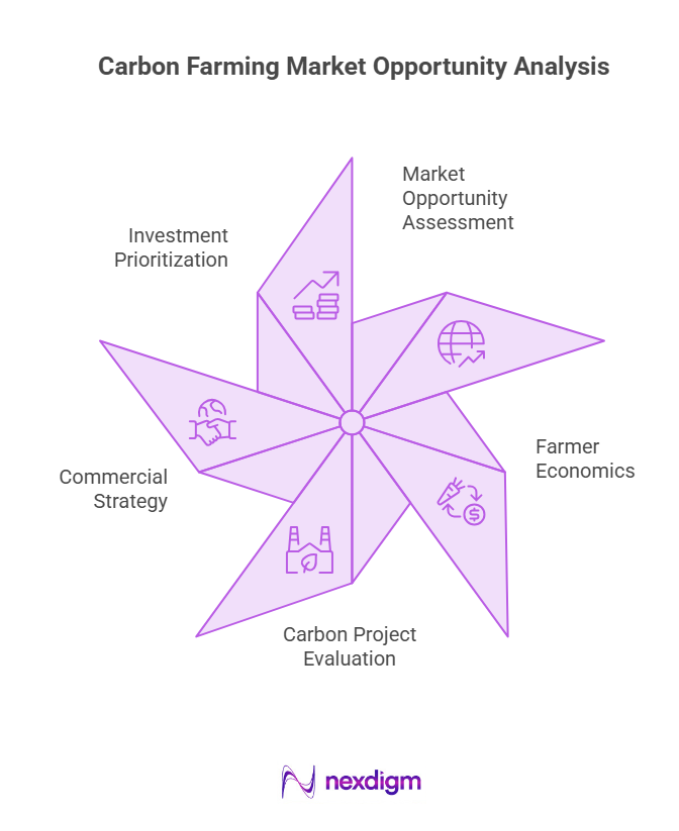
- Market Opportunity Assessment: Evaluation of carbon-farming markets, regional potential, crop suitability, and emerging demand.
- Farmer Economics: Assessment of implementation costs, potential revenue streams, adoption barriers, and economic viability.
- Carbon Project Evaluation: Analysis of project structures, aggregation models, monitoring requirements, and scalability considerations.
- Commercial Strategy: Determination of partnerships, market-access pathways, buyer segments, and potential business models.
- Investment Prioritization: Comparison of opportunities based on market attractiveness, feasibility, scalability, and potential value creation.
This approach helps organizations assess carbon farming as both a sustainability opportunity and a potential revenue-generating agricultural business model.
Nexdigm’s Carbon Farming Analysis in Delivering Commercial Outcomes
Following a structured market opportunity analysis, Nexdigm helps organizations translate carbon-farming insights into practical strategies for implementation and growth. The focused outcomes here are:
- Project Model Development: Evaluation of farmer aggregation, implementation structures, and operating models suited to target markets.
- Revenue Model Assessment: Analysis of potential credit revenues, project costs, payment structures, and value-sharing mechanisms.
- Partnership Strategy: Identification of potential roles for aggregators, technology providers, buyers, financial institutions, and agricultural organizations.
- Market Activation: Development of pathways for launching, scaling, and positioning carbon-farming initiatives within relevant agricultural ecosystems.
This helps clients move from understanding carbon-farming potential to developing commercially practical models that can create value for farmers and other ecosystem participants.
Client Outcomes from Nexdigm’s Carbon Farming Expertise
Nexdigm’s analysis helps clients turn carbon-farming potential into clearer commercial decisions by linking project economics, farmer participation, carbon-market demand, and scalability. The resulting insights can support with:
- Prioritized Opportunities: The most viable crops, regions, and carbon-farming models based on commercial potential, helping organizations focus resources on opportunities with stronger scalability and long-term value creation.
- Improved Project Economics: Evaluated project costs, revenue potential, and value-sharing structures to improve financial feasibility, enabling stakeholders to build more sustainable and commercially attractive carbon-farming initiatives.
- Stronger Farmer Models: Participation and aggregation frameworks aligned with farm-level economics, encouraging farmer engagement, improving program adoption, and supporting long-term project sustainability and impact.
- Better Market Access: Suitable carbon-credit buyers, strategic partners, and commercialization channels, helping organizations strengthen market connectivity and maximize opportunities for credit monetization and growth.
With these outcomes delivered from Nexdigm’s Analytical expertise, clients get to enhance their project scalability and create sustainable value across agricultural and carbon-credit ecosystems.
Nexdigm’s Case
Nexdigm supported an agribusiness in applying data-driven insights to improve resource allocation and manage agricultural market and climate risks. The engagement helped reduce supply-chain disruptions by 15% and improve operational efficiency by 20%, enabling stronger resource planning and more resilient decision-making. The results demonstrate how structured agricultural intelligence can translate complex market risks into measurable business improvements.
To take the next step, simply visit our Request a Consultation page and share your requirements with us.
Harsh Mittal
+91-8422857704