

Chemical trade connects producers of industrial inputs with customers in agriculture, pharmaceuticals, construction, automotive manufacturing, and consumer goods. Changes in trade flows can reveal shifts in industrial demand, production economics and access to raw materials. However, the chemical sector contains products with very different supply chains, regulatory requirements, and end uses.
A meaningful assessment starts at product level, then traces the suppliers, buyers and transport routes shaping market access.
Identify Products Driving Trade Growth
Trade analysis should separate major categories such as organic chemicals, inorganic chemicals, fertilisers, plastics, specialty chemicals, and pharmaceutical inputs. Their demand drivers differ. Fertiliser trade is closely linked to agricultural requirements, while specialty chemicals may depend on manufacturing activity, product formulation and technical specifications.
Trade values should be compared with available quantity data. Higher values can result from price increases rather than greater physical demand, making this distinction important when estimating market size or procurement requirements.
Product-level analysis also helps identify categories where demand is expanding faster than domestic production or where buyers depend on specialised imports.
Map Supplier And Buyer Relationships
Analysis of chemical trade should identify leading exporters, importing markets and changes in bilateral trade over time. Import growth may reflect stronger downstream production, a shortage of domestic capacity, or a shift toward imported grades that meet specific technical requirements.
Supplier analysis should consider production scale, product quality, pricing, delivery performance, and the availability of alternatives. Buyers may also value regulatory documentation, technical support, and consistent specifications, particularly when chemicals are used in tightly controlled manufacturing processes.
Businesses should examine whether trade relationships are becoming more concentrated or diversified and whether changes reflect long-term sourcing decisions or temporary supply disruptions.
Follow The Trade Corridors
Chemical supply chains are influenced by access to feedstocks, energy costs, industrial clusters, ports, and transport infrastructure. A change in one production region can affect buyers in several countries, particularly when alternative sources require new approvals or longer shipping routes.
Trade corridor analysis should account for the product’s handling and storage requirements. Some chemicals require specialised containers, temperature controls, or additional safety procedures, which can influence the feasibility and cost of alternative routes.
Build A Chemical Trade Assessment Framework
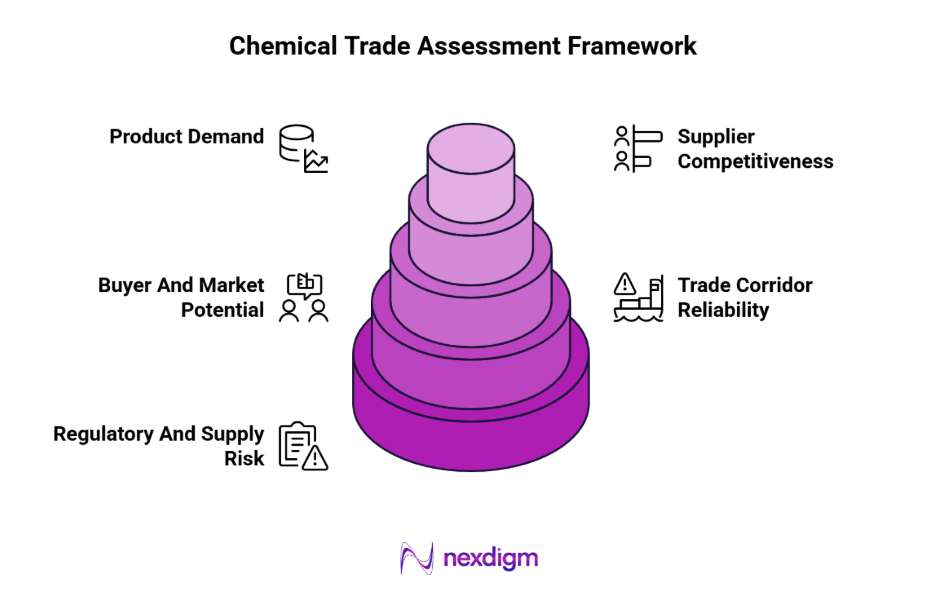
- Product Demand: Examine import volumes, trade values and end-use industries to identify growing chemical categories and distinguish sustained demand from temporary price movements.
- Supplier Competitiveness: Compare exporting countries on production capacity, pricing, product quality, delivery reliability and technical specifications to identify commercially viable sourcing alternatives.
- Buyer And Market Potential: Assess major importing markets, downstream industrial activity, customer requirements and domestic production gaps to identify opportunities for exporters and distributors.
- Trade Corridor Reliability: Evaluate port access, freight costs, transit times, handling requirements and route disruptions to determine whether products can reach buyers consistently and competitively.
- Regulatory And Supply Risk: Review tariffs, product classification, safety documentation, import restrictions and supplier concentration to identify barriers that could increase costs or interrupt supply.
These dimensions should be considered together. An attractive import market may offer limited commercial value if regulatory requirements are complex; logistics costs are high or established suppliers have a strong competitive advantage.
Turn Chemical Trade Patterns Into Decisions
Chemical trade research can support export-market selection, supplier diversification and investment planning when product-level statistics are combined with regulatory and logistics intelligence. Tracking how buyers and suppliers change over time helps businesses distinguish attractive opportunities from routes carrying excessive cost or compliance risk.
Nexdigm’s Case Study
A distributor tracking imports of a specialty chemical identifies growing demand from a manufacturing cluster. Existing supply is concentrated in a small number of origins, while alternative producers appear commercially competitive. Further checks on product specifications, certification, freight costs and buyer qualification requirements determine whether the new sourcing route is viable.
To take the next step, simply visit our Request a Consultation page and share your requirements with us.
Harsh Mittal
+91-8422857704