
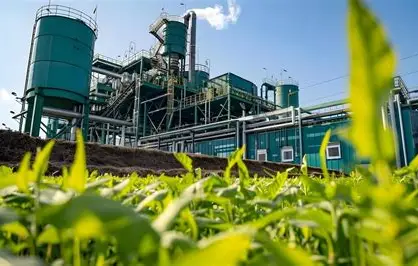
China’s Advanced Biofuel Market is witnessing rapid expansion, supported by transportation fuel consumption exceeding 170 billion liters annually, making it one of the world’s largest fuel markets. The country generates more than 800 million tonnes of agricultural residues annually, providing abundant feedstock for advanced biofuels such as cellulosic ethanol, renewable diesel, Sustainable Aviation Fuel (SAF), and bio-methanol. Additionally, China’s digital industrial transformation and carbon neutrality before 2060 target are accelerating investments in low-carbon fuels. Rising demand from aviation, heavy transport, shipping, and industrial sectors, combined with growing waste-to-fuel initiatives and biomass utilization programs, is driving large-scale investment in advanced biofuel production infrastructure and strengthening China’s position in the global renewable fuels market.
Key Market Drivers for China’s Advanced Biofuel Market
Transport Decarbonization and Carbon Neutrality Goals Accelerate Biofuel Demand
China’s commitment to peak carbon emissions before 2030 and achieve carbon neutrality before 2060 is strengthening demand for low-carbon transportation fuels. The country’s transportation sector consumes more than 170 billion liters of gasoline and diesel annually, making renewable fuels a critical component of long-term decarbonization efforts. Advanced biofuels are increasingly viewed as viable solutions for reducing emissions in heavy-duty transportation, aviation, shipping, and industrial sectors where complete electrification remains challenging.
Sustainable Aviation Fuel (SAF) Development Creates Major Growth Opportunities
China is one of the world’s largest aviation markets, with major airports including Beijing Capital, Shanghai Pudong, and Guangzhou Baiyun collectively serving hundreds of millions of passengers annually. As airlines and regulators pursue aviation decarbonization targets, investments in Sustainable Aviation Fuel production and supply chains are increasing. Growing demand from both domestic and international aviation sectors is expected to support significant expansion in advanced biofuel production capacity.
Abundant Biomass and Waste Resources Strengthen Feedstock Availability
China generates more than 800 million tonnes of agricultural residues annually, including crop straw, forestry residues, and organic waste materials. Additionally, rapid urbanization produces substantial volumes of municipal solid waste and waste oils suitable for advanced biofuel production. The availability of these resources provides strong feedstock potential for cellulosic ethanol, renewable diesel, biomethane, and waste-to-fuel projects across the country.
Government Initiatives Supporting China’s Advanced Biofuel Market
The Chinese government continues to support advanced biofuel development through national renewable energy plans, carbon-reduction policies, and circular-economy initiatives. Significant investments are being directed toward waste-to-energy facilities, biomass utilization projects, clean transportation technologies, and aviation decarbonization programs. China’s carbon neutrality roadmap and industrial modernization strategies are encouraging wider adoption of advanced biofuels while strengthening domestic production capabilities. Government support for agricultural waste utilization and sustainable fuel technologies is creating favorable conditions for long-term market growth.
Competitive Landscape of China’s Advanced Biofuel Market
China’s Advanced Biofuel Market is becoming increasingly competitive as major energy companies, state-owned refiners, biotechnology firms, and waste-management operators expand renewable fuel production. Competition is focused on feedstock security, conversion efficiency, SAF commercialization, renewable diesel production, and carbon-intensity reduction. Leading participants including Sinopec, PetroChina, CNOOC, China Energy Investment Corporation, and various bio-refining technology providers are investing in advanced fuel projects and next-generation bio-refinery infrastructure. Strategic partnerships between airlines, industrial companies, agricultural enterprises, and renewable fuel developers are accelerating commercialization and capacity expansion.
Major Challenges Facing China’s Advanced Biofuel Market
Feedstock Collection and Supply Chain Complexity
Efficient collection, transportation, and processing of biomass and agricultural residues across large geographic regions remain operational challenges. Seasonal availability and logistics costs can impact feedstock supply reliability.
Commercial Scale-Up and Cost Competitiveness
Advanced biofuel technologies often require substantial investments in processing infrastructure and technology deployment. Achieving commercial-scale production while maintaining cost competitiveness with conventional fuels remains a key industry challenge.
Future Outlook
China’s Advanced Biofuel Market is expected to witness robust growth through 2035, supported by transportation fuel consumption exceeding 170 billion liters annually, biomass resource availability of more than 800 million tonnes per year, and accelerating investments in low-carbon energy solutions. Demand for Sustainable Aviation Fuel (SAF) is expected to rise rapidly as China’s aviation sector serves hundreds of millions of passengers annually and strengthens decarbonization efforts. Additionally, the country’s commitment to achieving carbon neutrality before 2060, expanding waste-to-fuel projects, renewable diesel production, and bio-methanol deployment will further support market expansion. Growing investment in advanced biorefineries, circular-economy infrastructure, and industrial decarbonization initiatives is expected to strengthen domestic production capacity and create significant opportunities for advanced biofuel technology providers, feedstock processors, and renewable fuel producers.
Consultants at Nexdigm, in their latest publication “China Advanced Biofuel Market Outlook to 2035,” analyse the sector By Fuel Technology (Corn Stover Conversion, Wheat Straw Enzymatic Hydrolysis and Rice Husk Gasification), By Feedstock Source (Agricultural Residues and Energy Crops) and By Technological Maturity (Commercial Scale Deployment, Pilot Plant Operations and Demonstration Facility Phase).
Nexdigm suggests that businesses in China’s Advanced Biofuel Industry prioritize Sustainable Aviation Fuel (SAF), renewable diesel, cellulosic ethanol, bio-methanol, and waste-to-fuel conversion technologies to capitalize on the country’s 170 billion+ liters of transportation fuel demand, 800 million+ tonnes of annual biomass resources, carbon neutrality ambitions, and growing need for low-carbon fuel solutions across aviation, transport, maritime, and industrial sectors.
To take the next step, simply visit our Request a Consultation page and share your requirements with us.
Harsh Mitta
+91-8422857704