
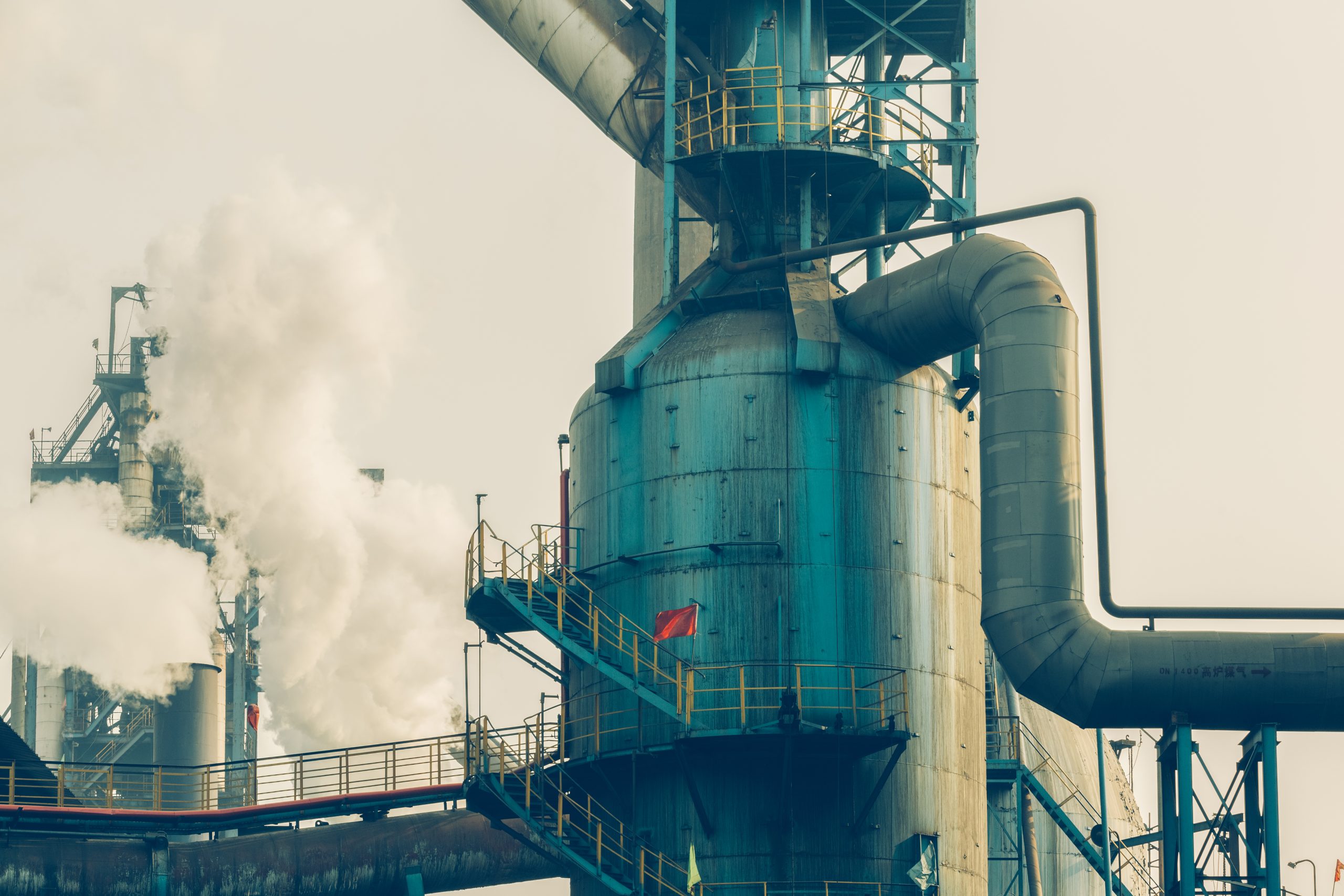
China’s Air Separation Unit (ASU) market plays a critical role in supporting the country’s vast industrial ecosystem. Air separation units produce industrial gases such as oxygen, nitrogen, and argon that are essential for steelmaking, chemicals, electronics, healthcare, and energy applications. As China continues investing in advanced manufacturing, semiconductors, green energy, and industrial modernization, demand for reliable gas production infrastructure remains strong. The country produced more than 1 billion tonnes of crude steel in 2024, maintaining its position as the world’s largest steel producer, which continues to create substantial demand for ASU installations and industrial gas supply systems.
Market Drivers Advancing the China Air Separation Unit Industry
Expanding Steel and Metallurgical Operations Fuel Equipment Demand
The steel industry remains one of the largest consumers of oxygen generated through air separation units. China produced approximately 1.005 billion tonnes of crude steel in 2024, accounting for more than half of global steel output. Oxygen-enriched processes improve combustion efficiency and productivity in blast furnaces and basic oxygen furnaces, making ASUs a critical component of steel manufacturing facilities. Moreover, modernization initiatives across steel plants are encouraging operators to replace aging gas generation systems with larger, more energy-efficient ASUs that can reduce operational costs while supporting environmental goals.
Rapid Growth of Chemicals, Coal-to-Chemicals and Energy Projects
China’s chemical industry continues to invest in large-scale production facilities, particularly in coal gasification, petrochemicals, methanol, and synthetic fuel projects. These facilities require substantial quantities of oxygen and nitrogen, making ASUs indispensable infrastructure assets. As industrial operators seek greater efficiency and reliability, on-site gas production using advanced air separation systems is becoming increasingly attractive. Large integrated chemical complexes are therefore expected to remain a major growth engine for the China ASU industry.
Rising Demand from Electronics and High-Tech Manufacturing
China’s ambitions in semiconductor manufacturing, display panels, lithium batteries, and photovoltaic production are creating fresh opportunities for the ASU sector. These industries depend on ultra-high-purity nitrogen and specialty gases for precision manufacturing processes. Industrial gas suppliers are responding by installing technologically advanced ASUs that can deliver consistently high gas purity levels. The rapid expansion of electronics manufacturing clusters across eastern and southern China is expected to support long-term demand for next-generation air separation technologies.
Government Initiatives Supporting the China Air Separation Unit Industry
China’s industrial upgrading strategy, carbon reduction objectives, and advanced manufacturing initiatives continue to create favorable conditions for ASU investments. The government encourages energy-efficient industrial equipment, smart manufacturing technologies, and modernization of heavy industries. Policies supporting semiconductor self-reliance, green steel production, clean energy projects, and high-value chemical manufacturing are indirectly boosting demand for industrial gases and air separation infrastructure. These initiatives are encouraging both domestic and international players to expand capacities and invest in efficient ASU systems.
Competitive Landscape of China Air Separation Unit Industry
The competitive environment includes both international industrial gas leaders and strong domestic equipment manufacturers. Major participants include Hangyang Group, Yingde Gases, Air Liquide, Linde, Air Products, Messer, and China Baowu-linked industrial gas operations. Competition is increasingly focused on energy efficiency, automation, operational reliability, and the ability to provide integrated gas solutions. Companies are also expanding their presence near industrial clusters to secure long-term supply contracts with steel, chemical, and electronics manufacturers.
Challenges Facing China Air Separation Unit Industry Growth
High Energy Consumption and Operating Costs
Air separation is an electricity-intensive process. Rising power costs and stricter environmental requirements can affect project economics, especially for older facilities operating at lower efficiencies. Manufacturers must continually invest in energy-saving technologies to remain competitive.
Intensifying Environmental and Carbon Compliance Requirements
China’s focus on industrial decarbonization places additional pressure on gas producers and industrial facilities. Operators are increasingly required to balance production growth with sustainability goals, creating the need for advanced and lower-emission ASU technologies. Compliance-related investments may increase capital expenditure for new projects.
Future Outlook
The future of China’s Air Separation Unit market appears promising as industrial modernization and technological advancement continue across key sectors. Demand from steel, chemicals, semiconductors, renewable energy, and advanced manufacturing is expected to sustain investments in industrial gas infrastructure. Smart ASUs featuring automation, digital monitoring, and improved energy efficiency are likely to gain greater adoption. As China strengthens its position in high-tech manufacturing while pursuing greener industrial development, the ASU industry is expected to remain a vital enabler of industrial productivity, operational efficiency, and sustainable growth.
Consultants at Nexdigm, in their latest publication “China Air Separation Unit Market Outlook to 2035“ analyze the sector By Supply Model (On-Site Build-Own-Operate and Turnkey EPC Contracting), By Component Type (Compression Modules, Heat Exchangers and Turbo-Expanders) and By End User Industry (Iron and Steel Sector and Hydrogen Fuel Generation).
Nexdigm suggests that businesses in “China Air Separation Unit Industry” focusses on oilfield, desalination, construction, and industrial applications, strengthen local warehousing, develop application-specific grades, improve technical support, and build resilient sourcing networks to serve expanding energy, water, and manufacturing demand.
To take the next step, simply visit our Request a Consultation page and share your requirements with us.
Harsh Mittal
+91-8422857704