
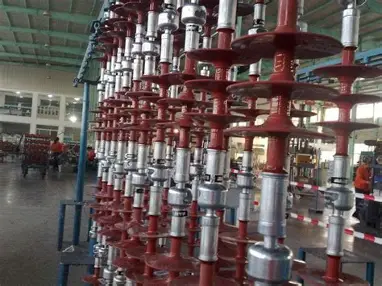
China’s Electrical Insulators Market is experiencing robust growth, supported by the world’s largest electricity network and rapid renewable energy deployment. China has surpassed 3,300 GW of installed power-generation capacity, including more than 1,000 GW of solar power capacity and over 600 GW of wind capacity, creating significant demand for transmission and distribution infrastructure. The country continues to expand its Ultra-High Voltage (UHV) transmission network to connect renewable-rich western regions with major industrial centers. Additionally, investments in smart grids, electric vehicle infrastructure, data centers, and industrial electrification are accelerating demand for advanced ceramic, glass, and composite insulators capable of supporting high-voltage, long-distance power transmission and enhancing grid reliability across one of the world’s most extensive power systems.
Key Market Drivers for China’s Electrical Insulators Market
Ultra-High Voltage Transmission Expansion Accelerates Demand
China operates the world’s largest UHV transmission network, spanning tens of thousands of kilometers and connecting renewable-energy-rich western provinces with major consumption centers in eastern China. Continuous investment in ±800 kV and ±1100 kV transmission corridors is driving substantial demand for high-performance insulators capable of supporting long-distance power transmission under extreme operating conditions.
Renewable Energy Integration Creates Significant Growth Opportunities
China leads the world in renewable energy deployment, with installed solar capacity exceeding 1,000 GW and wind capacity surpassing 600 GW. The integration of large-scale solar and wind farms requires extensive transmission, substation, and grid-upgrade infrastructure. This expansion is increasing demand for composite and polymer insulators that offer superior reliability, lightweight construction, and resistance to environmental contamination.
Industrial Electrification and Smart Grid Development Support Market Growth
China’s manufacturing sector contributes approximately 26–28% of GDP, making it the world’s largest industrial economy. Growing investments in electric vehicles, smart manufacturing, energy storage systems, railway electrification, and digital infrastructure are increasing electricity demand and strengthening requirements for power-distribution equipment and electrical insulation systems throughout the country.
Government Initiatives Supporting China’s Electrical Insulators Market
The Chinese government continues to strengthen power infrastructure through its 14th Five-Year Plan, national energy security strategy, and commitment to achieve carbon neutrality before 2060. State-owned utilities such as State Grid Corporation of China and China Southern Power Grid are investing heavily in transmission modernization, smart grids, and Ultra-High Voltage (UHV) projects. China has installed more than 3,300 GW of power-generation capacity, including over 1,000 GW of solar capacity and 600 GW of wind capacity, requiring extensive transmission infrastructure expansion. Additionally, ongoing investments in renewable-energy integration, energy storage systems, electric vehicle charging networks, and interregional power transmission corridors are creating strong demand for high-performance electrical insulators across utility-scale applications.
Competitive Landscape of China’s Electrical Insulators Market
China’s Electrical Insulators Market is highly competitive and supported by the world’s largest power transmission and distribution ecosystem. Competition is increasingly centered on UHV-compatible insulation technologies, mechanical strength, contamination resistance, lightweight composite materials, and lifecycle efficiency. Major domestic manufacturers such as Pinggao Group, TBEA, XD Electric, Shandong Taikai, and Dalian Insulator Group, alongside global players including Hitachi Energy, Siemens Energy, and ABB, are actively supplying products for grid expansion projects. With China operating more than 3,300 GW of installed power capacity, over 1,000 GW of solar power, and 600 GW of wind capacity, manufacturers are expanding production of advanced composite and polymer insulators to support renewable-energy integration, smart-grid deployment, and rapidly growing UHV transmission networks across the country.
Major Challenges Facing China’s Electrical Insulators Market
Raw Material Cost Volatility and Manufacturing Competition
Fluctuations in raw-material prices, energy costs, and manufacturing inputs can impact production economics. Intense competition among domestic manufacturers also places pressure on pricing and margins.
Renewable Grid Integration Complexity
The rapid addition of solar and wind generation requires continuous expansion of transmission infrastructure and advanced grid-management systems. Utilities must maintain network stability while integrating increasingly large volumes of variable renewable electricity.
Future Outlook
China’s Electrical Insulators Market is expected to witness robust growth through 2035, supported by installed power-generation capacity exceeding 3,300 GW, solar power capacity surpassing 1,000 GW, and wind capacity exceeding 600 GW. Continued expansion of China’s Ultra-High Voltage (UHV) transmission network, one of the largest globally, will drive sustained demand for high-performance insulation technologies. Additionally, accelerating investments in smart grids, grid-scale energy storage, electric vehicle charging infrastructure, data centers, and industrial electrification projects will strengthen market opportunities. As China advances toward its carbon neutrality target before 2060, increasing renewable-energy integration and transmission network modernization are expected to create significant demand for advanced composite, polymer, ceramic, and glass insulators across transmission, distribution, and renewable-energy applications.
Consultants at Nexdigm, in their latest publication “China Electrical Insulators Market Outlook to 2035” analyse the sector By Insulator Technology Type (Cap and Pin Porcelain, Pin Porcelain Insulators and Station Post Porcelain), By End User Industry (Utility Grid Infrastructure and Renewable Energy Substations) and By Sales Channel (Direct Utility Procurement, EPC Contracting Firms and Electrical Equipment Distributors).
Nexdigm suggests that businesses in China’s Electrical Insulators Industry prioritize advanced composite insulators, UHV-compatible insulation technologies, renewable-energy-focused products, and smart-grid-ready solutions to capitalize on the country’s 3,300 GW+ installed power capacity, world-leading renewable-energy deployment, expanding UHV transmission network, and growing demand for reliable high-voltage electricity infrastructure across utility, industrial, and renewable-energy applications.
To take the next step, simply visit our Request a Consultation page and share your requirements with us.
Harsh Mittal
+91-8422857704