
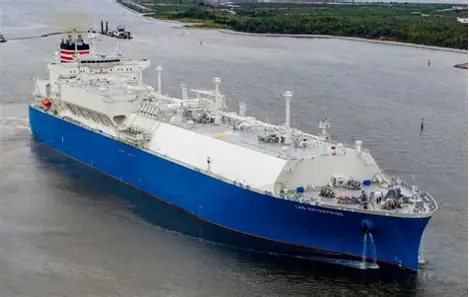
China’s LNG Carriers Market is witnessing rapid growth, supported by the country’s position as the world’s largest LNG importer and its expanding role in global natural gas trade. Rising energy demand, industrial decarbonization, and efforts to improve energy security are driving substantial investments in LNG transportation infrastructure. China imported more than 130 million tonnes of LNG annually, accounting for a significant share of global LNG trade. Growing LNG demand from power generation, manufacturing, chemicals, and urban gas distribution is increasing requirements for modern LNG carrier fleets and long-term shipping capacity.
Key Market Drivers for China’s LNG Carriers Market
Rising LNG Imports Drive Vessel Demand
China remains the world’s largest LNG importing nation, with annual LNG imports exceeding 130 million tonnes. The country’s demand for cleaner-burning fuels and expanding natural gas consumption is driving long-term LNG procurement contracts with suppliers from Qatar, Australia, the United States, Russia, and Malaysia. Increasing import volumes are creating sustained demand for LNG carriers capable of transporting cargo efficiently across long-haul international routes.
Energy Security and Diversification Strengthen Fleet Expansion
To reduce dependence on individual supply sources and improve energy resilience, China continues to diversify LNG imports through long-term contracts and strategic partnerships. State-owned energy companies such as CNOOC, PetroChina, and Sinopec are investing heavily in LNG shipping assets and long-term charter agreements. These initiatives are fueling demand for modern LNG carriers and supporting fleet expansion programs across the country.
Growing Domestic Shipbuilding Capabilities Support Market Growth
China has emerged as a major global LNG carrier shipbuilding center. Shipyards such as Hudong-Zhonghua Shipbuilding, Jiangnan Shipyard, and other major marine engineering firms are securing increasing numbers of LNG carrier orders. Advances in membrane containment technologies, dual-fuel propulsion systems, and vessel construction capabilities are strengthening China’s competitiveness within the global LNG transportation sector.
Government Initiatives Supporting China’s LNG Carriers Market
The Chinese government continues to prioritize natural gas within its long-term energy transition strategy. Significant investments are being directed toward LNG import terminals, storage facilities, transmission pipelines, and shipping infrastructure. Under national energy security and carbon-reduction objectives, natural gas is expected to play a larger role in supporting industrial decarbonization and reducing coal dependence. In addition, government support for domestic shipbuilding capabilities and strategic LNG transportation capacity is encouraging fleet expansion while strengthening China’s position within global LNG supply chains.
Competitive Landscape of China’s LNG Carriers Market
China’s LNG Carriers Market is highly competitive and supported by strong participation from state-owned energy firms, shipping companies, and domestic shipbuilders. Competition is increasingly focused on vessel size optimization, fuel efficiency, dual-fuel propulsion technologies, boil-off gas management systems, digital fleet-management capabilities, and environmental performance. Chinese shipyards continue to capture a growing share of global LNG carrier orders, while shipping operators expand long-term charter portfolios to support rising LNG imports. Increasing LNG trade volumes and fleet modernization programs continue to drive technological innovation and market competition.
Major Challenges Facing China’s LNG Carriers Market
High Capital Investment Requirements
Modern LNG carriers typically require investments ranging from USD 250 million to USD 300 million per vessel, creating significant financing requirements for shipowners and fleet operators.
Shipping Market Volatility and Geopolitical Risks
Freight rates remain sensitive to global LNG demand cycles, vessel availability, fuel costs, trade route disruptions, and geopolitical developments. Effective fleet management and charter strategies remain critical for maintaining profitability and operational flexibility.
Future Outlook
China’s LNG Carriers Market is expected to witness strong growth through 2035, supported by LNG imports exceeding 130 million tonnes annually, continued expansion of natural gas consumption, and rising investments in energy security infrastructure. Additional LNG import terminal developments, growing long-term LNG contracts with global suppliers, and increasing adoption of dual-fuel propulsion technologies are expected to strengthen shipping demand. Domestic shipbuilders are also expected to play an increasingly important role in supplying advanced LNG carriers to both domestic and international markets. Companies investing in next-generation LNG vessel technologies, digital fleet optimization systems, and long-term transportation partnerships will be well-positioned to capitalize on China’s rapidly expanding LNG trade ecosystem.
Consultants at Nexdigm, in their latest publication “China LNG Carriers Market to 2035,” analyse the sector By Carrier Capacity Class (Below 20,000 CBM, 20,000-30,000 CBM and Coastal Distribution Vessels), By Propulsion Technology (Steam Turbine Systems and Dual Fuel Diesel Electric) and By Containment System Type (GTT N096 Membrane, GTT Mark III Membrane and Spherical Moss Rosenberg).
Nexdigm suggests that businesses in China’s LNG Carriers Industry prioritize next-generation dual-fuel LNG vessels, long-term chartering strategies, digital fleet-management technologies, and partnerships with major energy companies such as CNOOC, PetroChina, and Sinopec to capitalize on the country’s 130+ million tonnes of LNG imports, expanding natural gas demand, strengthening energy security strategy, and increasing need for efficient and environmentally compliant LNG transportation solutions.
To take the next step, simply visit our Request a Consultation page and share your requirements with us.
Harsh Mittal
+91-8422857704