
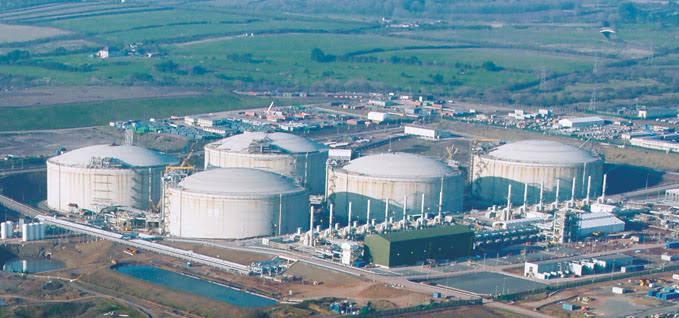
China’s LNG infrastructure market has become a critical pillar of the country’s evolving energy strategy. As industries, cities, and households seek cleaner alternatives to coal, liquefied natural gas (LNG) is playing an increasingly important role in the national energy mix. China is now recognized as one of the world’s largest LNG importers, supported by a rapidly expanding network of import terminals, storage facilities, regasification plants, and transmission pipelines. The country currently operates more than 30 LNG receiving terminals with total receiving capacity exceeding 150 million tonnes per annum, highlighting the scale of ongoing infrastructure development.
Market Drivers Advancing the China’s LNG Infrastructure Industry
Rising Energy Demand and Cleaner Fuel Transition
China’s economic growth continues to fuel demand for reliable energy supplies. At the same time, reducing dependence on coal remains a national priority. LNG is increasingly viewed as a practical bridge fuel that supports lower emissions while ensuring energy security. Natural gas consumption across power generation, industrial manufacturing, and residential heating has increased significantly over the past decade. The growing preference for cleaner fuels is encouraging investments in LNG import terminals, storage facilities, and supporting pipeline infrastructure.
Expansion of LNG Import Capacity
China has invested heavily in LNG receiving terminals along its eastern and southern coastlines. As of 2025, operational LNG receiving capacity surpassed 157 million tonnes annually, while numerous new projects remain under construction or in planning stages. These facilities strengthen the country’s ability to secure supplies from diverse international exporters, reducing exposure to supply disruptions and enhancing flexibility in procurement strategies.
Strengthening Energy Security Through Diversification
Energy security remains one of the strongest motivations behind LNG infrastructure investments. China sources LNG from multiple regions, including the Middle East, Australia, Southeast Asia, and Russia. Diversifying suppliers helps minimize risks linked to geopolitical uncertainty and market volatility. In addition, larger storage capacities allow operators to manage seasonal demand fluctuations more effectively and ensure stable supply during peak consumption periods.
Government Initiatives Supporting the China’s LNG Infrastructure Industry
The Chinese government continues to promote natural gas utilization through long-term energy transition policies, pipeline network modernization, and strategic infrastructure investments. State-owned enterprises and major energy companies receive significant support for developing LNG terminals, storage facilities, and interprovincial gas transmission systems. The establishment of PipeChina has also improved coordination and accessibility across national gas infrastructure networks, encouraging greater market efficiency and integration.
Competitive Landscape of China’s LNG Infrastructure Sector
China’s LNG infrastructure market is characterized by strong participation from major state-owned and regional energy companies. Key players include PetroChina, Sinopec, CNOOC, PipeChina, ENN Energy, Beijing Gas, and Zhejiang Energy. These organizations continue to expand terminal capacity, storage assets, and transportation networks while pursuing strategic partnerships to improve operational efficiency. Competition is increasingly focused on terminal expansion, storage capabilities, and supply chain optimization.
Challenges Facing China’s LNG Infrastructure Industry
High Capital Investment Requirements
Developing LNG terminals, storage tanks, regasification facilities, and associated pipelines requires substantial upfront investment. Project developers must carefully balance long-term demand forecasts with financial returns, particularly during periods of LNG price volatility.
Supply and Geopolitical Uncertainty
Although supplier diversification has improved resilience, global LNG markets remain influenced by geopolitical developments and fluctuating trade dynamics. Changes in international supply availability or shipping costs can affect infrastructure utilization and investment decisions.
Future Outlook
China’s LNG infrastructure market is expected to maintain strong momentum as the country advances its energy transition goals. Industry observers anticipate receiving capacity could approach 280 million tonnes annually over the coming decade as additional terminals and storage projects become operational. Looking ahead, investments will increasingly focus on improving storage resilience, expanding gas distribution networks, and integrating digital monitoring technologies. As cleaner energy adoption accelerates and energy security remains a national priority, LNG infrastructure will continue to play a vital role in supporting China’s economic growth, industrial development, and environmental objectives.
Consultants at Nexdigm, in their latest publication “China LNG Infrastructure Market Outlook to 2035” analyze the sector By Facility Infrastructure Type (Receiving Terminals, Storage Infrastructure and Pipeline Connectors), By Geographical Economic Zone (Bohai Economic Rim, Yangtze River Delta and Pearl River Delta) and By Ownership Business Model (State-Owned Enterprise Managed and Joint Venture Public-Private).
Nexdigm suggests that businesses in “China LNG Infrastructure Industry” focusses on oilfield, desalination, construction, and industrial applications, strengthen local warehousing, develop application-specific grades, improve technical support, and build resilient sourcing networks to serve expanding energy, water, and manufacturing demand.
To take the next step, simply visit our Request a Consultation page and share your requirements with us.
Harsh Mittal
+91-8422857704