
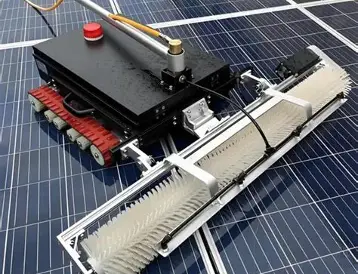
China’s solar panel cleaning systems and services market is experiencing rapid growth, driven by the country’s position as the world’s largest solar energy producer and its continued investment in renewable energy infrastructure. China’s cumulative installed solar photovoltaic (PV) capacity exceeded 1,000 GW (1 TW) in 2026, supported by record-breaking utility-scale solar installations and distributed generation projects. As solar farms expand across desert regions, industrial zones, and urban rooftops, maintaining panel efficiency has become increasingly critical. Industry studies indicate that dust, sand, industrial pollutants, and environmental contaminants can reduce solar power generation by 5%–30%, depending on location and cleaning frequency. Consequently, demand for robotic cleaning technologies, automated maintenance systems, and professional cleaning services is increasing as operators seek to maximize energy yields, improve operational efficiency, and extend the lifespan of solar assets.
Key Market Drivers for China’s Solar Panel Cleaning Systems and Services Market
Record Solar Capacity Additions Drive Cleaning Requirements
China continues to lead global solar deployment, accounting for a substantial share of new photovoltaic installations annually. The country added more than 250 GW of new solar capacity during 2025, significantly expanding the installed asset base. As utility-scale solar parks and distributed solar systems grow, operators are increasingly investing in routine cleaning and maintenance solutions to prevent efficiency losses and maximize electricity generation. Large-scale installations in northern and western provinces require frequent cleaning due to dust accumulation and desert conditions.
Expansion of Desert-Based Mega Solar Projects Supports Advanced Cleaning Technologies
China is investing heavily in large renewable energy bases across desert regions such as Inner Mongolia, Xinjiang, Gansu, and Ningxia. These projects often consist of millions of solar modules operating in environments where sand, dust, and low rainfall create continuous cleaning requirements. As a result, demand is growing for robotic dry-cleaning systems, autonomous maintenance technologies, and AI-powered monitoring platforms that can improve operational efficiency while reducing labor costs and water consumption.
Growing Focus on Energy Yield Optimization and Asset Performance
As China’s solar fleet continues to expand, developers and operators are placing increased emphasis on asset performance and return on investment. Research indicates that routine cleaning can significantly improve power output, particularly in heavily polluted or dusty regions where soiling losses can exceed 20%. This is encouraging wider adoption of predictive maintenance, automated cleaning technologies, and integrated asset management solutions designed to improve system reliability and maximize long-term energy production.
Government Initiatives Supporting China’s Solar Panel Cleaning Systems and Services Market
China’s solar panel cleaning systems and services market is benefiting from the country’s ambitious clean energy and carbon neutrality objectives. Under its long-term energy strategy, China aims to achieve carbon neutrality by 2060 while continuing to rapidly expand renewable energy generation capacity. The country surpassed 1,000 GW of installed solar PV capacity in 2026, supported by large-scale investments in renewable energy bases, ultra-high-voltage transmission infrastructure, and grid modernization projects. As solar deployment accelerates across utility-scale, commercial, and distributed segments, the expanding photovoltaic asset base is expected to generate substantial demand for professional cleaning, inspection, and maintenance services to maximize energy generation and operational efficiency.
Competitive Landscape of China’s Solar Panel Cleaning Systems and Services Market
The Chinese solar panel cleaning systems and services market is highly competitive and increasingly technology-driven, supported by the world’s largest installed solar fleet. Competition is centered on robotic cleaning technologies, autonomous maintenance systems, water-efficient solutions, AI-based monitoring platforms, and large-scale service capabilities. With solar capacity exceeding 1 TW and hundreds of gigawatts of additional projects in development, asset owners are prioritizing solutions that minimize soiling losses and improve operational performance. Market participants are investing heavily in intelligent cleaning robots, predictive maintenance technologies, and digital asset management systems to support the efficient operation of China’s rapidly expanding utility-scale and distributed solar infrastructure.
Major Challenges Facing China’s Solar Panel Cleaning Systems and Services Market
Dust Accumulation in Desert Regions
Large-scale solar installations located in western and northern China face significant challenges from sandstorms, dust deposition, and low rainfall. Maintaining optimal panel efficiency in these environments requires frequent cleaning and advanced automated maintenance technologies.
Water Consumption and Operational Efficiency
Many solar projects are located in water-scarce regions, creating pressure to reduce water usage during cleaning operations. Service providers are increasingly developing robotic dry-cleaning technologies and water-efficient maintenance solutions to improve sustainability and reduce operating costs.
Future Outlook
Looking ahead to 2035, China’s solar panel cleaning systems and services market is expected to witness substantial expansion as solar capacity continues to grow beyond the 1 TW milestone. With ongoing investments in desert-based renewable energy projects, distributed solar generation, and grid modernization, the number of photovoltaic systems requiring routine maintenance will increase significantly. Industry studies suggest that effective cleaning programs can improve energy generation by 5%–30%, particularly in regions affected by heavy dust accumulation and industrial pollution. Future growth is expected to be driven by AI-enabled monitoring platforms, autonomous robotic cleaning systems, water-saving technologies, and integrated asset management solutions. Companies that invest in automation, operational efficiency, and sustainable maintenance practices are expected to benefit most from China’s expanding solar energy ecosystem through 2035.
Consultants at Nexdigm, in their latest publication “China Solar Panel Cleaning Systems and Services Market Outlook to 2035,” analyse the sector By Cleaning Technology Type (Autonomous Dry Brush Robots, Water-Based Robotic Spray Systems and Remote-Controlled Crawler Units), By Service Delivery Model (Internal O&M Maintenance Teams and Third-Party Specialized Service Providers) and By Region (Northwest China (Inner Mongolia, Gansu), North China (Hebei, Shanxi) and East China (Jiangsu, Zhejiang)).
Nexdigm suggests that businesses in China’s Solar Panel Cleaning Systems and Services Industry prioritize robotic cleaning technologies, AI-powered asset monitoring, and water-efficient maintenance solutions to capitalize on the country’s rapidly expanding solar capacity, large-scale desert photovoltaic projects, and growing demand for energy-yield optimization across utility-scale, commercial, and distributed solar installations.
To take the next step, simply visit our Request a Consultation page and share your requirements with us.
Harsh Mittal
+91-8422857704