
Cold chain networks across pharmaceuticals, food, chemicals, and healthcare face premium costs from refrigeration, monitoring, validated packaging, specialized handling, and strict compliance requirements. Effective cold chain logistics pricing analysis combines pricing analysis with temperature ranges, product sensitivity, lane risk, energy consumption, storage duration, packaging specifications, and regulatory obligations.
This approach helps businesses compare sector-specific premiums, identify cost drivers, validate supplier quotations, and design transparent pricing structures. It also supports stronger negotiations, improved margin control, reduced excursion risk, and scalable temperature-controlled operations without compromising product integrity, safety, or service reliability globally.
A 2026 cold-chain optimization study across five unnamed market sites reduced annualized costs by up to 15%, cut battery capacity by 67%, lowered total costs by another 8%, and reduced thermal-storage capacity by 35%, demonstrating stronger pricing and infrastructure efficiency.
Pricing Intelligence for Cold-Chain Logistics Sector and Operations
Pricing intelligence helps temperature-controlled logistics networks evaluate refrigeration costs, compliance requirements, enabling businesses to optimize pricing structures, protect margins, and maintain product integrity across sectors. Key dimensions of cold chain pricing analysis are:
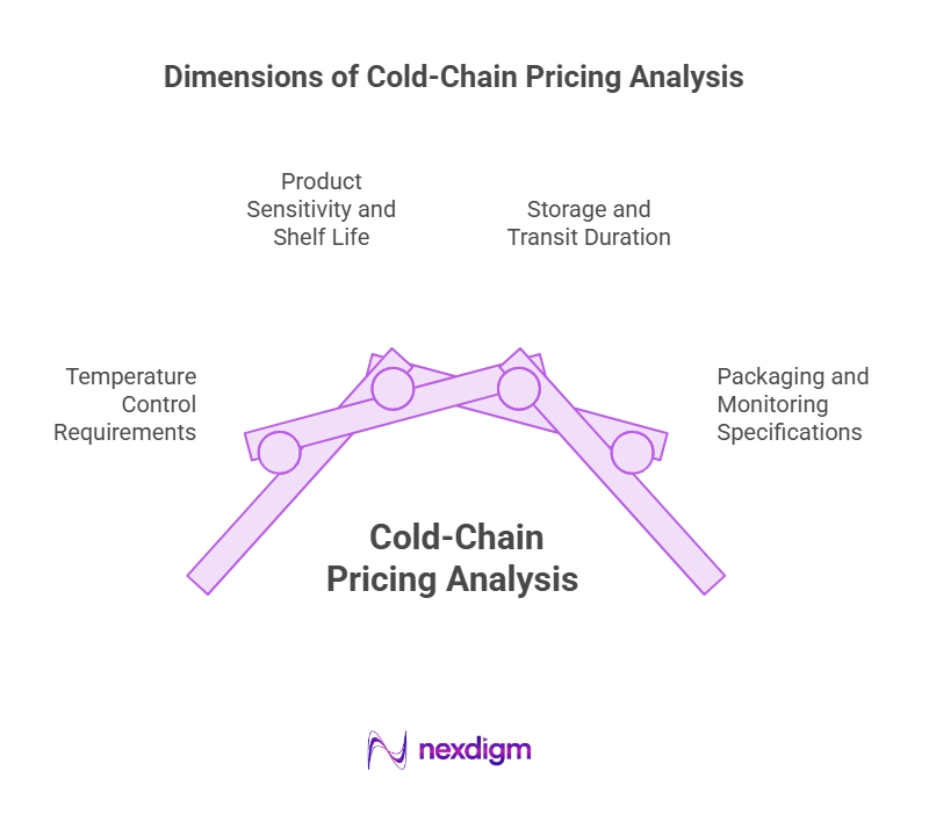
- Temperature Control Requirements: Pricing varies according to frozen, chilled, controlled-ambient, and ultra-low temperature ranges, reflecting differences in refrigeration intensity, equipment specifications, monitoring needs, and handling complexity.
- Product Sensitivity and Shelf Life: Product value, spoilage risk, shelf life, and time sensitivity influence pricing premiums, ensuring vulnerable pharmaceuticals, food products, and chemicals receive appropriate commercial treatment.
- Storage and Transit Duration: Longer storage periods and extended transportation times increase refrigeration, monitoring, and risk exposure, requiring pricing structures that reflect duration-based resource consumption and operational complexity.
- Packaging and Monitoring Specifications: Validated packaging, insulated containers, sensors, data loggers, and real-time monitoring requirements are incorporated into pricing to reflect technology usage and shipment protection needs.
Nexdigm’s Strategic Advisory for Cold-Chain Pricing Analysis Planning
Nexdigm supports temperature-controlled supply chains with cold chain logistics pricing analysis, pricing intelligence, cost-to-serve assessment, and logistics cost benchmarking. By examining refrigeration expenses, compliance-related premiums, storage charges, route economics, and service performance, Nexdigm enables informed pricing decisions, stronger contract negotiations, improved margin visibility, and more efficient, resilient cold chain operations across regulated and temperature-sensitive sectors.
Nexdigm’s Strategic Blueprint for Temperature-Controlled Logistics Pricing
Nexdigm’s strategic blueprint integrates cold chain pricing intelligence, compliance requirements, operational risks, and market benchmarks to develop transparent pricing strategies that improve profitability and service performance across sectors. Important strategies of the blueprint model are:
- Thermal Adjustment Strategy: Temperature excursion probability, product value, spoilage exposure, route reliability, and response requirements are assessed to incorporate risk premiums into transportation and storage pricing structures.
- Route and Lane Benchmarking Strategy: Cold chain rates are compared across routes, regions, carriers, and temperature bands to identify pricing gaps, validate quotations, and strengthen logistics contract negotiations.
- Performance-Linked Pricing Strategy: Rates, incentives, and penalties are connected to temperature stability, on-time delivery, excursion frequency, documentation accuracy, and service responsiveness, improving provider accountability and operational outcomes.
- Technology Value Pricing Strategy: IoT sensors, control towers, predictive alerts, data loggers, and analytics costs are compared with reduced excursions and improved visibility to establish measurable technology-related pricing premiums.
Nexdigm’s Case
Nexdigm supported a pharmaceutical company in optimizing temperature-controlled logistics through benchmarking, real-time monitoring, and storage improvements, reducing product spoilage by 20% and improving delivery reliability by 28%, while strengthening compliance, operational visibility, product integrity, and pricing confidence across supply chains.
To take the next step, simply visit our Request a Consultation page and share your requirements with us.
Harsh Mittal
+91-8422857704