

Cold chain operations require specialised infrastructure, temperature-controlled transportation and continuous monitoring to maintain product quality throughout storage and distribution. These requirements are particularly important for pharmaceuticals, vaccines, food products, chemicals and other temperature-sensitive goods.
The cost of maintaining a cold chain extends beyond refrigerated transportation. Organisations also incur expenditure on specialised warehouses, energy, packaging, monitoring technology, handling, validation and compliance-related services. These expenses may be distributed across multiple providers and operating locations, making it difficult to establish the true cost of temperature-controlled logistics.
A structured cold chain logistics procurement spend analysis helps businesses understand where expenditure is concentrated, evaluate supplier pricing and identify opportunities to improve cost efficiency without compromising product integrity.
Mapping the Major Cold Chain Cost Categories
Cold chain procurement involves several interconnected service categories. Transportation is one of the most visible, covering refrigerated trucks, temperature-controlled containers, air freight and specialised delivery services.
Warehousing introduces another significant cost component. Temperature-controlled facilities require refrigeration systems, insulation, backup power arrangements, monitoring equipment and specialised handling infrastructure. Costs also vary according to the temperature range required, storage capacity and facility location.
Packaging expenditure includes insulated containers, refrigerants, thermal packaging materials and specialised shipment protection. The requirements differ according to product sensitivity, transportation duration and external temperature conditions.
Technology and monitoring services support temperature visibility throughout the logistics process. These may include data loggers, sensors, tracking platforms, alert systems and reporting tools.
Additional expenditure can arise from quality assurance, equipment calibration, temperature mapping, validation, documentation and regulatory compliance.
A complete spend classification should distinguish these categories rather than grouping all cold chain expenditure under general logistics costs.
Understanding Transportation and Storage Cost Drivers
Temperature-controlled transportation costs depend on several operational variables, including route length, shipment volume, vehicle specifications, fuel consumption, equipment utilisation and delivery frequency.
Low vehicle utilisation can increase the cost per shipment because refrigeration and transportation expenses are spread across fewer consignments. Similarly, fragmented delivery schedules may require additional trips and increase fuel and operating expenditure.
Procurement teams should examine shipment density, route planning, vehicle capacity and the availability of backhaul opportunities.
Warehouse costs require a different assessment. Refrigerated facilities often have higher energy requirements and maintenance needs than conventional storage facilities. The cost structure may also differ between chilled, frozen and deep-frozen storage.
Businesses should compare warehouse pricing according to storage temperature, pallet positions, handling volumes, energy arrangements and service scope. A lower rental rate may not represent better value if the provider charges separately for handling, monitoring or specialised equipment.
Identifying Costs Associated with Compliance and Product Protection
Cold chain procurement decisions must account for the consequences of temperature deviations.
A shipment exposed to unsuitable conditions may require investigation, quarantine or disposal. These incidents can generate financial losses beyond the immediate transportation or storage expense.
Procurement teams should therefore evaluate the cost of monitoring systems, equipment maintenance, backup power, temperature validation and quality assurance as part of the overall sourcing decision.
For pharmaceutical and healthcare products, supplier assessments may need to consider applicable good distribution practices, product handling procedures, documentation and traceability requirements. Food-related cold chains may involve separate food safety and temperature-control obligations.
The objective is to ensure that cost optimisation does not reduce the controls needed to protect product quality.
Analysing Spend Across Suppliers and Operating Locations
Cold chain expenditure is frequently distributed across specialised logistics providers, warehouse operators, packaging suppliers and technology vendors.
A supplier-level assessment should compare total spending, service volumes, geographical coverage, temperature capabilities and contractual terms.
Location-level analysis is equally important. Energy costs, infrastructure availability, labour expenses and regional demand can create substantial differences in operating costs.
Organisations operating across several markets should compare suppliers using equivalent service requirements. This includes temperature range, shipment size, storage duration, monitoring standards and delivery expectations.
Such comparisons help distinguish market-driven cost differences from supplier pricing variations.
Where Can Procurement Efficiency Improve?
Cold chain procurement offers opportunities through shipment consolidation, improved vehicle utilisation, warehouse network optimisation, packaging standardisation and supplier contract reviews.
Businesses may also examine whether temperature-controlled services are being purchased at the appropriate level for each product category. Different products can have different handling and temperature requirements, and applying the same service specification across all shipments may increase costs unnecessarily.
Supplier consolidation can improve purchasing leverage, although organisations should retain sufficient operational alternatives for critical routes and storage locations.
Cold Chain Logistics Procurement Spend Analysis Framework
A structured cold chain logistics procurement spend analysis should include:
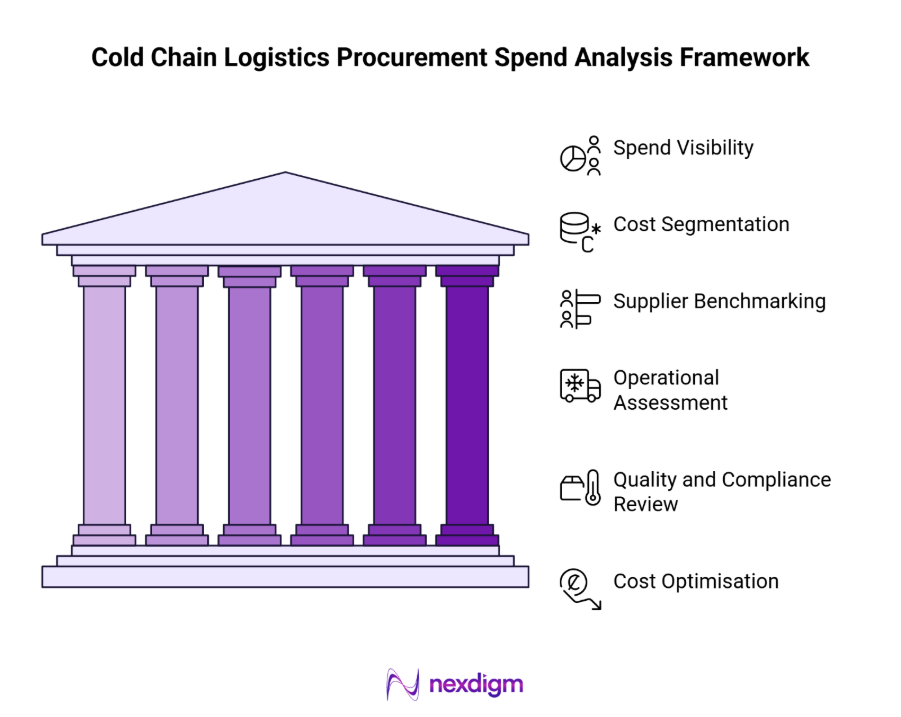
- Spend visibility: Consolidate expenditure across refrigerated transport, storage, packaging, monitoring and compliance services.
- Cost segmentation: Classify costs by temperature range, product category, route, supplier and operating location.
- Supplier benchmarking: Compare providers using equivalent capacity, handling, monitoring and service requirements.
- Operational assessment: Examine vehicle utilisation, storage occupancy, energy consumption and shipment frequency.
- Quality and compliance review: Evaluate temperature monitoring, validation, traceability and contingency arrangements.
- Cost optimisation: Identify opportunities through network redesign, shipment consolidation, packaging improvements and commercial renegotiation.
Nexdigm can support organisations through cold chain market research, supplier benchmarking, procurement cost analysis and service provider intelligence. These services help businesses understand temperature-controlled logistics economics, compare supplier capabilities and identify opportunities for more efficient sourcing.
Nexdigm’s Case Study: Mapping Temperature-Controlled Logistics Costs
Nexdigm assessed 13 cold chain providers across 4 markets, comparing refrigerated transport, storage, packaging and monitoring costs. The analysis identified a 16% variation in comparable service expenditure, shortlisted 4 providers and established 7 cost and compliance benchmarks.
To take the next step, simply visit our Request a Consultation page and share your requirements with us.
Harsh Mittal
+91-8422857704